What Is the Typical BMS Failure Rate in EV Charging Equipment?
For EV charging operators, EPC contractors, fleet managers, and asset owners, the useful question is rarely whether a battery management system can fail. Every electronic control system can. The practical question is what “BMS failure” means in a charging project, how often it creates a service-impacting event, and whether the risk sits in the charger, the vehicle, an on-site battery system, or the interface between them.
That distinction matters because the phrase battery management system failure rate in charging equipment is used loosely. Most standalone AC and DC chargers do not contain a traction-battery BMS comparable to the one inside an EV. The vehicle owns the main battery pack and its BMS. The charger communicates with that system, follows its charging limits, and protects its own power electronics. A charger may, however, include batteries for backup power or auxiliary functions, be paired with battery energy storage, or rely on controls that perform BMS-like monitoring functions.
As a result, there is no single credible industry-wide percentage that answers the title in every case. A reported “BMS fault rate” can describe vehicle-side battery faults, faults in a battery-buffered charging station, communication failures interpreted as BMS faults, or actual hardware failures in an energy storage system attached to a charging hub. Procurement teams should be cautious when a supplier presents one headline figure without defining the equipment boundary, operating hours, fault severity, and data period.
Why a single failure-rate number is misleading
Failure rates are often discussed as though chargers and battery systems are uniform products operating under identical conditions. In reality, an overnight depot with managed AC charging has little in common with a public ultra-fast charging site operating at high utilization, exposed to heat, dust, humidity, grid disturbances, and a large range of vehicle models.
A BMS-related event also does not automatically mean a failed BMS. A session may stop because the vehicle BMS requests a lower current, detects an imbalance, limits charging at a low temperature, or refuses charging because a pack-level protection threshold is reached. From the driver’s perspective, the charger has failed. From the operator’s remote monitoring platform, it may appear as a communication or charging-abort code. From the vehicle manufacturer’s diagnostic record, it may be a normal protective response.
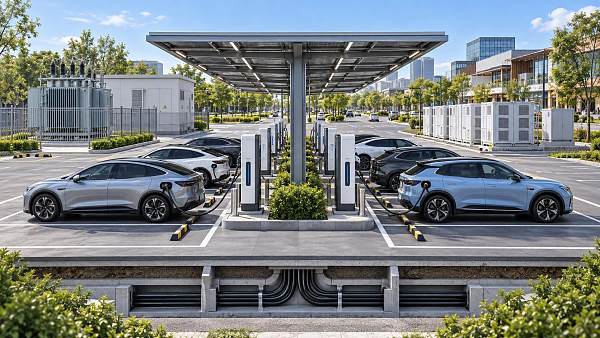
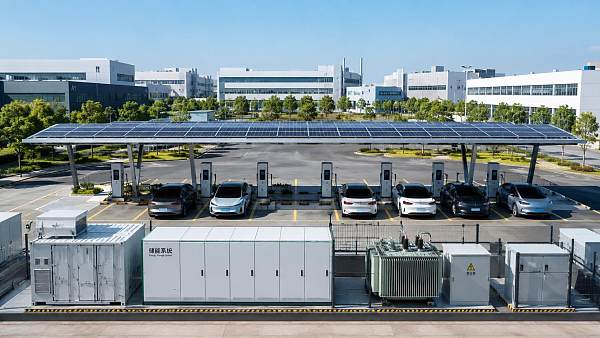
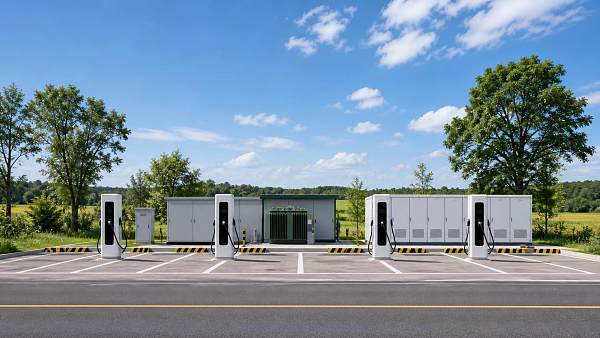
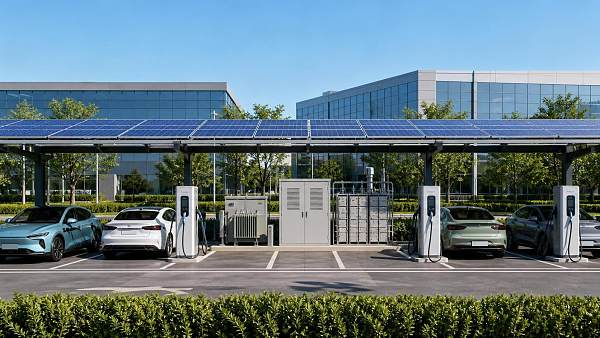
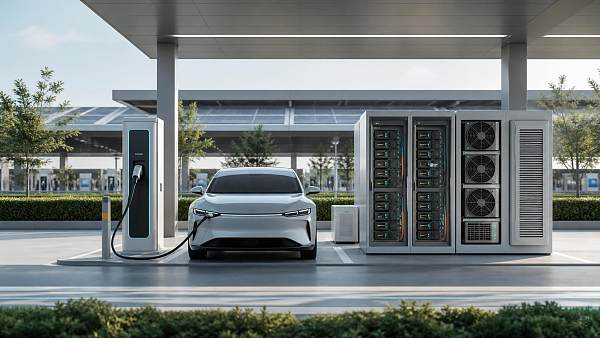
For sites that combine DC fast charging with stationary battery storage, the analysis becomes more direct. The storage BMS supervises cell voltage, temperature, current, state of charge, insulation conditions, contactors, and safety interlocks. A BMS event can derate the battery, isolate a rack, restrict charging output, or take an entire battery-buffered charger offline depending on system architecture. Here, BMS reliability becomes an asset-availability issue rather than merely a vehicle compatibility issue.
The more useful measure is therefore not an unsupported generic percentage. It is a set of operational metrics:
- How many BMS-related alarms occur per charger, battery rack, or charging session over a defined period?
- What share of those alarms causes a failed customer charging session?
- How many events require a site visit rather than remote recovery?
- How long does a BMS-related event keep power capacity unavailable?
- Is the event caused by a genuine hardware failure, a software defect, a calibration issue, a wiring problem, thermal stress, or vehicle-charger communication?
- Does the system fail safely and recover predictably after the underlying condition is corrected?
These questions turn a vague reliability claim into something that can be compared across vendors and project designs.
What is typical in practice?
Publicly comparable, independently audited BMS failure-rate data for EV charging equipment remains limited. Manufacturers, operators, and vehicle OEMs collect data differently, and many fault records are commercially sensitive. It is therefore safer to describe typical patterns than to cite a universal percentage.
In mature systems, a true BMS hardware failure should be an infrequent event relative to ordinary charging sessions. But “infrequent” is not the same as commercially insignificant. A small number of control-board failures or persistent sensing errors can create disproportionate cost at a remote or high-traffic site because dispatch, diagnosis, replacement parts, recommissioning, and lost charging revenue all accumulate.
In early deployments, BMS-related service incidents are more often linked to integration than to cell-monitoring electronics alone. Common examples include incompatible firmware versions, unstable Controller Area Network communications, incorrect battery parameter configuration, temperature sensor drift, contactor feedback faults, and charging-control logic that responds poorly to abnormal but recoverable conditions. At higher charging powers, the importance of these interactions rises because thermal and electrical margins become tighter.
Asset owners should separate three levels of event severity:
These categories should not be blended into a single “failure rate.” A site with frequent low-severity warnings but strong automated recovery may be operationally preferable to one with fewer recorded alerts but repeated long outages. Conversely, a supplier can appear to have low fault counts if its controller records only final lockouts and ignores the warning events that preceded them.
The boundary problem: charger BMS, vehicle BMS, or storage BMS?
Before comparing reliability data, project teams need to define ownership of the fault domain. This is particularly important in tender documents and service-level agreements.
Vehicle-side BMS: In a conventional charging session, the EV battery’s BMS determines whether the pack can accept power and under what limits. A vehicle BMS may request reduced current, end the session, or reject it. This does not establish that the charger itself is defective. Charge point operators need protocol logs and vehicle compatibility records to distinguish an EV-specific event from a network-wide issue.
Charger control and protection system: The charger manages power conversion, insulation monitoring, connector status, thermal protection, communication, and charging protocol execution. These functions may be described loosely as battery management, especially in marketing material, but they are not necessarily a BMS. Their reliability has a direct effect on session success and uptime.
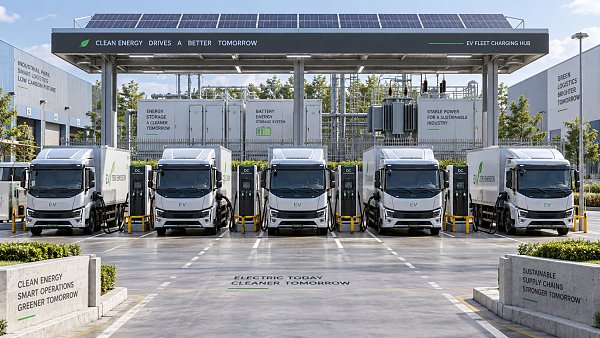
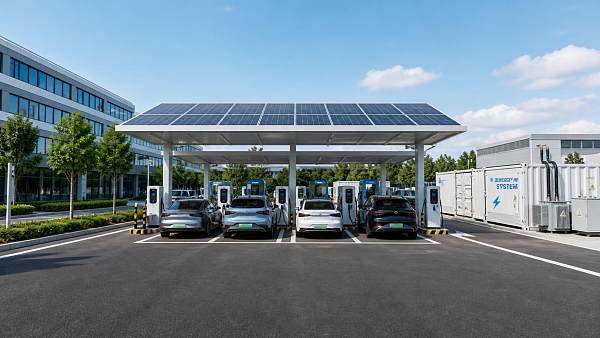
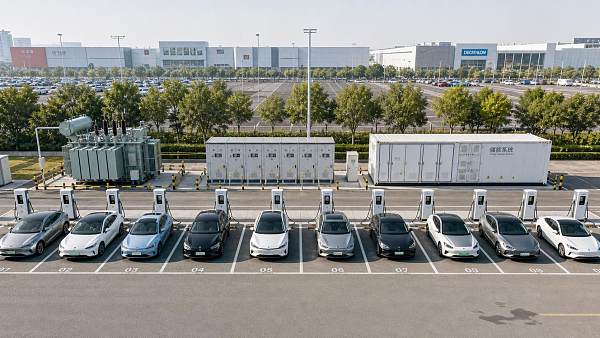
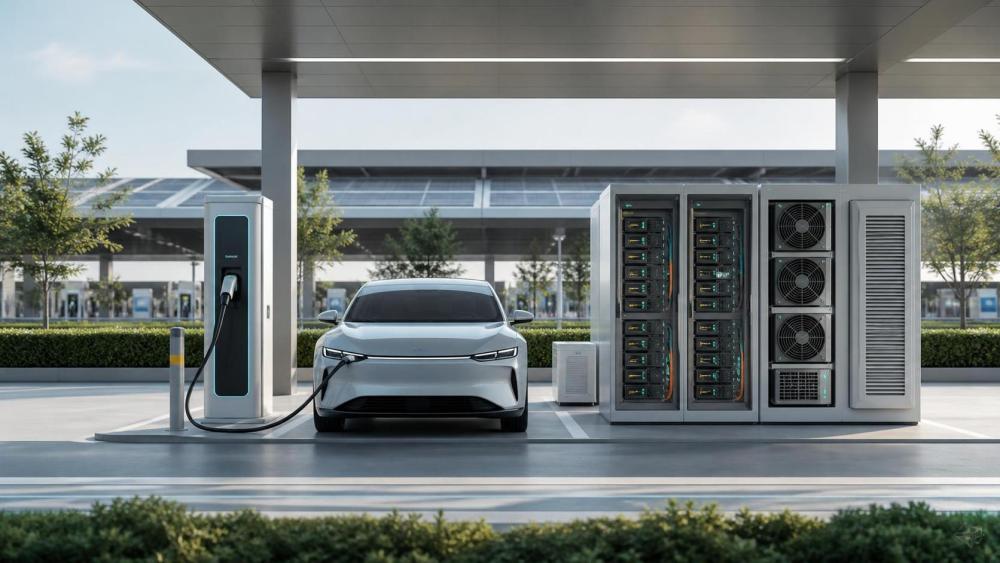
Stationary storage BMS: Battery-buffered fast chargers, solar-plus-storage charging hubs, and depot microgrids may have a dedicated BMS controlling on-site batteries. In these projects, battery monitoring quality directly affects safety, available energy, peak-shaving performance, and charging capacity. The BMS must also coordinate with the energy management system, power conversion system, charger controller, fire safety system, and site grid connection.
A good contract should require suppliers to label alarms by domain and provide the data needed to verify that classification. Without this, operators can spend months debating whether an availability shortfall belongs to the charger vendor, storage integrator, vehicle OEM, software platform, or grid operator.
Conditions that increase the risk
Hardware quality matters, but environment and operating strategy often determine whether a latent weakness becomes a real outage. This is why laboratory reliability claims should be treated as only one input to a procurement decision.
Thermal stress and repeated high-power operation
Fast charging generates heat in connectors, cables, power modules, battery cells, and enclosures. In a battery-integrated charging hub, high ambient temperature combined with rapid cycling can expose weak thermal design, uneven cooling, inaccurate sensor placement, or control thresholds that are too narrow or poorly calibrated. Low temperature creates a different problem: battery acceptance falls, and protective logic may constrain output more often.
Temperature-related derating is not automatically a defect. The concern begins when thermal events become frequent, unpredictable, or difficult to diagnose. Operators should ask for temperature trends, not merely a statement that the system has liquid cooling or active HVAC.
Software and configuration management
BMS failures are increasingly software-defined in their visible effect. A firmware update can correct false alarms, improve state-of-charge estimation, or resolve a protocol issue. It can also introduce a new incompatibility if version control, regression testing, rollback procedures, and remote deployment governance are weak.
For charging networks, every software layer matters: charger firmware, BMS firmware, energy management controls, cloud platform, payment system, and communication middleware. A supplier that can diagnose across those boundaries will generally restore service faster than one that treats each subsystem as a separate black box.
Sensor, harness, connector, and contactor faults
Many supposedly “BMS failures” originate in components around the BMS. Temperature probes, voltage sensing lines, low-voltage power supplies, wiring harnesses, connector seals, contactor auxiliary contacts, and grounding arrangements can all trigger protection logic. Outdoor sites are vulnerable to moisture ingress, corrosion, insects, vibration, poor cable routing, and installation defects. Fleet depots may add frequent mechanical wear and demanding duty cycles.
This has a procurement implication: buyers should assess serviceability as carefully as nominal system performance. Can a technician isolate a bad sensor channel? Are harnesses accessible? Is the replacement procedure documented? Are parts stocked locally? A design that reduces mean repair time can be economically more valuable than a slightly better component-level reliability claim.
Grid quality and system integration
Voltage excursions, phase imbalance, harmonics, weak-grid conditions, and poorly coordinated protection settings can cause charger shutdowns or abnormal battery-system behavior. In projects with solar, storage, and charging behind one connection point, the control interactions become more complex. A BMS may be functioning correctly when it blocks a battery operation after it detects a condition created elsewhere in the system.
Grid studies, protection coordination, power-quality analysis, and controls testing should therefore be completed before commissioning, particularly for high-power charging hubs and constrained distribution networks. Adding battery storage does not remove this requirement; it adds another responsive power asset that must be coordinated.
How buyers should evaluate reliability claims
Reliability evaluation should begin with a common definition of availability. A charger that is online but unable to complete compatible charging sessions is not fully available in a commercial sense. Similarly, a battery-buffered charger operating at a fraction of rated power may technically be online while failing to meet the fleet or public-service requirement that justified the investment.
During vendor evaluation, request evidence across a consistent reporting period and installed population. Useful questions include:
- What is the installed base for the exact charger and battery architecture being offered?
- What are the top recurring fault codes, their root causes, and their corrective actions?
- How are vehicle-originated charging refusals separated from charger or stationary-BMS faults?
- What percentage of events can be resolved remotely, and what is the typical restoration time?
- Which components are field-replaceable, and what are the spare-parts lead times in the project region?
- What firmware versions are supported, how are updates validated, and can the system roll back after an unsuccessful deployment?
- What happens after a communications loss: does the system fail safe, continue under local controls, or shut down entirely?
- Are operational logs exportable to the owner or an independent asset-management platform?
References are more informative when they match the intended duty cycle. A vendor’s performance at lightly used workplace chargers does not prove its suitability for a taxi depot, logistics fleet, highway corridor, or charging hub with integrated storage. Buyers should request references with comparable power level, climate, grid conditions, daily energy throughput, and service model.
Design choices that reduce lifecycle exposure
There is no component selection that eliminates BMS-related risk, but several design choices reduce the chance that a single fault becomes a prolonged outage. Modular battery racks, redundant communications where justified, segmented power architecture, local fallback controls, accessible service panels, and well-defined alarm escalation can all improve recoverability.
For battery-integrated charging sites, the BMS should not be considered independently from thermal management and fire protection. Cell monitoring can identify abnormal conditions, but it cannot compensate for inadequate enclosure design, poor airflow, blocked cooling paths, unsuitable cell chemistry for the duty cycle, or missing emergency-response procedures. Compliance requirements vary by market and project type, so applicable electrical, battery, fire, grid-interconnection, and cybersecurity standards should be confirmed for the deployment jurisdiction rather than assumed from a supplier brochure.
Commissioning is another overlooked control point. A robust process includes functional testing at normal and abnormal operating conditions, communications-loss scenarios, sensor plausibility checks, emergency shutdown verification, charging interoperability tests with representative vehicles, and confirmation that remote alarms reach the responsible operations team. The purpose is not to create more paperwork. It is to find configuration and integration defects before the site is supporting customers or a time-critical fleet.
What operators should monitor after commissioning
Once equipment is live, the most valuable reliability indicator is usually the trend rather than a monthly raw fault count. Operators should track repeat alarms by asset, temperature correlation, aborted-session patterns, power derating duration, state-of-charge anomalies for stationary batteries, and the time from alarm to restoration. A rise in minor warnings can reveal a degrading sensor, cooling system, connector, or firmware issue before it creates a full lockout.
Data governance deserves attention here. Fault logs should include timestamps, firmware versions, ambient and enclosure temperatures where available, charging power, communication status, vehicle identifiers when privacy rules permit, and the corrective action taken. Without consistent records, root-cause analysis becomes dependent on technician memory and supplier interpretation.
The market is moving toward more tightly integrated charging, storage, distributed generation, and digital energy management. That can improve grid flexibility and site economics, but it also means a larger control stack and more interfaces to manage. In that environment, the right question is not whether a brochure can promise a low BMS failure rate. It is whether the project team can identify a fault accurately, contain its impact, restore service quickly, and use operating data to prevent its recurrence.
Questions about market trends? Contact Market Scope Live for deeper business insights.
We respect your privacy. Your information is strictly confidential.
Related News
 EV Charging InfrastructureIndian Minister Proposes Lower EV Charging Rates to Encourage AdoptionIndia EV charging rates could fall in Maharashtra under Nitin Gadkari’s proposal. Explore the potential impact on drivers, fleets and charging operators.MORE+
 EV Charging InfrastructureEV Charging for Industrial Parks: Sizing Capacity and Managing Peak LoadsPlan industrial parks EV charging with confidence. Learn how to size capacity, manage peak loads, reduce demand costs, and keep fleets ready without disrupting production.MORE+
 EV Charging InfrastructureArlington County, Virginia, to Raise Public EV Charging Rates by 72%Arlington County public EV charging rates will rise 72% to $0.30/kWh on November 1, 2026. Explore the potential impact on fleet budgets and how businesses can prepare.MORE+
 EV Charging InfrastructurePlanning Solar EV Charging Hubs: Sizing PV, Battery Storage, and Grid CapacityPlan solar EV charging hubs with confidence. Learn how to size PV, battery storage, and grid capacity to meet peak demand, control costs, and support reliable charging.MORE+
 EV Charging InfrastructureChery Unveils 1.44 MW Charging System, Claims 500 km of Range in Five MinutesChery’s 1.44 MW charging system claims 500 km of range in five minutes. Explore its ultrafast EV charging technology, vehicle compatibility and global rollout plans.MORE+
 EV Charging InfrastructureComparing EV Charging Equipment Manufacturers: Warranty, Lead Times, and SupportCompare EV charging equipment manufacturers on warranty coverage, lead times, and support. Discover how to reduce downtime, uncover hidden costs, and choose the right supplier.MORE+
 EV Charging InfrastructurePlanning Urban EV Charging Hubs: Site Selection, Power Needs, and Charger MixPlan urban EV charging hubs with confidence. Discover how to select sites, size power capacity, and balance AC/DC chargers to control costs and deliver reliable charging.MORE+
 EV Charging InfrastructureHow to Plan Charging Corridors for Fleet Routes, Grid Capacity, and Future DemandCharging corridor infrastructure planning helps fleets align routes, grid capacity, reliable charging, and scalable site design for future demand.MORE+
 EV Charging InfrastructureHow to Size Fast EV Charging Equipment for Fleet Depots Without OverbuildingFast EV charging equipment for fleet depots: learn how to match power, charging windows, grid capacity, and smart controls without costly overbuilding.MORE+
 EV Charging InfrastructureHow to Plan EV Charging Infrastructure in Indonesia for Fleet and Public SitesCharging infrastructure planning in Indonesia for fleet and public sites: optimize energy, grid capacity, smart load management, safety, and scalable EV charging.MORE+
 EV Charging InfrastructureHow to Size DC EV Charging Equipment for Fleet Depots and Peak DemandDC EV charging equipment sizing guide for fleet depots: balance energy demand, peak loads, utility limits, smart charging, and scalable growth.MORE+
 EV Charging InfrastructureAre EV Charger Payment Systems Interoperable Across Regions?Are there interoperability standards for EV charger payment systems across regions? Explore OCPP, OCPI, Plug & Charge, roaming, and payment strategies for seamless EV charging.MORE+
 EV Charging InfrastructureHow to Evaluate Total Cost of Ownership for a Fleet DC Charging DepotHow to evaluate total cost of ownership for a fleet DC charging depot: compare grid costs, tariffs, uptime, smart charging, and scalable infrastructure.MORE+
 EV Charging InfrastructurePublic Charging Infrastructure Planning: Site Criteria, Grid Capacity, and UtilizationPublic charging infrastructure planning made practical: evaluate site access, grid capacity, utilization, and scalable design to build reliable, investable EV charging hubs.MORE+
 EV Charging InfrastructureHow Behind-the-Meter Energy Systems for EV Charging Cut Peak-Demand CostsBehind the meter energy systems for EV charging help cut peak-demand costs, defer grid upgrades, and improve charging reliability with storage and smart controls.MORE+
 EV Charging InfrastructureIs Building a Public EV Charging Network in Rural Areas Financially Viable?Is it financially viable to build public charging networks in rural areas? Explore grid costs, utilization, funding, AC/DC choices, and strategies for profitable rural EV charging.MORE+
 EV Charging InfrastructureHow Public EV Charging Load Management Prevents Peak Demand and Grid Overloadspublic EV charging load management prevents costly peak demand and grid overloads. Explore smarter controls, capacity planning, and scalable charging performance.MORE+
 EV Charging InfrastructureHow to Assess Long-Term EV Charger Reliability Before ProcurementHow to evaluate long-term reliability of EV chargers before procurement? Explore practical checks for uptime, grid compatibility, software stability, service support, and lifecycle costs.MORE+
 EV Charging InfrastructureIs AC Charging Still Worth Investing in for New Public Stations in 2026?Is AC charging still worth investing in for new public stations in 2026? Explore where smart, managed AC charging delivers value, revenue, and scalable EV infrastructure.MORE+
 EV Charging InfrastructureHow to Plan Power Capacity for Highway EV Charging CorridorsHighway charging corridor power capacity planning: learn how to size grid connections, manage peak demand, use storage, and phase EV hubs for reliable, scalable growth.MORE+
 EV Charging InfrastructureWhat Is the Typical BMS Failure Rate in EV Charging Equipment?Battery management system failure rate in charging equipment: learn what BMS faults mean, key risks, and how to protect EV charger uptime.MORE+
 EV Charging InfrastructureHow Should Fleet Depot Charging Stations Be Laid Out?Fleet depot charging station layout design guidelines for safer vehicle flow, smart power use, scalable infrastructure, and reliable fleet readiness. Explore practical planning tips.MORE+
 EV Charging InfrastructureDC Fast Chargers vs Liquid-Cooled Ultra-Fast Chargers in 2026DC fast charger vs liquid-cooled ultra-fast charging stations 2026: compare power, costs, grid demands, uptime, and ideal deployment scenarios for smarter EV infrastructure.MORE+
 EV Charging InfrastructureWhat Does the Global EcoPower Charging Intelligence Platform Do?Global EcoPower EV charging infrastructure intelligence platform delivers actionable insights on grid capacity, storage, technology, risk, and profitable charging project planning.MORE+
 EV Charging InfrastructureHow Global EcoPower Manages Energy Across EV Charging NetworksGlobal EcoPower energy management systems for charging networks optimize EV charging with dynamic load control, storage, solar integration, and reliable data insights.MORE+
 EV Charging InfrastructureWhat Switchgear Specifications Are Needed for a 500 kW Charging Site?What switchgear specifications are required for a 500kW charging installation? Explore load sizing, transformer selection, fault ratings, protection, and expansion planning.MORE+
 EV Charging InfrastructureWhich Communication Protocols Matter When Mixing Charger Brands?What communication protocols matter most when mixing charger brands at one station? Explore OCPP, OCPI, ISO 15118, and energy controls for reliable interoperability.MORE+
 EV Charging InfrastructureWhat Grid Connection Capacity Does a 10-Bay Fast Charging Hub Need?What grid connection capacity is needed for a 10-bay fast charging hub? Explore demand, power sharing, batteries, and scalable planning for reliable EV charging.MORE+
 EV Charging InfrastructureHow to Plan EV Charging Systems for Apartments Without Overloading the Building?EV charging systems for apartments start with capacity, not charger count. Learn how to prevent overloads, use smart load management, and plan scalable charging that fits your building.MORE+
 EV Charging InfrastructureHow City Charging Infrastructure Planning Can Reduce Costs and Avoid Grid BottlenecksCharging infrastructure planning for cities helps cut costs, avoid grid bottlenecks, and speed EV rollout with smarter, scalable deployment.MORE+
 EV Charging InfrastructureEU Mandates EN 61851-23:2026 for EV ChargersEU Mandates EN 61851-23:2026 for EV Chargers: learn how the new EU rule impacts certification, customs clearance, and market access before October 2026.MORE+
 EV Charging InfrastructureITC Ruling Puts Chinese EV Chargers Under 337 PressureITC ruling on Chinese EV chargers puts Section 337 pressure on imports, compliance, and OEM supply chains. Learn how patent risks may impact U.S. customs, distributors, and EV charger sourcing.MORE+
 EV Charging InfrastructureHow EV Charging Technology Affects Charging Speed, Compatibility, and Site PlanningEV charging technology shapes real charging speed, vehicle compatibility, and site planning. Learn how to avoid costly design mistakes and build charging projects that perform.MORE+
 EV Charging InfrastructureUS Requires UL 1741 SA-2025 EVSE ModulesUS Requires UL 1741 SA-2025 EVSE Modules for imported DC fast chargers. Learn how V2G, FCC+UL testing, and firmware compliance will reshape US market access.MORE+
 EV Charging InfrastructureUSTR Opens Section 301 Review on China EV ChargersUSTR Opens Section 301 Review on China EV Chargers: learn how the 25% tariff review may affect import costs, customs compliance, and procurement timing across EV charging and BESS supply chains.MORE+
 EV Charging InfrastructureHow to Plan Fleet Charging Infrastructure for Logistics Depots and Delivery HubsFleet charging infrastructure for logistics starts with duty cycles, dwell time, and grid limits. Learn how to design depot and hub charging that cuts bottlenecks and supports scalable fleet electrification.MORE+
 EV Charging InfrastructureWhat Is Load Management in EV Charging and How Does It Reduce Peak Power Costs?Load management in EV charging helps control peak demand, lower grid upgrade pressure, and cut costly power spikes. Learn how smart power allocation improves site economics.MORE+
 EV Charging InfrastructureHow to Evaluate an EV Charging Software Platform for Multi-Site Charging OperationsEV charging software platform evaluation made practical: learn how to assess interoperability, load management, billing, security, and scalability for multi-site charging operations.MORE+
 EV Charging InfrastructureUSTR Opens 301 Review on China EV Charging GearUSTR opens a Section 301 review on China EV charging gear, putting tariffs, import costs, pricing, and inventory plans at risk. See what US importers and distributors should watch now.MORE+
 EV Charging InfrastructureEU Sets 17.1% Duty on Chinese EV ChargersEU Sets 17.1% Duty on Chinese EV Chargers: see how the new EU tariff affects EV charging equipment exports, customs costs, HS codes, and contract risks for suppliers.MORE+