Planning Urban EV Charging Hubs: Site Selection, Power Needs, and Charger Mix
Successful urban EV charging hubs match three things: the time drivers can stay, the energy they need, and the power the site can reliably supply. A busy location can still perform poorly if drivers cannot enter easily, charging takes longer than their visit, or the grid connection makes the project uneconomic.
Start with a service requirement: who will charge, when they will arrive, and how much energy they need before leaving. Use that requirement to compare sites, develop the electrical design, and select the charger mix. Buying equipment before resolving these questions can lock a project into avoidable compromises.
Define the charging service before comparing sites
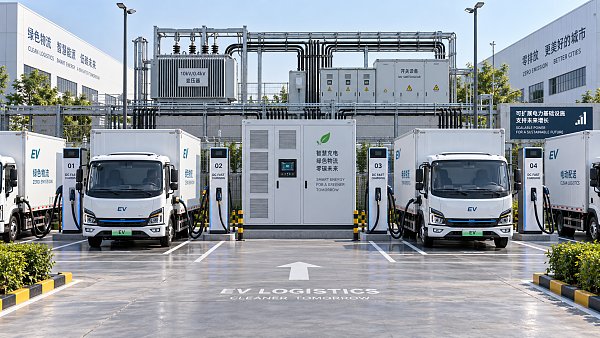
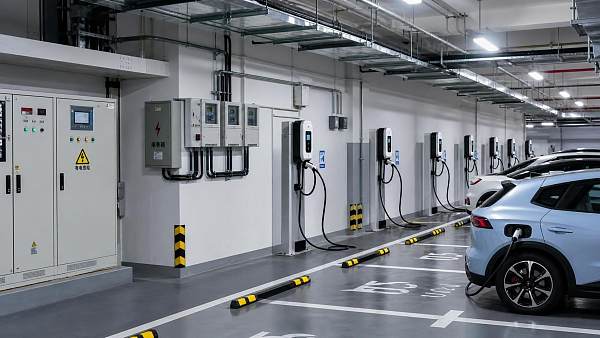
A neighborhood hub serving residents without private parking has a different purpose from a rapid charging stop for taxis. The first may benefit from longer parking sessions and managed AC charging. The second depends on short, predictable stops, reliable DC charging, and enough capacity during concentrated demand periods.
Describe demand in terms of charging sessions, energy per session, arrival patterns, and acceptable waiting time. Daily energy demand alone is insufficient: the same energy delivered across an entire day creates a different infrastructure requirement from demand concentrated around a shift change.
Use parking observations, nearby land uses, fleet schedules where available, and existing charging activity to build an initial demand profile. Separate confirmed demand from expected growth. A nearby apartment building may indicate potential demand, but its residents’ parking access, vehicle ownership, and willingness to walk determine how much demand the hub can capture.
Establish a minimum service promise as well. This might mean supporting routine charging during a shopping visit or delivering enough energy for a working vehicle’s next operating period. That promise gives power allocation, charger selection, and queue planning a common reference point.
Choose a site that works electrically and physically
Traffic volume helps identify candidate areas, but access determines whether drivers can use them conveniently. Check turning restrictions, entrance visibility, circulation, and the route back to the main road. A site that looks close on a map may require an awkward detour or become difficult to access during peak traffic.
Assess the surrounding activity at the times charging is expected to occur. Shops and amenities can make a charging stop useful, but daytime footfall does not establish overnight demand. Lighting, pedestrian routes, visibility, and a comfortable waiting environment also affect whether drivers will return.
Evaluate the land arrangement alongside the layout. Lease duration, access rights, operating hours, signage permissions, and responsibility for maintenance must support the intended asset life. Restrictions on overnight access can undermine a residential charging proposition even when the electrical connection is attractive.
Bring utility discussions into site selection. A nearby transformer or substation does not establish available capacity. The utility assessment needs to address the proposed connection point, deliverable capacity, reinforcement work, connection schedule, and any operating restrictions. Compare these findings across shortlisted sites before committing to a preferred location.
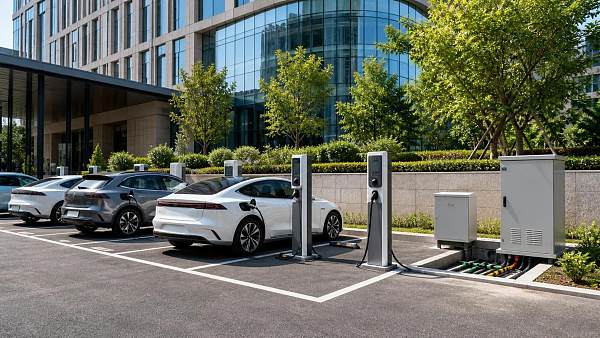
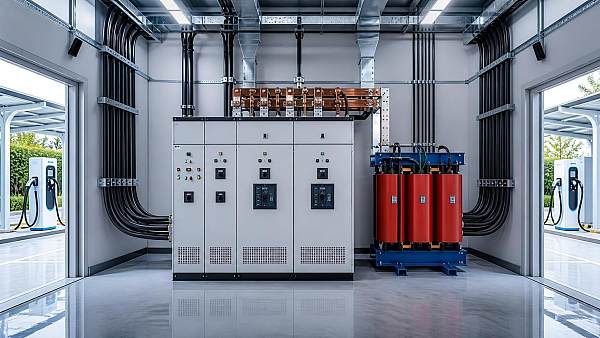
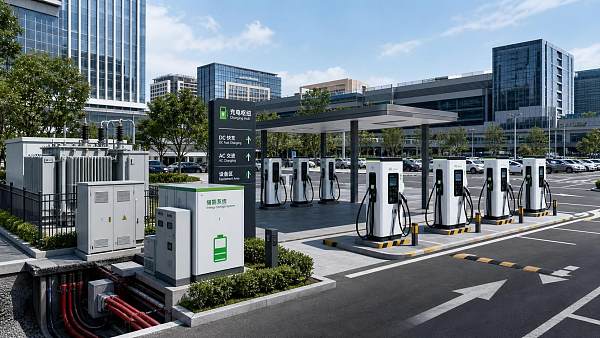
The physical survey should examine underground services, drainage, flood exposure, equipment foundations, cable routes, and space for electrical equipment. Long cable routes and constrained excavation can make a seemingly inexpensive plot costly to develop.
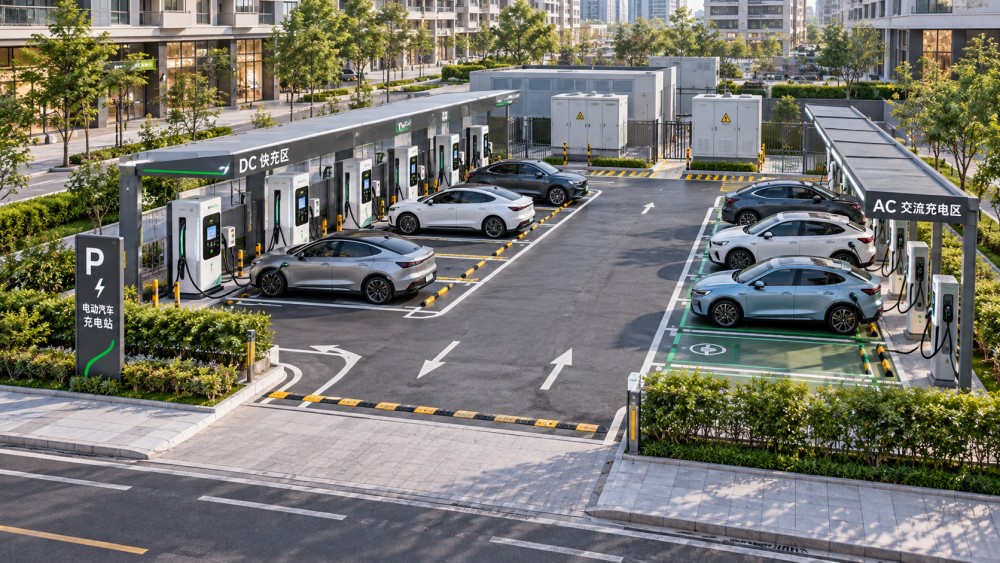
Check the proposed layout against practical operating needs:
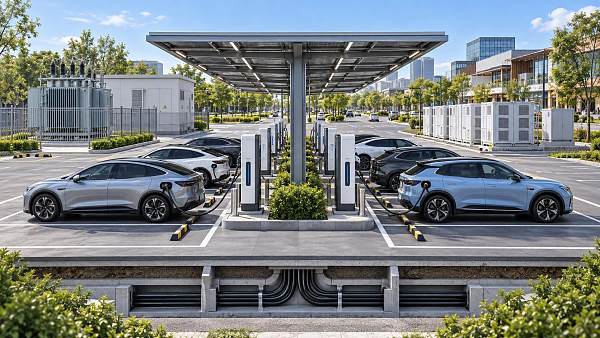
- Vehicle movement: Drivers should enter, align with a charger, and leave without creating conflicts with pedestrians or waiting vehicles.
- Charging access: Bay geometry and cable reach should accommodate the expected vehicle types and charging-port positions.
- Accessible use: Provide appropriate routes, maneuvering space, and access to connectors, controls, and payment interfaces.
- Maintenance access: Technicians need safe working space and a way to service equipment without unnecessarily closing the hub.
- Expansion space: Reserve usable locations for additional bays, cabinets, and electrical infrastructure.
Queue space deserves explicit treatment. If arriving vehicles must wait in an entrance lane or on a public road, adding chargers later may not solve the circulation problem.
Translate charging demand into a power requirement
Keep energy and power separate. Energy, measured in kilowatt-hours, describes how much electricity vehicles receive. Power, measured in kilowatts, describes the rate of delivery. Energy demand helps estimate electricity consumption and revenue; coincident power demand drives connection capacity and much of the electrical design.
A useful starting relationship is:
Average charging power required = energy to be delivered ÷ available charging time.
This establishes a service-level baseline, not a final connection size. Charging demand varies over time, vehicles accept different power levels, and conversion losses increase the electricity required at the supply point. Auxiliary loads, such as lighting, communications, and equipment cooling, also belong in the load assessment.
Build a time-based demand model showing arrivals, departure deadlines, requested energy, and charger availability. Test ordinary operation alongside credible busy periods. Include delayed departures and a charger outage, because both can increase queues without changing the total daily energy requirement.
Installed charger capacity and required grid capacity are different quantities. Adding every charger’s nameplate rating assumes they all operate at maximum output simultaneously. That may overstate the connection requirement where managed charging is acceptable. Applying an optimistic diversity assumption can create the opposite problem: a site that cannot meet its advertised service during busy periods.
Define a controlled import limit, then assess what that limit means for users. For DC equipment, account for conversion efficiency, auxiliary consumption, and the manufacturer’s input requirements. Electrical infrastructure must also be assessed for apparent power, protection, fault levels, voltage drop, and relevant installation conditions.
Where charging shares a connection with a building, use the building’s time-varying demand profile. Spare capacity during quiet hours may disappear when commercial loads and charging demand peak together.
Select the charger mix around dwell time
The best charger mix depends on how long vehicles can remain parked and the energy they need during that period. Higher rated power adds value when vehicles can accept it and drivers need the shorter stop. Otherwise, it can increase equipment and connection costs without a corresponding service benefit.
AC charging is useful when vehicles stay long enough to receive the required energy. Its output is limited by both the charging equipment and the vehicle’s onboard charger. Increasing the AC unit’s rating will not accelerate charging beyond the vehicle’s capability.
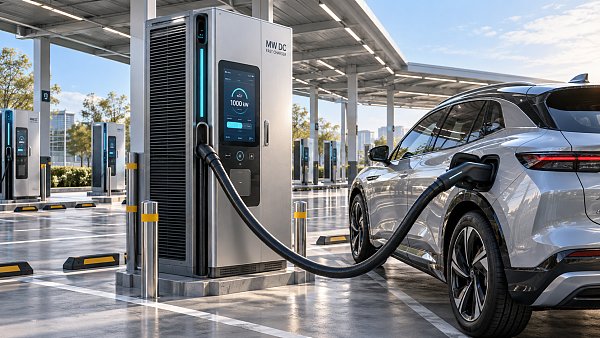
DC fast charging supports shorter visits, but its rated output is not a constant delivery rate. Battery temperature, state of charge, vehicle limits, and power sharing influence the session. Estimate throughput using representative charging behavior rather than dividing battery capacity by the charger’s maximum rating.
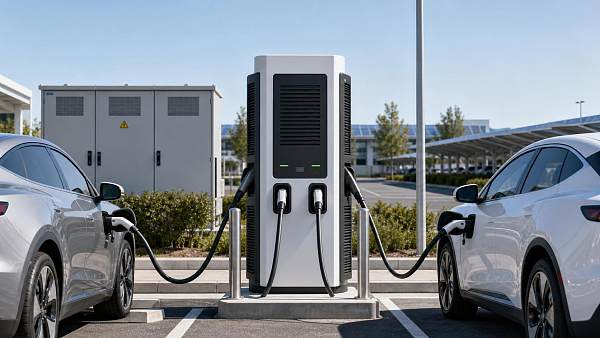
Distinguish charging connectors from independently available power. Multiple dispensers may share a power cabinet. Procurement documents should state how many vehicles can charge simultaneously and how output changes when adjacent connectors are occupied.
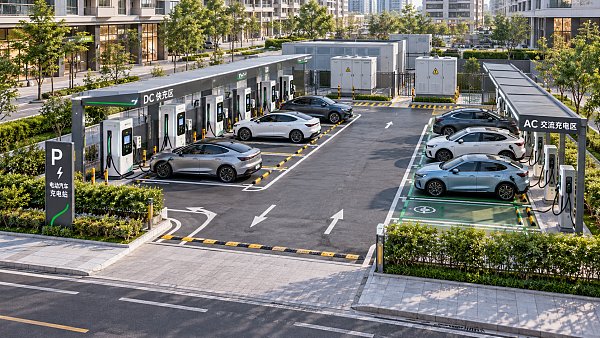
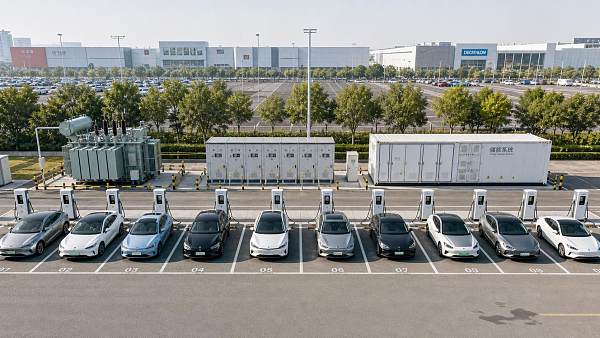
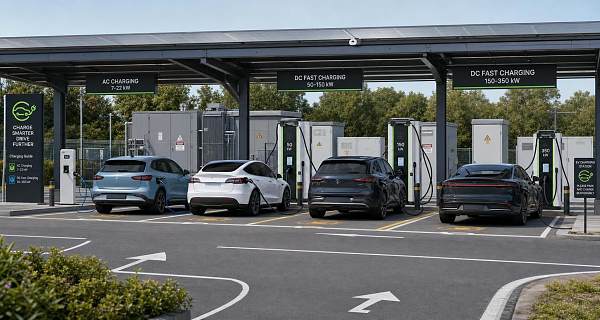
A mixed hub can serve several user groups, provided the layout and parking rules support each service. Long-stay vehicles occupying rapid charging bays can reduce turnover even when the electrical system has ample capacity. Clear bay designation and understandable charging and parking terms help protect the intended service.
Use load management to protect a defined service level
Dynamic load management allocates power within a site limit and can adjust charging as building demand changes. It is especially useful where vehicles have flexible departure times. The design question is how much flexibility the service can tolerate.
For longer stays, the system may distribute energy gradually while meeting departure requirements. For rapid charging, frequent deep reductions in output can extend sessions and create queues. Assess charging duration and waiting time under the proposed control strategy before treating a smaller connection as a cost saving.
Specify priorities explicitly. Possible approaches include equal sharing, minimum allocations for active sessions, or prioritization based on departure requirements. Define behavior during communications failures, including how the site maintains its electrical limit if the central platform becomes unavailable.
Battery storage can supplement a constrained connection when short demand peaks are followed by opportunities to recharge. It is less effective when charging demand remains above available supply for sustained periods. Evaluate usable energy, discharge power, losses, degradation, operating restrictions, and replacement costs against the actual demand profile.
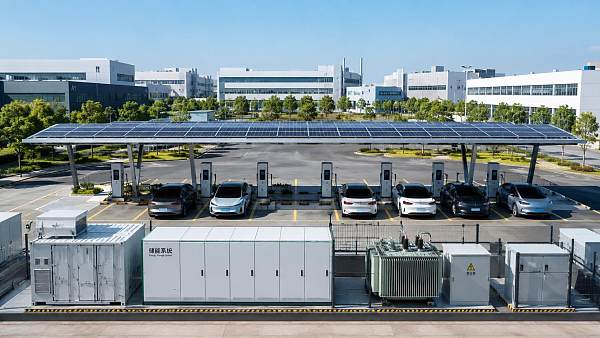
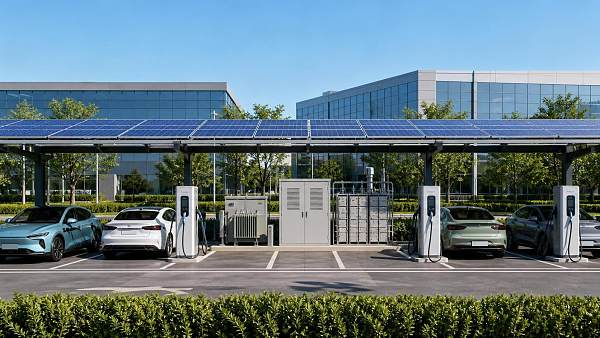
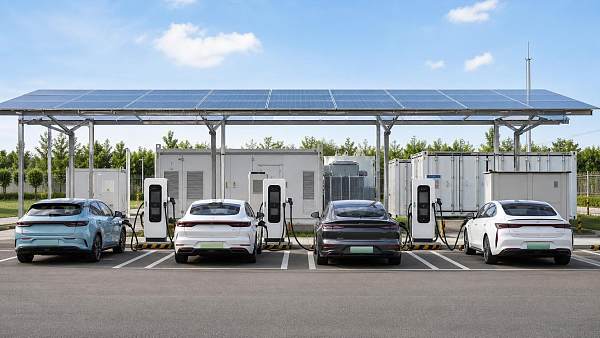
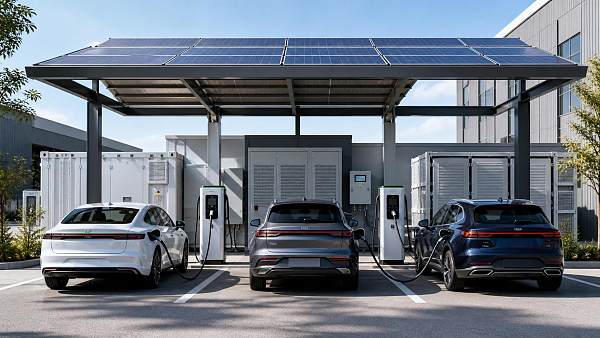
Solar generation can offset some electricity consumption where site conditions permit, but its variable output does not establish firm charging capacity. Any capacity contribution must be supported by a control strategy and a service model that can accommodate variability.
Procure an operable hub and build a realistic expansion path
Compare proposals on delivered service and lifecycle cost. Include civil works, grid connection, electricity tariffs, capacity or demand charges where applicable, software, payment processing, maintenance, and equipment replacement. Low equipment cost can be outweighed by expensive installation or poor availability.
Connector compatibility should reflect the expected vehicle population. Payment methods, pricing information, charging instructions, and support access should be understandable at the charger. Cable weight, display placement, and connector handling affect everyday usability as directly as electrical performance.
For connected equipment, define backend compatibility, data access, software support, cybersecurity responsibilities, and the process for changing service providers. Protocol support alone does not establish that every required function will work across the proposed equipment and software combination.
Specify acceptance checks around complete charging sessions: vehicle connection, authorization, power delivery, payment, session termination, fault reporting, and recovery. Exercise power sharing and import limits with multiple vehicles or suitable test equipment. A charger appearing online is only one part of operational readiness.
Phase expansion around evidence. Sustained peak occupancy, unmet energy requests, queues, and constrained power delivery reveal different problems. More bays help when parking capacity is the constraint; more power helps when existing sessions are repeatedly limited by available supply.
Install difficult-to-retrofit infrastructure early where justified, including ducts, suitable cable routes, foundations, and space for electrical equipment. Check how later construction would affect operating bays and access. Reserved space has limited value if expansion requires closing the entire hub.
Before authorizing construction, align the demand model, utility connection offer, site layout, and operating plan. Together, they should demonstrate that vehicles can reach the chargers, receive the intended energy, and leave within the expected visit. That is the practical basis for selecting a site and charger mix that can support dependable operation.
Questions about market trends? Contact Market Scope Live for deeper business insights.
We respect your privacy. Your information is strictly confidential.
Related News
 EV Charging InfrastructureIndian Minister Proposes Lower EV Charging Rates to Encourage AdoptionIndia EV charging rates could fall in Maharashtra under Nitin Gadkari’s proposal. Explore the potential impact on drivers, fleets and charging operators.MORE+
 EV Charging InfrastructureEV Charging for Industrial Parks: Sizing Capacity and Managing Peak LoadsPlan industrial parks EV charging with confidence. Learn how to size capacity, manage peak loads, reduce demand costs, and keep fleets ready without disrupting production.MORE+
 EV Charging InfrastructureArlington County, Virginia, to Raise Public EV Charging Rates by 72%Arlington County public EV charging rates will rise 72% to $0.30/kWh on November 1, 2026. Explore the potential impact on fleet budgets and how businesses can prepare.MORE+
 EV Charging InfrastructurePlanning Solar EV Charging Hubs: Sizing PV, Battery Storage, and Grid CapacityPlan solar EV charging hubs with confidence. Learn how to size PV, battery storage, and grid capacity to meet peak demand, control costs, and support reliable charging.MORE+
 EV Charging InfrastructureChery Unveils 1.44 MW Charging System, Claims 500 km of Range in Five MinutesChery’s 1.44 MW charging system claims 500 km of range in five minutes. Explore its ultrafast EV charging technology, vehicle compatibility and global rollout plans.MORE+
 EV Charging InfrastructureComparing EV Charging Equipment Manufacturers: Warranty, Lead Times, and SupportCompare EV charging equipment manufacturers on warranty coverage, lead times, and support. Discover how to reduce downtime, uncover hidden costs, and choose the right supplier.MORE+
 EV Charging InfrastructurePlanning Urban EV Charging Hubs: Site Selection, Power Needs, and Charger MixPlan urban EV charging hubs with confidence. Discover how to select sites, size power capacity, and balance AC/DC chargers to control costs and deliver reliable charging.MORE+
 EV Charging InfrastructureHow to Plan Charging Corridors for Fleet Routes, Grid Capacity, and Future DemandCharging corridor infrastructure planning helps fleets align routes, grid capacity, reliable charging, and scalable site design for future demand.MORE+
 EV Charging InfrastructureHow to Size Fast EV Charging Equipment for Fleet Depots Without OverbuildingFast EV charging equipment for fleet depots: learn how to match power, charging windows, grid capacity, and smart controls without costly overbuilding.MORE+
 EV Charging InfrastructureHow to Plan EV Charging Infrastructure in Indonesia for Fleet and Public SitesCharging infrastructure planning in Indonesia for fleet and public sites: optimize energy, grid capacity, smart load management, safety, and scalable EV charging.MORE+
 EV Charging InfrastructureHow to Size DC EV Charging Equipment for Fleet Depots and Peak DemandDC EV charging equipment sizing guide for fleet depots: balance energy demand, peak loads, utility limits, smart charging, and scalable growth.MORE+
 EV Charging InfrastructureAre EV Charger Payment Systems Interoperable Across Regions?Are there interoperability standards for EV charger payment systems across regions? Explore OCPP, OCPI, Plug & Charge, roaming, and payment strategies for seamless EV charging.MORE+
 EV Charging InfrastructureHow to Evaluate Total Cost of Ownership for a Fleet DC Charging DepotHow to evaluate total cost of ownership for a fleet DC charging depot: compare grid costs, tariffs, uptime, smart charging, and scalable infrastructure.MORE+
 EV Charging InfrastructurePublic Charging Infrastructure Planning: Site Criteria, Grid Capacity, and UtilizationPublic charging infrastructure planning made practical: evaluate site access, grid capacity, utilization, and scalable design to build reliable, investable EV charging hubs.MORE+
 EV Charging InfrastructureHow Behind-the-Meter Energy Systems for EV Charging Cut Peak-Demand CostsBehind the meter energy systems for EV charging help cut peak-demand costs, defer grid upgrades, and improve charging reliability with storage and smart controls.MORE+
 EV Charging InfrastructureIs Building a Public EV Charging Network in Rural Areas Financially Viable?Is it financially viable to build public charging networks in rural areas? Explore grid costs, utilization, funding, AC/DC choices, and strategies for profitable rural EV charging.MORE+
 EV Charging InfrastructureHow Public EV Charging Load Management Prevents Peak Demand and Grid Overloadspublic EV charging load management prevents costly peak demand and grid overloads. Explore smarter controls, capacity planning, and scalable charging performance.MORE+
 EV Charging InfrastructureHow to Assess Long-Term EV Charger Reliability Before ProcurementHow to evaluate long-term reliability of EV chargers before procurement? Explore practical checks for uptime, grid compatibility, software stability, service support, and lifecycle costs.MORE+
 EV Charging InfrastructureIs AC Charging Still Worth Investing in for New Public Stations in 2026?Is AC charging still worth investing in for new public stations in 2026? Explore where smart, managed AC charging delivers value, revenue, and scalable EV infrastructure.MORE+
 EV Charging InfrastructureHow to Plan Power Capacity for Highway EV Charging CorridorsHighway charging corridor power capacity planning: learn how to size grid connections, manage peak demand, use storage, and phase EV hubs for reliable, scalable growth.MORE+
 EV Charging InfrastructureWhat Is the Typical BMS Failure Rate in EV Charging Equipment?Battery management system failure rate in charging equipment: learn what BMS faults mean, key risks, and how to protect EV charger uptime.MORE+
 EV Charging InfrastructureHow Should Fleet Depot Charging Stations Be Laid Out?Fleet depot charging station layout design guidelines for safer vehicle flow, smart power use, scalable infrastructure, and reliable fleet readiness. Explore practical planning tips.MORE+
 EV Charging InfrastructureDC Fast Chargers vs Liquid-Cooled Ultra-Fast Chargers in 2026DC fast charger vs liquid-cooled ultra-fast charging stations 2026: compare power, costs, grid demands, uptime, and ideal deployment scenarios for smarter EV infrastructure.MORE+
 EV Charging InfrastructureWhat Does the Global EcoPower Charging Intelligence Platform Do?Global EcoPower EV charging infrastructure intelligence platform delivers actionable insights on grid capacity, storage, technology, risk, and profitable charging project planning.MORE+
 EV Charging InfrastructureHow Global EcoPower Manages Energy Across EV Charging NetworksGlobal EcoPower energy management systems for charging networks optimize EV charging with dynamic load control, storage, solar integration, and reliable data insights.MORE+
 EV Charging InfrastructureWhat Switchgear Specifications Are Needed for a 500 kW Charging Site?What switchgear specifications are required for a 500kW charging installation? Explore load sizing, transformer selection, fault ratings, protection, and expansion planning.MORE+
 EV Charging InfrastructureWhich Communication Protocols Matter When Mixing Charger Brands?What communication protocols matter most when mixing charger brands at one station? Explore OCPP, OCPI, ISO 15118, and energy controls for reliable interoperability.MORE+
 EV Charging InfrastructureWhat Grid Connection Capacity Does a 10-Bay Fast Charging Hub Need?What grid connection capacity is needed for a 10-bay fast charging hub? Explore demand, power sharing, batteries, and scalable planning for reliable EV charging.MORE+
 EV Charging InfrastructureHow to Plan EV Charging Systems for Apartments Without Overloading the Building?EV charging systems for apartments start with capacity, not charger count. Learn how to prevent overloads, use smart load management, and plan scalable charging that fits your building.MORE+
 EV Charging InfrastructureHow City Charging Infrastructure Planning Can Reduce Costs and Avoid Grid BottlenecksCharging infrastructure planning for cities helps cut costs, avoid grid bottlenecks, and speed EV rollout with smarter, scalable deployment.MORE+
 EV Charging InfrastructureEU Mandates EN 61851-23:2026 for EV ChargersEU Mandates EN 61851-23:2026 for EV Chargers: learn how the new EU rule impacts certification, customs clearance, and market access before October 2026.MORE+
 EV Charging InfrastructureITC Ruling Puts Chinese EV Chargers Under 337 PressureITC ruling on Chinese EV chargers puts Section 337 pressure on imports, compliance, and OEM supply chains. Learn how patent risks may impact U.S. customs, distributors, and EV charger sourcing.MORE+
 EV Charging InfrastructureHow EV Charging Technology Affects Charging Speed, Compatibility, and Site PlanningEV charging technology shapes real charging speed, vehicle compatibility, and site planning. Learn how to avoid costly design mistakes and build charging projects that perform.MORE+
 EV Charging InfrastructureUS Requires UL 1741 SA-2025 EVSE ModulesUS Requires UL 1741 SA-2025 EVSE Modules for imported DC fast chargers. Learn how V2G, FCC+UL testing, and firmware compliance will reshape US market access.MORE+
 EV Charging InfrastructureUSTR Opens Section 301 Review on China EV ChargersUSTR Opens Section 301 Review on China EV Chargers: learn how the 25% tariff review may affect import costs, customs compliance, and procurement timing across EV charging and BESS supply chains.MORE+
 EV Charging InfrastructureHow to Plan Fleet Charging Infrastructure for Logistics Depots and Delivery HubsFleet charging infrastructure for logistics starts with duty cycles, dwell time, and grid limits. Learn how to design depot and hub charging that cuts bottlenecks and supports scalable fleet electrification.MORE+
 EV Charging InfrastructureWhat Is Load Management in EV Charging and How Does It Reduce Peak Power Costs?Load management in EV charging helps control peak demand, lower grid upgrade pressure, and cut costly power spikes. Learn how smart power allocation improves site economics.MORE+
 EV Charging InfrastructureHow to Evaluate an EV Charging Software Platform for Multi-Site Charging OperationsEV charging software platform evaluation made practical: learn how to assess interoperability, load management, billing, security, and scalability for multi-site charging operations.MORE+
 EV Charging InfrastructureUSTR Opens 301 Review on China EV Charging GearUSTR opens a Section 301 review on China EV charging gear, putting tariffs, import costs, pricing, and inventory plans at risk. See what US importers and distributors should watch now.MORE+
 EV Charging InfrastructureEU Sets 17.1% Duty on Chinese EV ChargersEU Sets 17.1% Duty on Chinese EV Chargers: see how the new EU tariff affects EV charging equipment exports, customs costs, HS codes, and contract risks for suppliers.MORE+