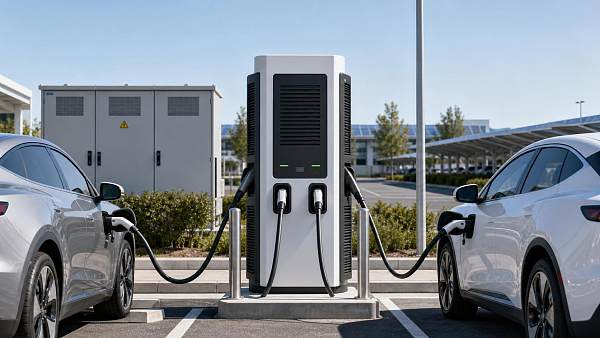
IEC 62196-3:2026 Takes Effect for Liquid-Cooled DC Charging
On July 8, 2026, the formal effect of IEC 62196-3:2026 turned liquid-cooled high-power DC charging from a technical reference point into an immediate market access requirement for new type-approval applications. The change matters not only for vehicle makers and charging equipment suppliers, but also for exporters, certification teams, procurement functions, and project delivery managers, because compliance now sits directly at the point where products enter regulated markets and public or commercial deployment programs.
What Has Entered into Force
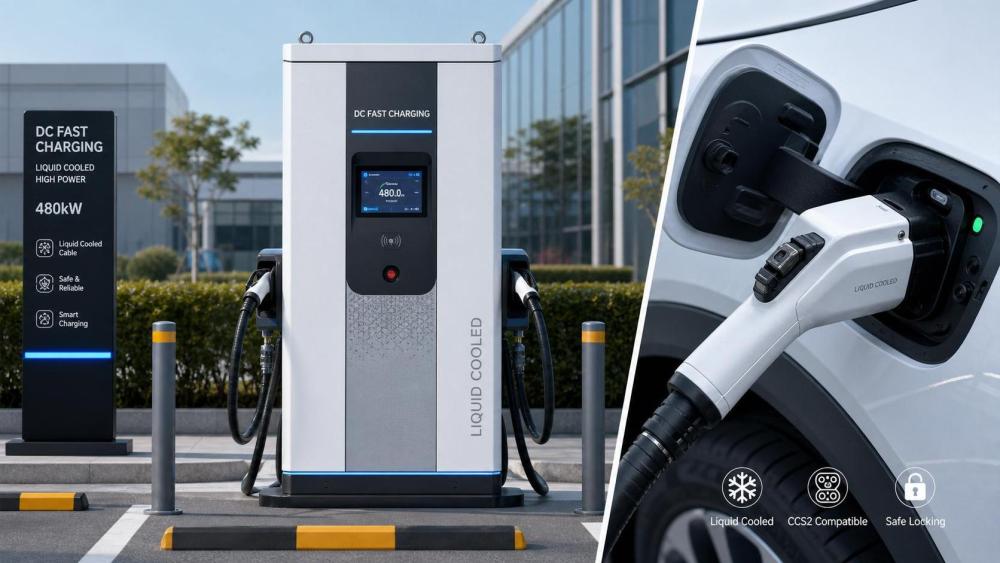
The International Electrotechnical Commission (IEC) formally issued IEC 62196-3:2026 on July 7, 2026. The standard addresses mechanical compatibility, thermal management protocols, communication handshake logic, and safety interlock mechanisms for liquid-cooled high-power DC charging interfaces.
The standard took effect immediately. It applies to all electric vehicles and public or commercial liquid-cooled fast-charging equipment submitted for type approval on or after July 8, 2026.
The scope also covers export products from China when they fall within those application conditions. The European Union, South Korea, and Australia have simultaneously adopted the standard as a mandatory basis for market entry.
Where the Immediate Business Pressure Appears
Vehicle and charging equipment certification now face a direct compliance gate
From an industry perspective, the clearest impact falls on manufacturers seeking new type approval after the effective date. For these applicants, the issue is no longer whether the standard is technically relevant, but whether the product file, interface design, and supporting evidence can meet a mandatory entry condition. The affected business steps are likely to include product definition, certification scheduling, technical file preparation, and application timing.
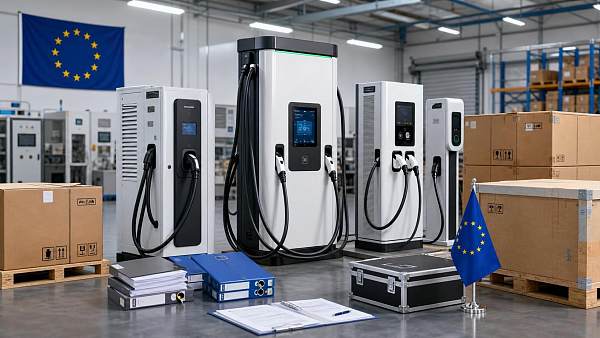
What deserves closer attention is the alignment between product specifications and the newly effective requirements covering interface compatibility, cooling-related control logic, communication handshake behavior, and safety interlock design. For certification-related businesses and testing service providers, document readiness and test evidence will likely become the first practical checkpoint.
Export and market-entry planning become more sensitive to timing
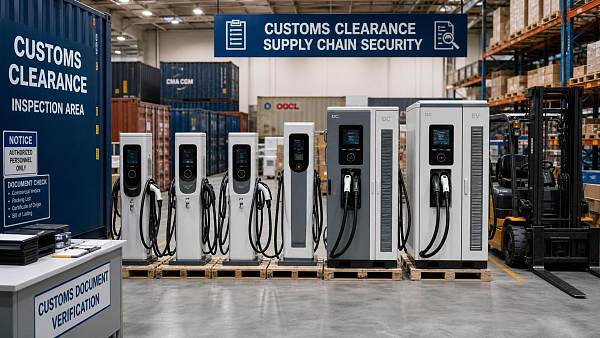
For export-oriented suppliers, especially those targeting the European Union, South Korea, or Australia, the regulatory change can affect shipment planning and market-entry sequencing. The key reason is that those jurisdictions have already adopted IEC 62196-3:2026 as a mandatory access basis, which means compliance review may move upstream into contract execution, customs preparation, certification submission, and buyer acceptance.
Analysis shows that exporters should pay particular attention to whether product documentation, certification declarations, and technical descriptions remain consistent across sales, approval, and delivery stages. Where a vehicle or charger is intended for a regulated public or commercial deployment scenario, mismatches between technical documents and certification scope may become a practical trade and delivery risk.
Procurement and project delivery teams may need to revisit technical alignment
For procurement departments, project developers, and supply chain service providers, the change may affect how technical requirements are written into sourcing documents and delivery milestones. This is especially relevant where buyers procure vehicles together with public or commercial liquid-cooled fast-charging systems, because compliance may now need to be checked not only at final acceptance but earlier in supplier qualification and bid review.
Observably, the business pressure here is less about broad market sentiment and more about whether procurement specifications, supplier submissions, and delivery packages reflect the new standard in a consistent way. That may extend to technical appendices, test reports, interface descriptions, and other compliance-facing materials used in tendering or project handover.
After-sales and traceability functions should watch configuration consistency
For after-sales service providers and quality traceability teams, the standard's focus on interface behavior, thermal management, and safety interlocks suggests that configuration control may become more important where newly certified products are introduced. The reason is practical: once the applicable compliance baseline changes, product variants, spare parts, and service records may need to be tracked with closer attention to certification-relevant interface configurations.
It is more appropriate to understand this not as a confirmed shift in service burdens, but as a signal that downstream support functions should monitor how compliance-linked technical changes are carried through delivery and maintenance records.
What Companies Should Check First
Review the approval timeline against the effective date
Analysis shows that one of the first questions is procedural: whether a vehicle or charging product will be submitted for type approval on or after July 8, 2026. That date now determines whether IEC 62196-3:2026 is part of the immediate compliance baseline for the application.
Recheck technical files tied to interface and control logic
What deserves closer attention is whether design descriptions, test materials, and technical dossiers clearly address the standard's stated areas: mechanical compatibility, thermal management protocols, communication handshake logic, and safety interlock mechanisms. Where companies rely on external laboratories or certification partners, document consistency may matter as much as the underlying hardware configuration.
Track whether bidding and customer documents are updated
For teams handling tenders, framework supply agreements, or public charging projects, a practical point is whether technical bid documents and customer-facing specifications have been revised to reflect the new mandatory basis in the affected markets. The input does not provide execution details beyond the standard's effect and adoption status, so this remains an area to monitor rather than a confirmed market outcome.
Watch export documentation and supplier qualification records
For exporters and supply chain managers, it is advisable to monitor whether qualification files, declarations, and delivery documents remain aligned with the applicable certification path. This is particularly relevant for products intended for the European Union, South Korea, and Australia, where the standard has already been adopted as a mandatory entry basis.
Why This Looks Like an Execution Signal Rather Than a Distant Policy Trend
Observably, this development is better understood as an already effective rule change, not a preliminary consultation signal. The decisive point is the combination of formal issuance, immediate effect, and explicit application to new type-approval filings after July 8, 2026. That places the issue in the category of execution readiness.
At the same time, Analysis shows that the market still needs to watch how certification interpretation, procurement language, and project documentation evolve in practice. The current facts establish the compliance trigger, but they do not by themselves resolve every implementation question that companies may face in different approval or delivery contexts.
How the Market Should Read This Stage
The current event is most appropriately understood as a formal compliance threshold now attached to new certification activity for liquid-cooled DC fast charging interfaces in affected vehicles and charging equipment. It carries immediate relevance for certification, export planning, procurement alignment, and delivery preparation, especially where access to the European Union, South Korea, and Australia is involved.
From an industry perspective, the prudent reading is neither to overstate the outcome nor to treat the standard as a distant technical update. It is an effective rule change with direct entry implications, while the detailed market response still requires continued observation through certification practice, tender documents, and implementation feedback.
Basis of This Article and What Still Needs Verification
This article is based on the user-provided news title, event date, and event summary. For developments of this kind, relevant source categories commonly include official announcements, regulatory publications, trade or customs authority information, industry association releases, standards organization documents, and reporting by authoritative media.
No specific official source link was provided in the input, so the exact official reference path still needs ongoing verification. Follow-up attention should remain on certification implementation approaches, possible changes in tender documentation, evolving compliance language in market-entry processes, industry feedback, and how companies execute against the new requirement in practice.
Questions about market trends? Contact Market Scope Live for deeper business insights.
We respect your privacy. Your information is strictly confidential.
Related News
 EV Charging InfrastructureIndian Minister Proposes Lower EV Charging Rates to Encourage AdoptionIndia EV charging rates could fall in Maharashtra under Nitin Gadkari’s proposal. Explore the potential impact on drivers, fleets and charging operators.MORE+
 EV Charging InfrastructureEV Charging for Industrial Parks: Sizing Capacity and Managing Peak LoadsPlan industrial parks EV charging with confidence. Learn how to size capacity, manage peak loads, reduce demand costs, and keep fleets ready without disrupting production.MORE+
 EV Charging InfrastructureArlington County, Virginia, to Raise Public EV Charging Rates by 72%Arlington County public EV charging rates will rise 72% to $0.30/kWh on November 1, 2026. Explore the potential impact on fleet budgets and how businesses can prepare.MORE+
 EV Charging InfrastructurePlanning Solar EV Charging Hubs: Sizing PV, Battery Storage, and Grid CapacityPlan solar EV charging hubs with confidence. Learn how to size PV, battery storage, and grid capacity to meet peak demand, control costs, and support reliable charging.MORE+
 EV Charging InfrastructureChery Unveils 1.44 MW Charging System, Claims 500 km of Range in Five MinutesChery’s 1.44 MW charging system claims 500 km of range in five minutes. Explore its ultrafast EV charging technology, vehicle compatibility and global rollout plans.MORE+
 EV Charging InfrastructureComparing EV Charging Equipment Manufacturers: Warranty, Lead Times, and SupportCompare EV charging equipment manufacturers on warranty coverage, lead times, and support. Discover how to reduce downtime, uncover hidden costs, and choose the right supplier.MORE+
 EV Charging InfrastructurePlanning Urban EV Charging Hubs: Site Selection, Power Needs, and Charger MixPlan urban EV charging hubs with confidence. Discover how to select sites, size power capacity, and balance AC/DC chargers to control costs and deliver reliable charging.MORE+
 EV Charging InfrastructureHow to Plan Charging Corridors for Fleet Routes, Grid Capacity, and Future DemandCharging corridor infrastructure planning helps fleets align routes, grid capacity, reliable charging, and scalable site design for future demand.MORE+
 EV Charging InfrastructureHow to Size Fast EV Charging Equipment for Fleet Depots Without OverbuildingFast EV charging equipment for fleet depots: learn how to match power, charging windows, grid capacity, and smart controls without costly overbuilding.MORE+
 EV Charging InfrastructureHow to Plan EV Charging Infrastructure in Indonesia for Fleet and Public SitesCharging infrastructure planning in Indonesia for fleet and public sites: optimize energy, grid capacity, smart load management, safety, and scalable EV charging.MORE+
 EV Charging InfrastructureHow to Size DC EV Charging Equipment for Fleet Depots and Peak DemandDC EV charging equipment sizing guide for fleet depots: balance energy demand, peak loads, utility limits, smart charging, and scalable growth.MORE+
 EV Charging InfrastructureAre EV Charger Payment Systems Interoperable Across Regions?Are there interoperability standards for EV charger payment systems across regions? Explore OCPP, OCPI, Plug & Charge, roaming, and payment strategies for seamless EV charging.MORE+
 EV Charging InfrastructureHow to Evaluate Total Cost of Ownership for a Fleet DC Charging DepotHow to evaluate total cost of ownership for a fleet DC charging depot: compare grid costs, tariffs, uptime, smart charging, and scalable infrastructure.MORE+
 EV Charging InfrastructurePublic Charging Infrastructure Planning: Site Criteria, Grid Capacity, and UtilizationPublic charging infrastructure planning made practical: evaluate site access, grid capacity, utilization, and scalable design to build reliable, investable EV charging hubs.MORE+
 EV Charging InfrastructureHow Behind-the-Meter Energy Systems for EV Charging Cut Peak-Demand CostsBehind the meter energy systems for EV charging help cut peak-demand costs, defer grid upgrades, and improve charging reliability with storage and smart controls.MORE+
 EV Charging InfrastructureIs Building a Public EV Charging Network in Rural Areas Financially Viable?Is it financially viable to build public charging networks in rural areas? Explore grid costs, utilization, funding, AC/DC choices, and strategies for profitable rural EV charging.MORE+
 EV Charging InfrastructureHow Public EV Charging Load Management Prevents Peak Demand and Grid Overloadspublic EV charging load management prevents costly peak demand and grid overloads. Explore smarter controls, capacity planning, and scalable charging performance.MORE+
 EV Charging InfrastructureHow to Assess Long-Term EV Charger Reliability Before ProcurementHow to evaluate long-term reliability of EV chargers before procurement? Explore practical checks for uptime, grid compatibility, software stability, service support, and lifecycle costs.MORE+
 EV Charging InfrastructureIs AC Charging Still Worth Investing in for New Public Stations in 2026?Is AC charging still worth investing in for new public stations in 2026? Explore where smart, managed AC charging delivers value, revenue, and scalable EV infrastructure.MORE+
 EV Charging InfrastructureHow to Plan Power Capacity for Highway EV Charging CorridorsHighway charging corridor power capacity planning: learn how to size grid connections, manage peak demand, use storage, and phase EV hubs for reliable, scalable growth.MORE+
 EV Charging InfrastructureWhat Is the Typical BMS Failure Rate in EV Charging Equipment?Battery management system failure rate in charging equipment: learn what BMS faults mean, key risks, and how to protect EV charger uptime.MORE+
 EV Charging InfrastructureHow Should Fleet Depot Charging Stations Be Laid Out?Fleet depot charging station layout design guidelines for safer vehicle flow, smart power use, scalable infrastructure, and reliable fleet readiness. Explore practical planning tips.MORE+
 EV Charging InfrastructureDC Fast Chargers vs Liquid-Cooled Ultra-Fast Chargers in 2026DC fast charger vs liquid-cooled ultra-fast charging stations 2026: compare power, costs, grid demands, uptime, and ideal deployment scenarios for smarter EV infrastructure.MORE+
 EV Charging InfrastructureWhat Does the Global EcoPower Charging Intelligence Platform Do?Global EcoPower EV charging infrastructure intelligence platform delivers actionable insights on grid capacity, storage, technology, risk, and profitable charging project planning.MORE+
 EV Charging InfrastructureHow Global EcoPower Manages Energy Across EV Charging NetworksGlobal EcoPower energy management systems for charging networks optimize EV charging with dynamic load control, storage, solar integration, and reliable data insights.MORE+
 EV Charging InfrastructureWhat Switchgear Specifications Are Needed for a 500 kW Charging Site?What switchgear specifications are required for a 500kW charging installation? Explore load sizing, transformer selection, fault ratings, protection, and expansion planning.MORE+
 EV Charging InfrastructureWhich Communication Protocols Matter When Mixing Charger Brands?What communication protocols matter most when mixing charger brands at one station? Explore OCPP, OCPI, ISO 15118, and energy controls for reliable interoperability.MORE+
 EV Charging InfrastructureWhat Grid Connection Capacity Does a 10-Bay Fast Charging Hub Need?What grid connection capacity is needed for a 10-bay fast charging hub? Explore demand, power sharing, batteries, and scalable planning for reliable EV charging.MORE+
 EV Charging InfrastructureHow to Plan EV Charging Systems for Apartments Without Overloading the Building?EV charging systems for apartments start with capacity, not charger count. Learn how to prevent overloads, use smart load management, and plan scalable charging that fits your building.MORE+
 EV Charging InfrastructureHow City Charging Infrastructure Planning Can Reduce Costs and Avoid Grid BottlenecksCharging infrastructure planning for cities helps cut costs, avoid grid bottlenecks, and speed EV rollout with smarter, scalable deployment.MORE+
 EV Charging InfrastructureEU Mandates EN 61851-23:2026 for EV ChargersEU Mandates EN 61851-23:2026 for EV Chargers: learn how the new EU rule impacts certification, customs clearance, and market access before October 2026.MORE+
 EV Charging InfrastructureITC Ruling Puts Chinese EV Chargers Under 337 PressureITC ruling on Chinese EV chargers puts Section 337 pressure on imports, compliance, and OEM supply chains. Learn how patent risks may impact U.S. customs, distributors, and EV charger sourcing.MORE+
 EV Charging InfrastructureHow EV Charging Technology Affects Charging Speed, Compatibility, and Site PlanningEV charging technology shapes real charging speed, vehicle compatibility, and site planning. Learn how to avoid costly design mistakes and build charging projects that perform.MORE+
 EV Charging InfrastructureUS Requires UL 1741 SA-2025 EVSE ModulesUS Requires UL 1741 SA-2025 EVSE Modules for imported DC fast chargers. Learn how V2G, FCC+UL testing, and firmware compliance will reshape US market access.MORE+
 EV Charging InfrastructureUSTR Opens Section 301 Review on China EV ChargersUSTR Opens Section 301 Review on China EV Chargers: learn how the 25% tariff review may affect import costs, customs compliance, and procurement timing across EV charging and BESS supply chains.MORE+
 EV Charging InfrastructureHow to Plan Fleet Charging Infrastructure for Logistics Depots and Delivery HubsFleet charging infrastructure for logistics starts with duty cycles, dwell time, and grid limits. Learn how to design depot and hub charging that cuts bottlenecks and supports scalable fleet electrification.MORE+
 EV Charging InfrastructureWhat Is Load Management in EV Charging and How Does It Reduce Peak Power Costs?Load management in EV charging helps control peak demand, lower grid upgrade pressure, and cut costly power spikes. Learn how smart power allocation improves site economics.MORE+
 EV Charging InfrastructureHow to Evaluate an EV Charging Software Platform for Multi-Site Charging OperationsEV charging software platform evaluation made practical: learn how to assess interoperability, load management, billing, security, and scalability for multi-site charging operations.MORE+
 EV Charging InfrastructureUSTR Opens 301 Review on China EV Charging GearUSTR opens a Section 301 review on China EV charging gear, putting tariffs, import costs, pricing, and inventory plans at risk. See what US importers and distributors should watch now.MORE+
 EV Charging InfrastructureEU Sets 17.1% Duty on Chinese EV ChargersEU Sets 17.1% Duty on Chinese EV Chargers: see how the new EU tariff affects EV charging equipment exports, customs costs, HS codes, and contract risks for suppliers.MORE+