How to Size Fast EV Charging Equipment for Fleet Depots Without Overbuilding
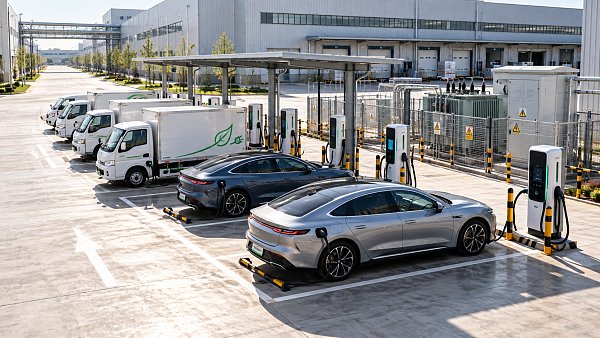
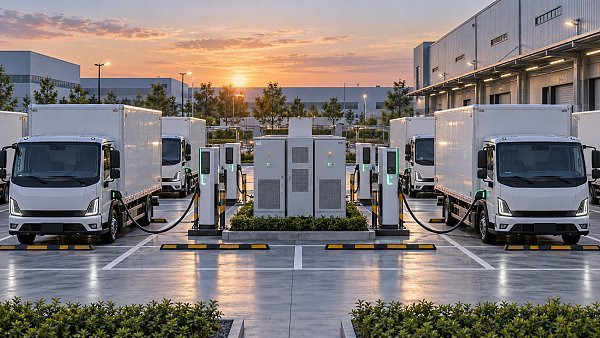
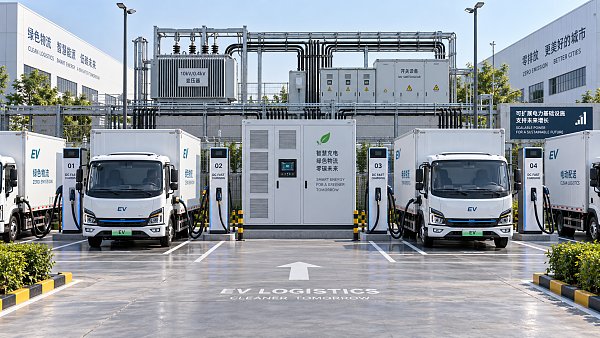
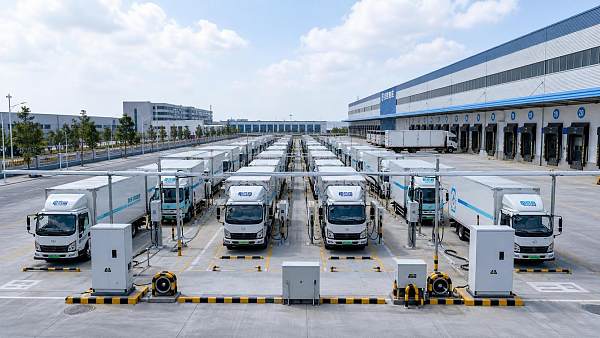
A fleet depot does not need the highest possible charging capacity. It needs enough dependable energy, delivered at the right times, to release vehicles on schedule. That distinction sounds obvious, yet it is where many depot charging projects go wrong. Teams often begin with charger nameplate ratings, multiply them by the number of vehicles, and discover later that the utility connection, transformer, switchgear, civil works, and demand charges have become more expensive than the operation actually requires.
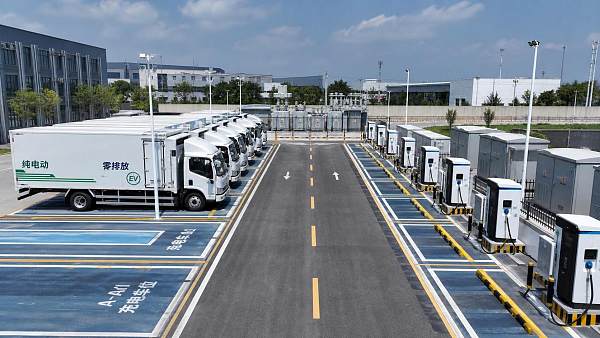
Sizing fast EV charging equipment is therefore not a simple equipment-selection exercise. It is an operating-model decision involving vehicle duty cycles, battery behavior, driver routines, grid constraints, site layout, and the level of redundancy the fleet can realistically afford. A depot for urban delivery vans should not be designed like a coach depot, and a municipal refuse fleet has a very different charging profile from regional electric trucks returning at uneven times.
The most practical objective is not to maximize installed kilowatts. It is to build a charging system that protects fleet availability while keeping the grid connection and capital plan proportionate to actual demand.
Start With Energy per Shift, Not Charger Power
The first calculation should answer a basic question: how much energy must return to each vehicle before its next duty cycle? This requires more than a vehicle battery capacity figure. A 300 kWh battery does not automatically need 300 kWh every night. The relevant value is the energy consumed during the route, adjusted for charging losses, seasonal variation, auxiliary loads, and the usable operating window set by the fleet.
A delivery vehicle that returns with a predictable state of charge and has eight to ten hours parked can often be served by managed overnight charging. Installing a high-power DC charger at every bay in that situation may look operationally robust on paper, but it can be a costly substitute for schedule analysis. Fast charging becomes more valuable where vehicles have short turnaround periods, split shifts, unpredictable dispatches, or heavy daily mileage that cannot be replenished during an overnight dwell.
Project teams should build the demand model from actual or expected route data: distance, payload, terrain, traffic conditions, climate control use, idling, dwell time, and return-to-depot patterns. If the fleet is not yet operating electrically, use manufacturer consumption estimates cautiously and test them against the intended operating conditions. Winter heating, summer cooling, and high payload utilization can materially change the energy requirement. A charging design that works only under mild-weather assumptions is not a resilient design.
The Critical Number Is the Charging Window
Once the required energy is understood, the next question is how long each vehicle is genuinely available to charge. “Parked at the depot” and “available to charge” are not always the same thing. Vehicles may need washing, loading, maintenance inspections, driver handover, refrigeration support, or movement around the yard. In some operations, a vehicle technically remains on site for six hours but can only stay connected for three.
This is where depot plans benefit from a time-based model rather than an average daily energy estimate. Map arrivals and departures in intervals that reflect the operation: perhaps every 15 or 30 minutes for a busy logistics site. Then identify how many vehicles need energy simultaneously and how much flexibility exists if one returns late.
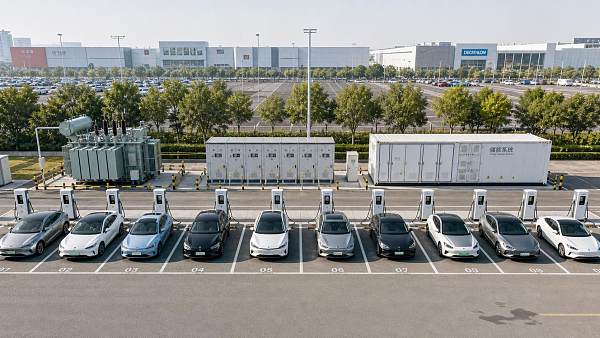
Consider a depot where most vehicles return gradually from late afternoon onward and depart in the morning. The site may have a long aggregate charging window even though individual vehicles do not. Smart scheduling can sequence charging across the night and reduce the required peak power. By contrast, a depot where all vehicles return within one hour and must leave again after a short break has a genuine coincident-power problem. That operation may justify more DC capacity, even if its total daily energy consumption is similar.
Separate Connector Count From Installed Power
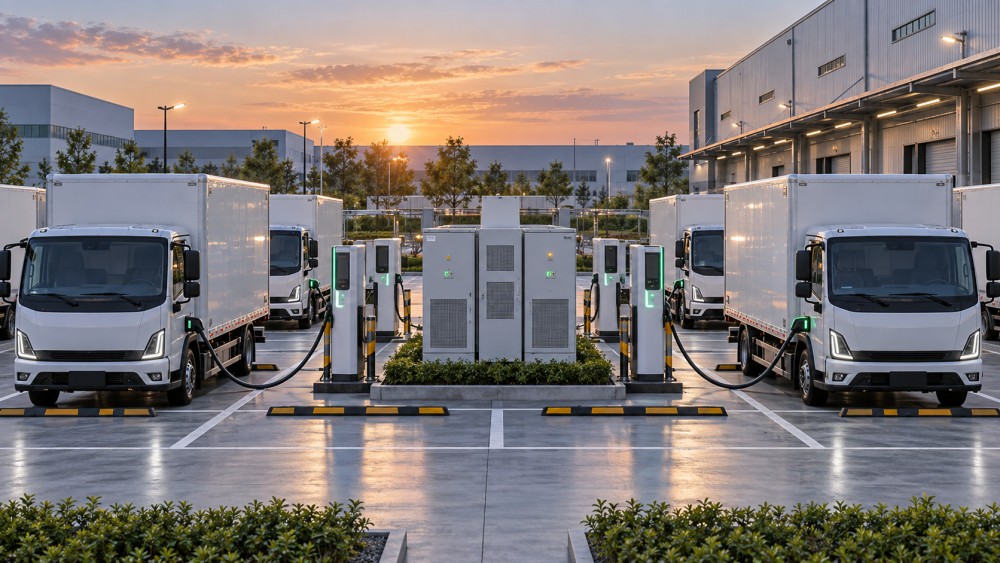
One of the most useful design choices is to avoid treating each parking position as a dedicated high-power asset. A depot may need many connection points without needing the same number of independent power modules. This is especially relevant for fleets with long dwell times and predictable dispatch windows.
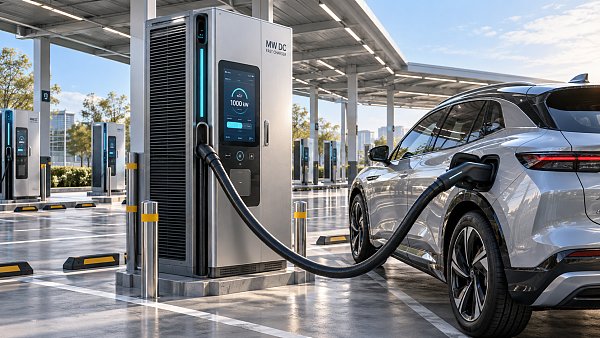
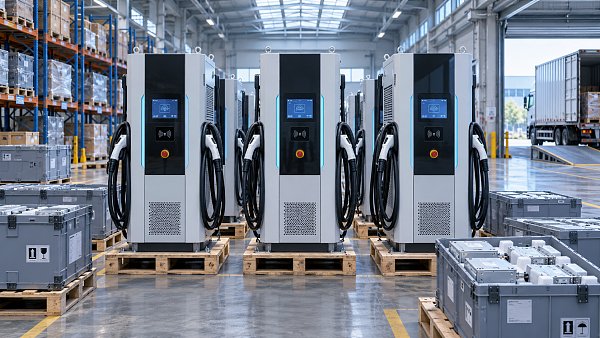
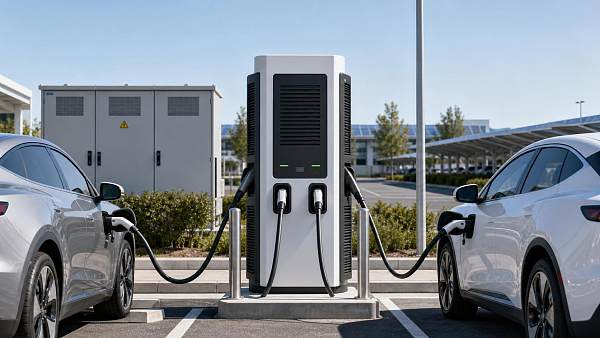
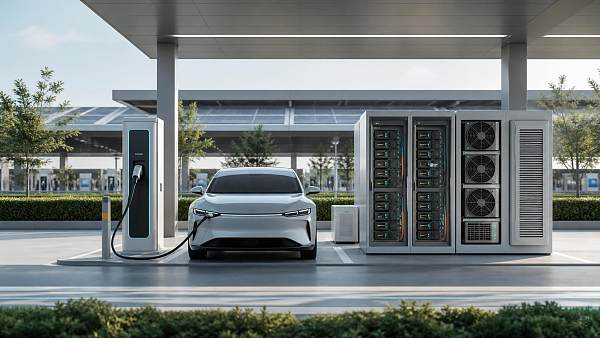
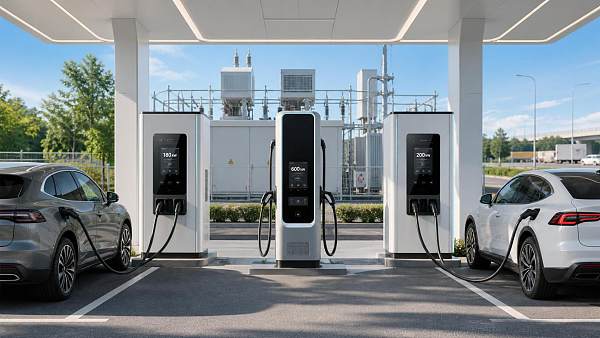
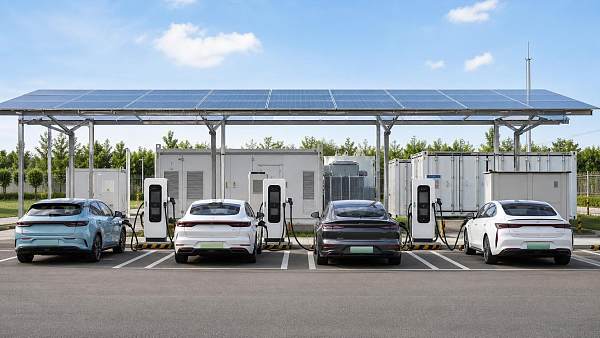
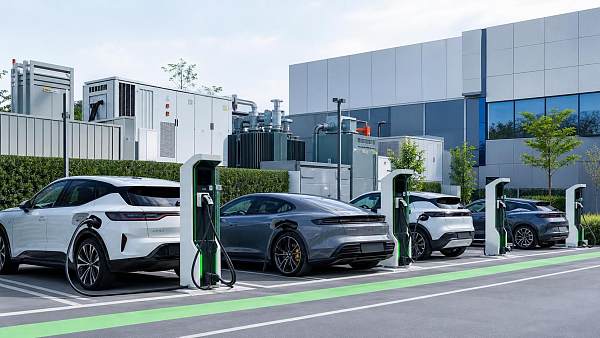
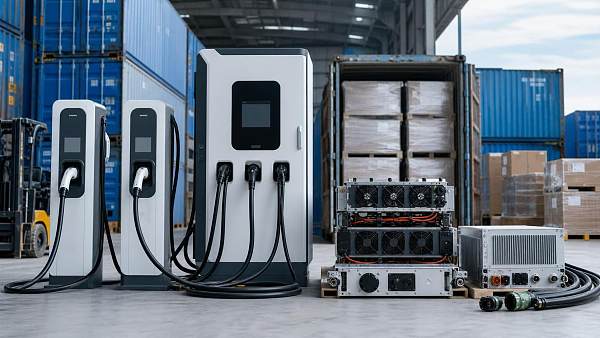
Modern fast EV charging equipment can be designed around shared power architecture. A charging cabinet may distribute available output across multiple dispensers, subject to the charger design and vehicle compatibility. The practical benefit is not merely fewer cabinets. It is the ability to align delivered power with the vehicles that need it most at a particular time. A vehicle nearing departure can receive priority, while another that will remain parked until morning can charge at a lower rate.
That said, shared power should not be treated as a universal answer. If the depot schedule requires several vehicles to receive high power simultaneously, a heavily shared system can create hidden queues. The charger supplier should show how power allocation behaves when multiple connectors are active, not just state the cabinet’s maximum output. Ask whether the system divides power in fixed blocks, dynamically reallocates it, or requires matched vehicle charging characteristics to achieve the advertised flexibility.
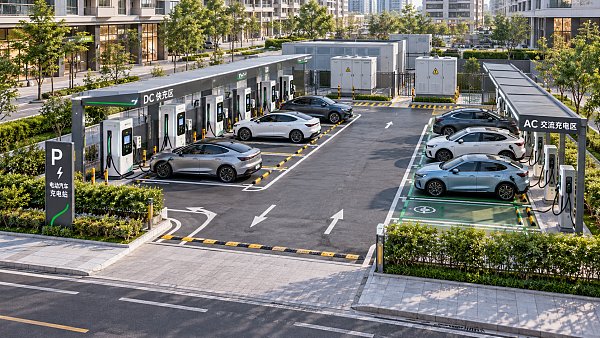
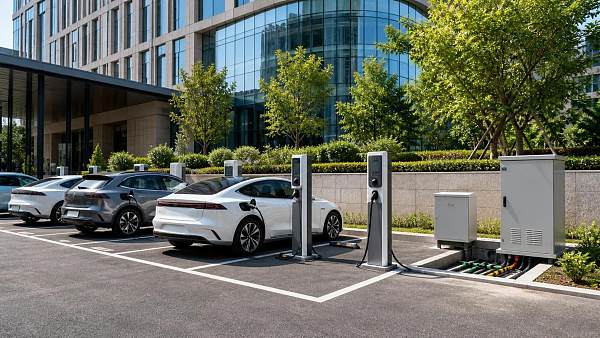
There is also a practical yard issue: drivers need a simple and repeatable connection process. A technically elegant centralized system can cause operational friction if cable lengths, dispenser locations, bay markings, or vehicle parking patterns are poorly planned. Charger sizing and depot circulation design should be reviewed together.
Calculate Peak Demand Before Ordering Chargers
A charger’s nameplate output is not the same as a depot’s expected maximum import, but it is equally unsafe to assume that all chargers will never operate together. The electrical design needs a transparent load model that considers coincident charging, auxiliary loads, site demand, power factor requirements, transformer capacity, and the utility’s connection conditions.
The key output is a managed site-power limit: the maximum power the charging management system is allowed to draw while preserving operational priorities. That limit should be tested against realistic high-stress conditions, including delayed returns, a vehicle requiring an unexpected recharge, cold-weather energy use, and a charger or connector being unavailable. If the design only works when every vehicle arrives exactly on schedule, it has no operating margin.
Demand management should be specified as a functional requirement, not added as a vague software option. The system may need to prioritize vehicles by departure time, minimum required state of charge, route criticality, battery condition, tariff period, and available site capacity. It should also provide clear manual override procedures. Dispatch managers need to understand what happens when an urgent vehicle is plugged in at 4 a.m.; they should not have to wait for an engineer to interpret a dashboard.
Do Not Ignore the Grid Connection Timeline
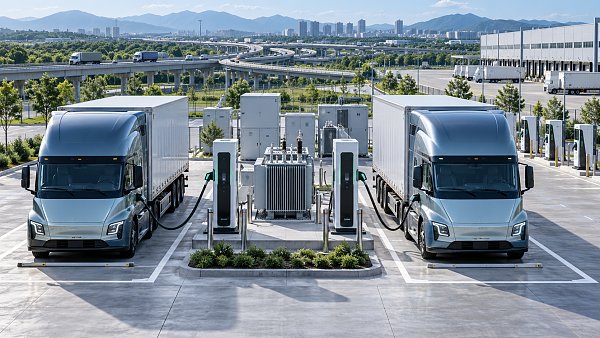
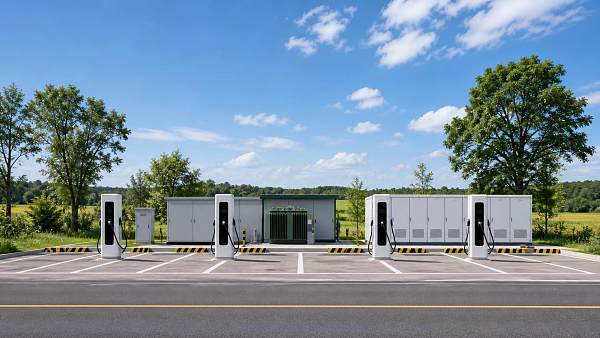
For many depot projects, the longest lead item is not the charger. It is the grid upgrade. New transformers, feeder reinforcement, metering arrangements, protection studies, and utility approvals can shape the project schedule far more than the delivery time of charging hardware. Early engagement with the distribution network operator or local utility is essential, particularly where the depot is near existing industrial demand or a constrained urban network.
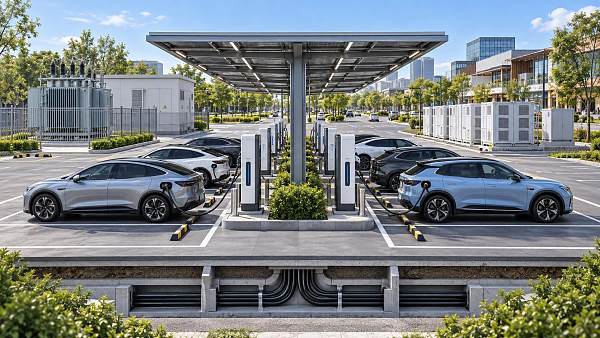
A staged deployment can be sensible when the full fleet transition is planned over several years. But staging only works if the first phase protects the eventual build-out. Reserve physical space for switchgear, transformer expansion, cable routes, charger foundations, and vehicle circulation. Install conduits and civil infrastructure when the site is open, where economically justified. Retrofitting buried routes after the depot is operational can be far more disruptive than the original installation.
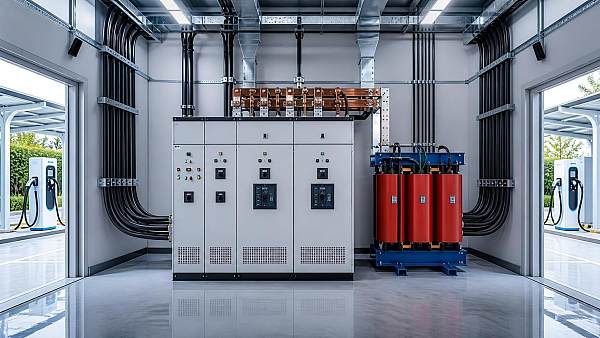
The electrical room should not be sized only for today’s chargers either. Future charging cabinets, energy storage interfaces, communications equipment, and ventilation or thermal requirements may affect layout. However, reserving space is different from purchasing capacity before there is a business case for it. Good planning keeps options open; overbuilding locks capital into equipment that may sit underutilized.
When Battery Storage or On-Site Generation Makes Sense
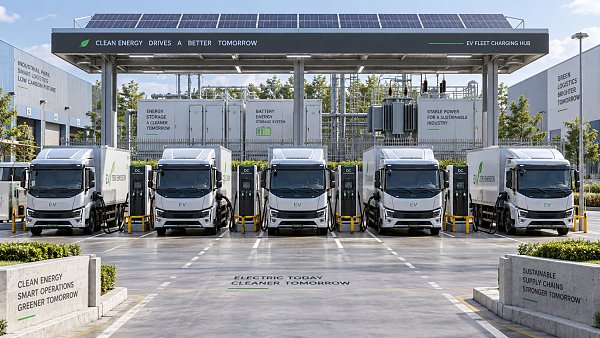
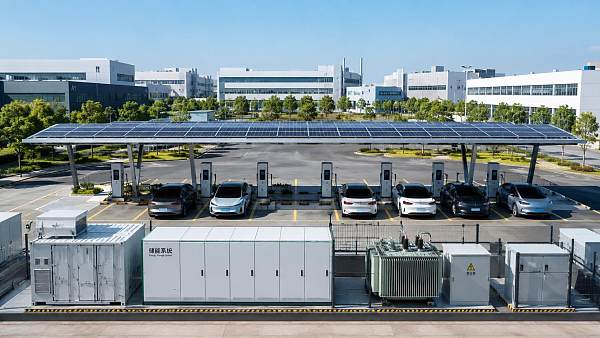
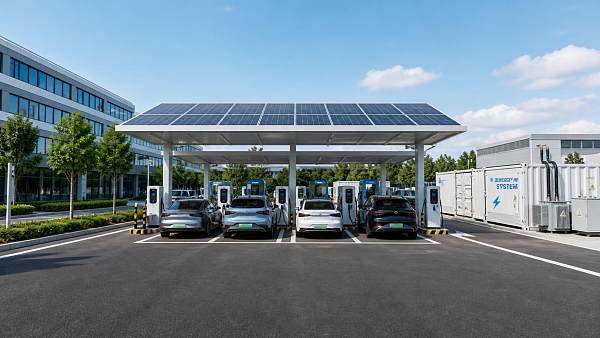
Battery energy storage can reduce short-duration charging peaks, support constrained grid connections, and create additional operating flexibility. It is not automatically cheaper than upgrading the connection. The answer depends on the shape of the load, local tariff structure, interconnection options, expected utilization, and the duty cycle imposed on the storage system.
Storage is most worth investigating when fast charging creates brief but expensive peaks, when grid reinforcement is delayed, or when the fleet needs a limited amount of high-power charging during constrained hours. It also adds design complexity: power conversion, control logic, fire safety, thermal management, operational monitoring, and lifecycle replacement planning all need attention. Treating storage as a simple “power booster” can hide those responsibilities.
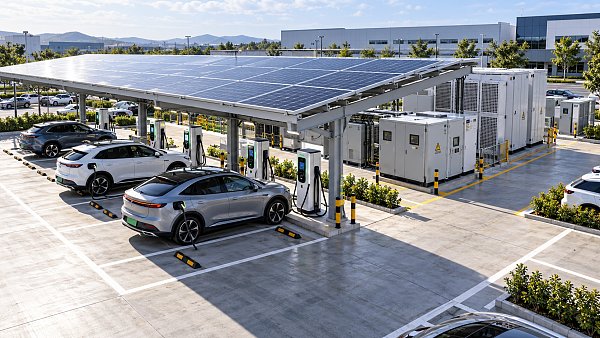
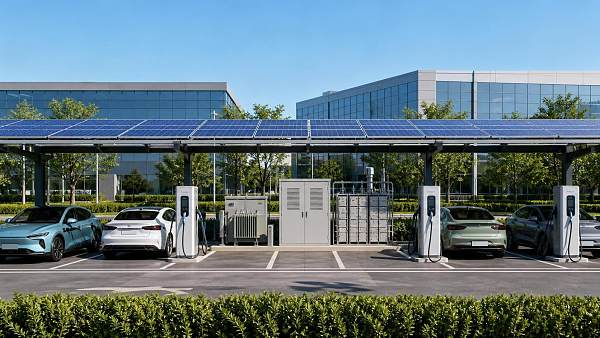
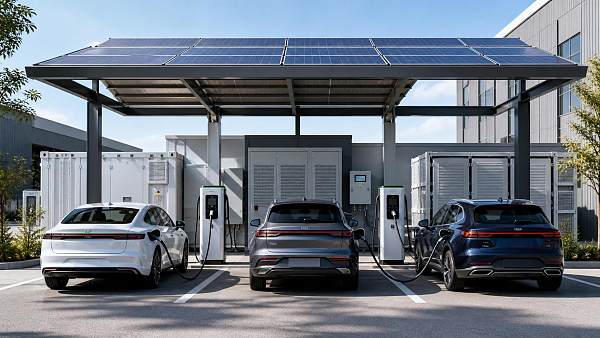
Rooftop solar can contribute useful energy over time, particularly at large depots, but it should not be assumed to match charging demand hour by hour. Most fleet charging demand may occur overnight, while solar production is daytime-dependent. The value often comes from an integrated energy strategy involving site loads, storage, tariff management, and potentially daytime vehicle dwell. EPEM’s wider coverage of distributed energy, storage, grid modernization, and depot charging reflects this reality: a charging depot increasingly behaves like a managed energy asset, not simply a vehicle refueling point.
Specify Reliability in Operational Terms
A fleet operator does not experience reliability as an equipment specification. It experiences it as vehicles leaving late. Procurement documents should therefore define redundancy and service expectations around the consequences of failure. If one power cabinet fails, how many vehicles lose access to charging? Can another dispenser serve them? Are spare parts held locally or supplied on a longer lead time? Which faults can be resolved remotely, and which require a field visit?
Compatibility is equally important. Confirm connector standards, vehicle charging limits, communication requirements, authorization methods, billing needs, and integration with fleet or energy-management systems. A charger capable of high output does not make a vehicle charge at that rate; the vehicle’s battery and charging system determine the accepted power. This sounds elementary, but mismatched assumptions between vehicle procurement and charger procurement still occur.
For large or mission-critical depots, commissioning should include operational simulations. Test concurrent charging, peak-power caps, priority changes, loss of communications, emergency shutdown, recovery after a power interruption, and the response to a late-arriving vehicle. A system that energizes successfully is not necessarily ready for a working fleet.
A Sensible Decision Sequence
The strongest depot charging plans usually follow a disciplined order: define vehicle energy needs, map real dwell times, model coincident demand, establish the available grid envelope, then select charger architecture and control logic. Equipment choice comes after the operational model, not before it.
Before finalizing a fast EV charging equipment package, project teams should be able to answer a few uncomfortable questions. Which vehicles truly require rapid charging? What happens during the busiest return period? How much capacity is reserved for disruption rather than normal operation? Can the system prioritize departures automatically? Is the grid upgrade sized for an evidence-based load profile, or for a theoretical maximum that will rarely occur?
A well-sized depot is not the one with the most chargers or the largest connection. It is the one where energy, power, hardware, controls, and fleet schedules have been designed as one system—and where expansion remains possible without paying for tomorrow’s uncertainty today.
Questions about market trends? Contact Market Scope Live for deeper business insights.
We respect your privacy. Your information is strictly confidential.
Related News
 EV Charging InfrastructureIndian Minister Proposes Lower EV Charging Rates to Encourage AdoptionIndia EV charging rates could fall in Maharashtra under Nitin Gadkari’s proposal. Explore the potential impact on drivers, fleets and charging operators.MORE+
 EV Charging InfrastructureEV Charging for Industrial Parks: Sizing Capacity and Managing Peak LoadsPlan industrial parks EV charging with confidence. Learn how to size capacity, manage peak loads, reduce demand costs, and keep fleets ready without disrupting production.MORE+
 EV Charging InfrastructureArlington County, Virginia, to Raise Public EV Charging Rates by 72%Arlington County public EV charging rates will rise 72% to $0.30/kWh on November 1, 2026. Explore the potential impact on fleet budgets and how businesses can prepare.MORE+
 EV Charging InfrastructurePlanning Solar EV Charging Hubs: Sizing PV, Battery Storage, and Grid CapacityPlan solar EV charging hubs with confidence. Learn how to size PV, battery storage, and grid capacity to meet peak demand, control costs, and support reliable charging.MORE+
 EV Charging InfrastructureChery Unveils 1.44 MW Charging System, Claims 500 km of Range in Five MinutesChery’s 1.44 MW charging system claims 500 km of range in five minutes. Explore its ultrafast EV charging technology, vehicle compatibility and global rollout plans.MORE+
 EV Charging InfrastructureComparing EV Charging Equipment Manufacturers: Warranty, Lead Times, and SupportCompare EV charging equipment manufacturers on warranty coverage, lead times, and support. Discover how to reduce downtime, uncover hidden costs, and choose the right supplier.MORE+
 EV Charging InfrastructurePlanning Urban EV Charging Hubs: Site Selection, Power Needs, and Charger MixPlan urban EV charging hubs with confidence. Discover how to select sites, size power capacity, and balance AC/DC chargers to control costs and deliver reliable charging.MORE+
 EV Charging InfrastructureHow to Plan Charging Corridors for Fleet Routes, Grid Capacity, and Future DemandCharging corridor infrastructure planning helps fleets align routes, grid capacity, reliable charging, and scalable site design for future demand.MORE+
 EV Charging InfrastructureHow to Size Fast EV Charging Equipment for Fleet Depots Without OverbuildingFast EV charging equipment for fleet depots: learn how to match power, charging windows, grid capacity, and smart controls without costly overbuilding.MORE+
 EV Charging InfrastructureHow to Plan EV Charging Infrastructure in Indonesia for Fleet and Public SitesCharging infrastructure planning in Indonesia for fleet and public sites: optimize energy, grid capacity, smart load management, safety, and scalable EV charging.MORE+
 EV Charging InfrastructureHow to Size DC EV Charging Equipment for Fleet Depots and Peak DemandDC EV charging equipment sizing guide for fleet depots: balance energy demand, peak loads, utility limits, smart charging, and scalable growth.MORE+
 EV Charging InfrastructureAre EV Charger Payment Systems Interoperable Across Regions?Are there interoperability standards for EV charger payment systems across regions? Explore OCPP, OCPI, Plug & Charge, roaming, and payment strategies for seamless EV charging.MORE+
 EV Charging InfrastructureHow to Evaluate Total Cost of Ownership for a Fleet DC Charging DepotHow to evaluate total cost of ownership for a fleet DC charging depot: compare grid costs, tariffs, uptime, smart charging, and scalable infrastructure.MORE+
 EV Charging InfrastructurePublic Charging Infrastructure Planning: Site Criteria, Grid Capacity, and UtilizationPublic charging infrastructure planning made practical: evaluate site access, grid capacity, utilization, and scalable design to build reliable, investable EV charging hubs.MORE+
 EV Charging InfrastructureHow Behind-the-Meter Energy Systems for EV Charging Cut Peak-Demand CostsBehind the meter energy systems for EV charging help cut peak-demand costs, defer grid upgrades, and improve charging reliability with storage and smart controls.MORE+
 EV Charging InfrastructureIs Building a Public EV Charging Network in Rural Areas Financially Viable?Is it financially viable to build public charging networks in rural areas? Explore grid costs, utilization, funding, AC/DC choices, and strategies for profitable rural EV charging.MORE+
 EV Charging InfrastructureHow Public EV Charging Load Management Prevents Peak Demand and Grid Overloadspublic EV charging load management prevents costly peak demand and grid overloads. Explore smarter controls, capacity planning, and scalable charging performance.MORE+
 EV Charging InfrastructureHow to Assess Long-Term EV Charger Reliability Before ProcurementHow to evaluate long-term reliability of EV chargers before procurement? Explore practical checks for uptime, grid compatibility, software stability, service support, and lifecycle costs.MORE+
 EV Charging InfrastructureIs AC Charging Still Worth Investing in for New Public Stations in 2026?Is AC charging still worth investing in for new public stations in 2026? Explore where smart, managed AC charging delivers value, revenue, and scalable EV infrastructure.MORE+
 EV Charging InfrastructureHow to Plan Power Capacity for Highway EV Charging CorridorsHighway charging corridor power capacity planning: learn how to size grid connections, manage peak demand, use storage, and phase EV hubs for reliable, scalable growth.MORE+
 EV Charging InfrastructureWhat Is the Typical BMS Failure Rate in EV Charging Equipment?Battery management system failure rate in charging equipment: learn what BMS faults mean, key risks, and how to protect EV charger uptime.MORE+
 EV Charging InfrastructureHow Should Fleet Depot Charging Stations Be Laid Out?Fleet depot charging station layout design guidelines for safer vehicle flow, smart power use, scalable infrastructure, and reliable fleet readiness. Explore practical planning tips.MORE+
 EV Charging InfrastructureDC Fast Chargers vs Liquid-Cooled Ultra-Fast Chargers in 2026DC fast charger vs liquid-cooled ultra-fast charging stations 2026: compare power, costs, grid demands, uptime, and ideal deployment scenarios for smarter EV infrastructure.MORE+
 EV Charging InfrastructureWhat Does the Global EcoPower Charging Intelligence Platform Do?Global EcoPower EV charging infrastructure intelligence platform delivers actionable insights on grid capacity, storage, technology, risk, and profitable charging project planning.MORE+
 EV Charging InfrastructureHow Global EcoPower Manages Energy Across EV Charging NetworksGlobal EcoPower energy management systems for charging networks optimize EV charging with dynamic load control, storage, solar integration, and reliable data insights.MORE+
 EV Charging InfrastructureWhat Switchgear Specifications Are Needed for a 500 kW Charging Site?What switchgear specifications are required for a 500kW charging installation? Explore load sizing, transformer selection, fault ratings, protection, and expansion planning.MORE+
 EV Charging InfrastructureWhich Communication Protocols Matter When Mixing Charger Brands?What communication protocols matter most when mixing charger brands at one station? Explore OCPP, OCPI, ISO 15118, and energy controls for reliable interoperability.MORE+
 EV Charging InfrastructureWhat Grid Connection Capacity Does a 10-Bay Fast Charging Hub Need?What grid connection capacity is needed for a 10-bay fast charging hub? Explore demand, power sharing, batteries, and scalable planning for reliable EV charging.MORE+
 EV Charging InfrastructureHow to Plan EV Charging Systems for Apartments Without Overloading the Building?EV charging systems for apartments start with capacity, not charger count. Learn how to prevent overloads, use smart load management, and plan scalable charging that fits your building.MORE+
 EV Charging InfrastructureHow City Charging Infrastructure Planning Can Reduce Costs and Avoid Grid BottlenecksCharging infrastructure planning for cities helps cut costs, avoid grid bottlenecks, and speed EV rollout with smarter, scalable deployment.MORE+
 EV Charging InfrastructureEU Mandates EN 61851-23:2026 for EV ChargersEU Mandates EN 61851-23:2026 for EV Chargers: learn how the new EU rule impacts certification, customs clearance, and market access before October 2026.MORE+
 EV Charging InfrastructureITC Ruling Puts Chinese EV Chargers Under 337 PressureITC ruling on Chinese EV chargers puts Section 337 pressure on imports, compliance, and OEM supply chains. Learn how patent risks may impact U.S. customs, distributors, and EV charger sourcing.MORE+
 EV Charging InfrastructureHow EV Charging Technology Affects Charging Speed, Compatibility, and Site PlanningEV charging technology shapes real charging speed, vehicle compatibility, and site planning. Learn how to avoid costly design mistakes and build charging projects that perform.MORE+
 EV Charging InfrastructureUS Requires UL 1741 SA-2025 EVSE ModulesUS Requires UL 1741 SA-2025 EVSE Modules for imported DC fast chargers. Learn how V2G, FCC+UL testing, and firmware compliance will reshape US market access.MORE+
 EV Charging InfrastructureUSTR Opens Section 301 Review on China EV ChargersUSTR Opens Section 301 Review on China EV Chargers: learn how the 25% tariff review may affect import costs, customs compliance, and procurement timing across EV charging and BESS supply chains.MORE+
 EV Charging InfrastructureHow to Plan Fleet Charging Infrastructure for Logistics Depots and Delivery HubsFleet charging infrastructure for logistics starts with duty cycles, dwell time, and grid limits. Learn how to design depot and hub charging that cuts bottlenecks and supports scalable fleet electrification.MORE+
 EV Charging InfrastructureWhat Is Load Management in EV Charging and How Does It Reduce Peak Power Costs?Load management in EV charging helps control peak demand, lower grid upgrade pressure, and cut costly power spikes. Learn how smart power allocation improves site economics.MORE+
 EV Charging InfrastructureHow to Evaluate an EV Charging Software Platform for Multi-Site Charging OperationsEV charging software platform evaluation made practical: learn how to assess interoperability, load management, billing, security, and scalability for multi-site charging operations.MORE+
 EV Charging InfrastructureUSTR Opens 301 Review on China EV Charging GearUSTR opens a Section 301 review on China EV charging gear, putting tariffs, import costs, pricing, and inventory plans at risk. See what US importers and distributors should watch now.MORE+
 EV Charging InfrastructureEU Sets 17.1% Duty on Chinese EV ChargersEU Sets 17.1% Duty on Chinese EV Chargers: see how the new EU tariff affects EV charging equipment exports, customs costs, HS codes, and contract risks for suppliers.MORE+