How to Plan Power Capacity for Highway EV Charging Corridors
Why Corridor Capacity Has Become a Strategic Planning Issue
Highway EV charging corridors are often discussed in terms of charger count, charging speed, and site coverage. Those are visible parts of the project, but they do not determine whether a corridor will operate reliably once traffic grows. The harder question is how much electrical capacity each location needs, when it needs it, and how that capacity can be expanded without rebuilding the site or waiting years for a new grid connection.
For developers, utilities, EPC contractors, fleet operators, and investors, highway charging corridor power capacity planning is therefore not a simple exercise in adding charger nameplate ratings. It is a coordinated decision involving traffic behavior, vehicle battery trends, local distribution-network constraints, land and civil design, storage economics, and the commercial consequences of queues.
A station with twelve 350 kW dispensers does not necessarily require a 4.2 MW connection on day one. Equally, a station with a 1 MW connection may appear adequate in a spreadsheet but become operationally weak when holiday traffic, larger battery packs, or electric commercial vehicles arrive. The relevant planning task is to identify the expected coincident demand, define an acceptable service level during peaks, and preserve practical expansion paths.
Start With the Route, Not the Charger Catalog
The first planning mistake is to select equipment before understanding how the route behaves. A highway charging stop is not equivalent to an urban destination-charging site. Drivers arrive with a practical need to continue a journey, often within a limited stopping window. They may have few alternatives nearby, particularly on rural routes, mountain crossings, border corridors, or stretches with seasonal tourism.
Capacity assumptions should begin with the corridor's actual demand drivers:
- Average daily traffic and the share likely to transition to EVs over the planning period.
- Directional traffic patterns, including whether one side of the highway experiences materially higher demand.
- Peak-hour concentration, weekend travel, holiday surges, weather-related route changes, and seasonal travel patterns.
- Distance to the preceding and next reliable charging locations.
- The likely mix of private cars, ride-hailing vehicles, vans, coaches, and medium- or heavy-duty trucks.
- Expected dwell time, since a food-service stop, rest area, or logistics hub can influence charging behavior.
These inputs matter because annual averages conceal the events that shape customer experience and revenue. A site may have a modest average energy throughput but still require substantial short-duration power at predictable peak periods. Designing only around the average can produce chronic queues during exactly the periods when drivers have the least flexibility.
Planning should also distinguish between corridor coverage and corridor reliability. Coverage answers whether an EV can technically travel the route. Reliability asks whether drivers can expect a charger to be available and sufficiently fast when they arrive. The second question usually requires more attention to redundancy, upstream capacity, and peak-load management.
Nameplate Power Is Not the Same as Grid Demand
A useful capacity model separates four figures that are frequently confused: installed dispenser capacity, simultaneous charging demand, site import capacity, and deliverable vehicle power. They are connected, but they should not be treated as identical.
Installed dispenser capacity is the sum of the maximum ratings shown on charging equipment. Simultaneous demand reflects how many vehicles are likely to charge at once and at what power. Site import capacity is the maximum power the facility can receive from the grid under its connection agreement. Deliverable vehicle power depends on the charger, vehicle battery voltage, state of charge, thermal conditions, cable limits, and the station's internal power-sharing logic.
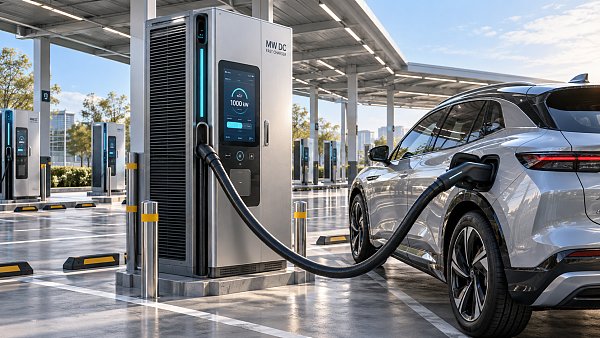
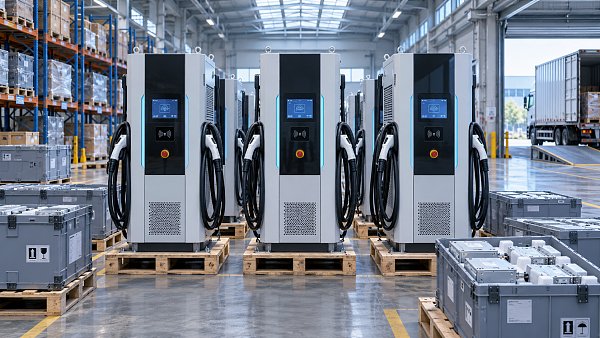
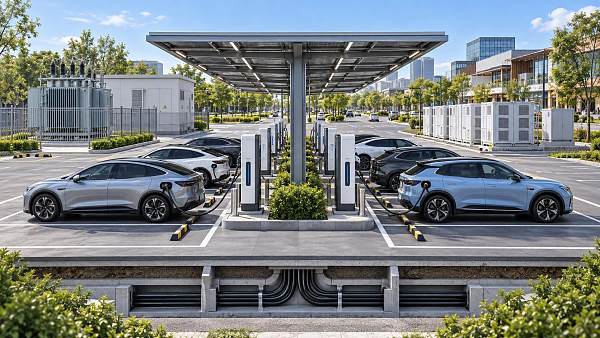
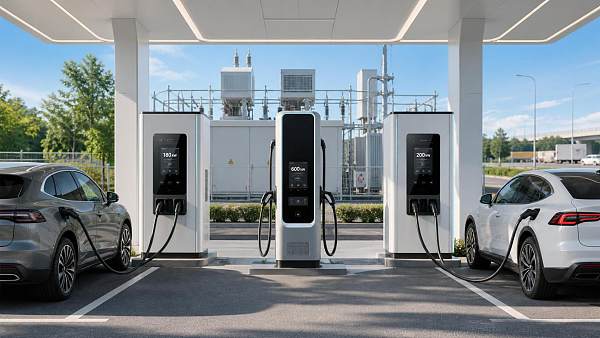
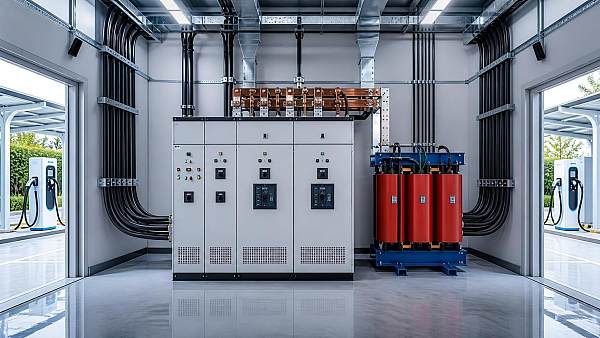
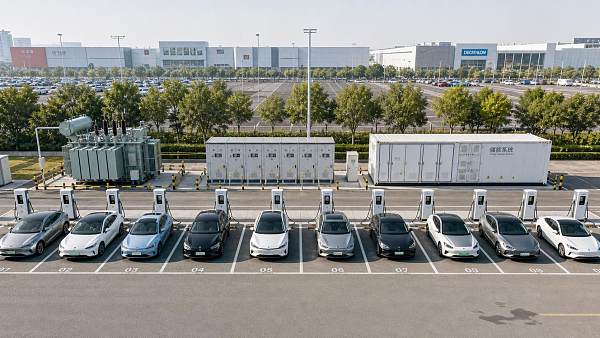
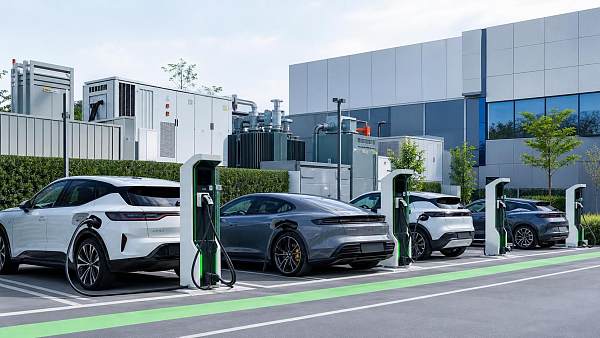
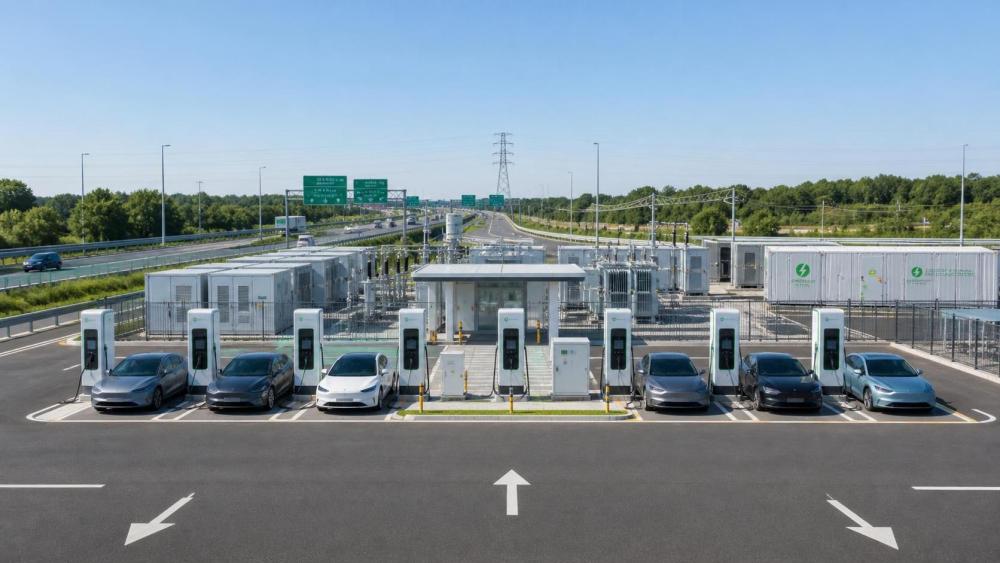
Modern DC charging hubs commonly use power cabinets shared across multiple dispensers. This architecture can improve utilization because not every vehicle draws maximum power at the same moment. A site may be able to offer several high-power charging positions while limiting the maximum power drawn from the grid through dynamic allocation. That is valuable, but it is not a substitute for modeling demand. If several compatible vehicles arrive with low states of charge during the same peak interval, the shared system may reduce individual charging speeds precisely when drivers expect rapid service.
A conservative planning approach models several operating cases rather than relying on one utilization assumption:
- Initial operation: early EV adoption, limited simultaneous demand, and lower site utilization.
- Expected growth: a realistic medium-term adoption case based on regional vehicle uptake and route use.
- Peak event: holiday, weather diversion, or other high-concentration scenario.
- Future vehicle mix: higher-voltage passenger EVs, larger battery packs, and possible commercial charging demand.
- Contingency operation: one charger, transformer, feeder, or power module unavailable for maintenance or failure.
The decision is not whether every charger must run at full rated output simultaneously. The decision is what service degradation is acceptable when demand peaks, and whether that degradation is commercially and operationally tolerable.
Grid Connection Lead Time Can Define the Entire Project
In many regions, the limiting factor is not charger procurement but the distribution network. A site close to a highway may be far from a suitable medium-voltage feeder, constrained by transformer capacity, or located in an area where renewable generation already creates voltage-management issues. A nominally attractive rest area can become expensive or slow to develop once the required network reinforcement is identified.
Early engagement with the distribution system operator is essential. Developers should request more than a simple statement of available capacity. The discussion needs to clarify the connection voltage, firm versus non-firm capacity, reinforcement scope, protection requirements, metering arrangements, curtailment conditions, reactive-power obligations where applicable, and the expected schedule for energization.
The distinction between firm and flexible connection rights deserves particular attention. A flexible arrangement may allow a project to proceed sooner or at lower upfront cost, but it can also limit import during grid-stressed periods. That may be workable for a site with on-site storage, carefully managed loads, and transparent operational rules. It is less attractive for a high-dependence corridor station where charging availability is the core service promise.
Grid studies should also account for capacity already reserved by other developments. Industrial facilities, logistics projects, housing growth, renewable plants, and other charging sites may compete for the same feeder or substation capacity. An available-capacity indication today is not always a durable development right. Connection terms, reservation milestones, and upgrade responsibilities need to be reviewed as commercial risks, not merely engineering details.
Build in Phases, But Protect the Final Build-Out
Phased deployment is often the most rational approach. Demand can be uncertain, while oversized electrical works can tie up capital long before utilization justifies them. However, a phased strategy fails when the first phase physically blocks, electrically constrains, or contractually complicates later expansion.
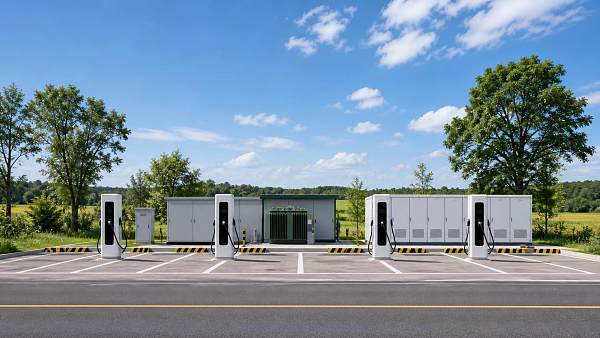
A practical approach is to distinguish between assets that are costly to revisit and assets that can be added modularly. Civil works, transformer space, switchgear layout, cable routes, communications conduits, drainage, vehicle circulation, and utility easements should generally anticipate the ultimate site capacity. Chargers, power modules, some battery units, and selected low-voltage distribution components can then be deployed in stages.
This leads to a planning question that procurement teams should ask early: what is the cost of being expansion-ready compared with the cost of retrofitting? The answer differs by site. At a constrained motorway service area, excavating again after operations begin may be disruptive and expensive. At a greenfield site with ample land and a nearby substation, staged construction may be simpler. The key is to make the comparison explicitly rather than treating future expansion as an informal intention.
Phase planning should include defined triggers. These might be sustained utilization levels, repeated peak-hour queues, a local EV adoption threshold, fleet contracts, a grid-upgrade milestone, or evidence that neighboring sites are reaching capacity. Without triggers, expansion tends to occur reactively, after customer dissatisfaction or lost traffic has already become visible.
Battery Storage Helps, but It Does Not Eliminate the Connection Question
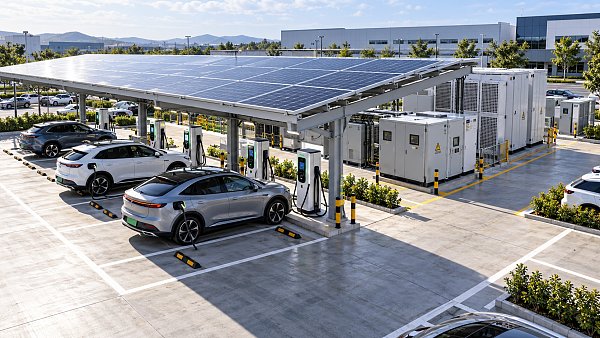
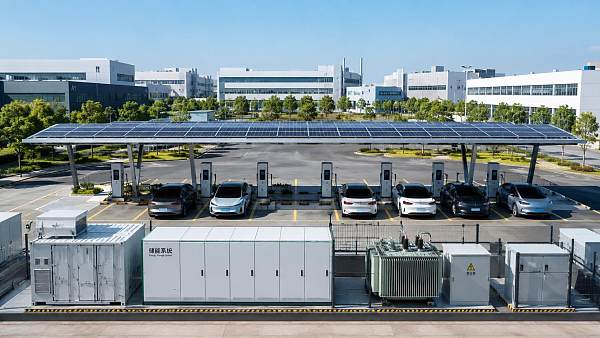
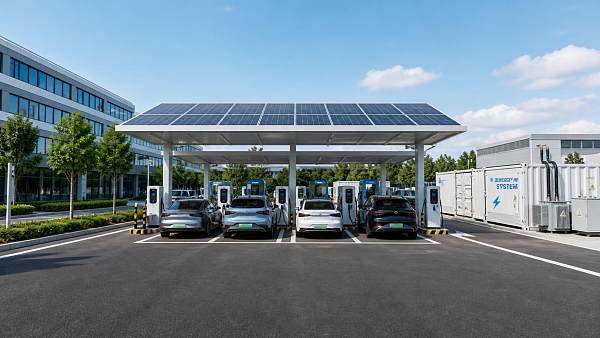
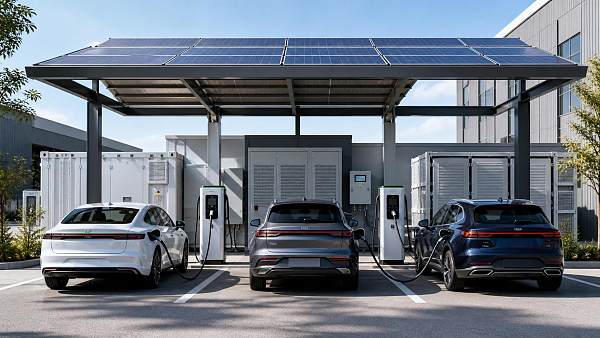
Battery energy storage can improve corridor economics and resilience, especially where grid upgrades are delayed or demand is highly peaky. It can cap short-duration import peaks, support a larger number of charging sessions within a limited connection capacity, reduce exposure to certain demand charges, and provide limited backup capability where the system design permits.
But storage should not be used as a generic answer to an undersized connection. A battery must be recharged, and repeated high-power discharge cycles may leave insufficient energy for the next demand wave. Its value depends on the relationship between grid capacity, peak duration, traffic timing, electricity tariffs, battery size, power-conversion limits, degradation assumptions, and control strategy.
For example, storage may work well at a site where demand peaks sharply for one or two hours around predictable travel periods and the grid has time to recharge the battery between peaks. It may be much less effective where demand remains high throughout the day, where commercial vehicles require frequent large energy deliveries, or where the local network remains constrained for extended periods.
Storage evaluations should therefore test both power and energy. A system may have adequate MW output to support several fast chargers briefly but insufficient MWh capacity to sustain the required operating window. Fire safety, thermal management, emergency isolation, equipment access, insurer requirements, and local permitting also need to be included in the site decision. These are project-specific matters and should be checked against applicable local requirements rather than assumed from a standard container specification.
Load Management Is an Operating Strategy, Not a Hidden Constraint
Dynamic load management is central to making high-power charging hubs economically viable. It can allocate available power among vehicles, prioritize selected bays, avoid breaching grid import limits, coordinate battery dispatch, and respond to tariff signals. In a well-designed system, drivers experience this as a reliable charging service rather than as an arbitrary reduction in power.
The commercial risk appears when power-sharing rules are opaque or poorly matched to customer expectations. If a station markets ultra-fast charging but routinely divides available capacity so aggressively that sessions take much longer than expected, the problem is not only technical. It can affect repeat use, reviews, fleet relationships, and corridor reputation.
Operators should define practical service rules before commissioning. Which users receive priority during constrained periods? Will adjacent dispensers share one power cabinet? Does the system prioritize the vehicle closest to departure, the lowest state of charge, a contracted fleet, or first arrival? Can an operator intervene remotely? What information is shown to the driver? These choices should align with the commercial model and local consumer obligations.
Heavy-Duty Charging Changes the Capacity Conversation
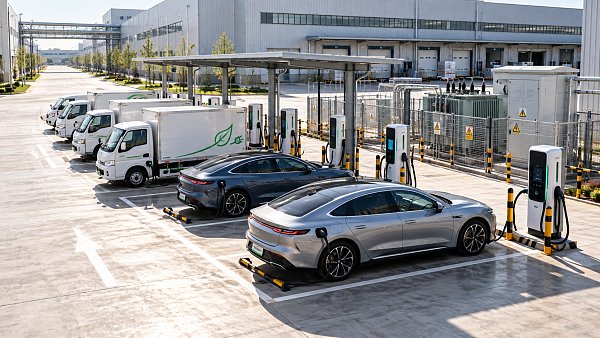
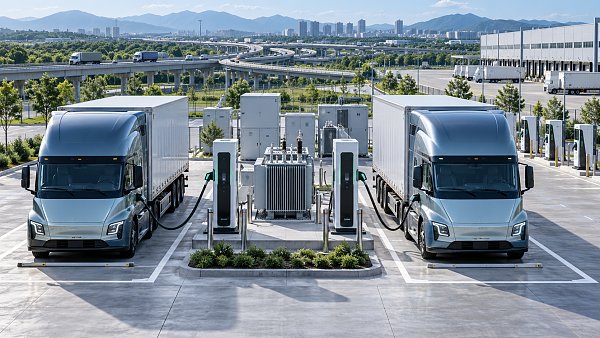
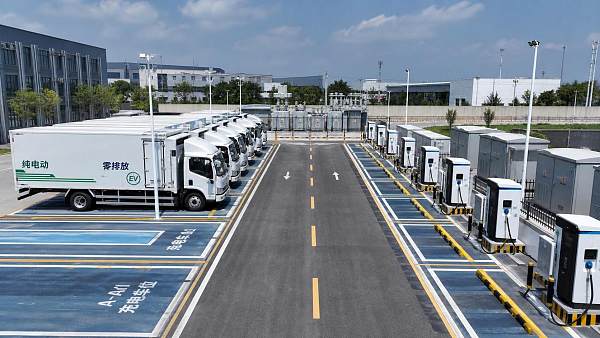
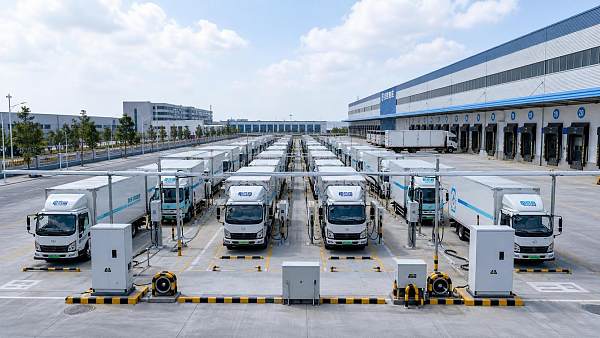
Passenger-car charging and truck charging should not be combined casually in early capacity estimates. A small number of electric trucks can create demand equivalent to a much larger passenger-car charging hub, and their operating schedules may be concentrated around logistics windows, driving-hour rules, and depot dispatch patterns. They also require different bay geometry, cable reach, turning space, and dwell-time planning.
Where a highway corridor is expected to support freight electrification, planners should evaluate truck charging as a separate demand stream. This does not necessarily mean building a dedicated heavy-duty facility immediately. It does mean preserving land, electrical routing, transformer capacity, and access arrangements so that future commercial charging does not require a complete redesign.
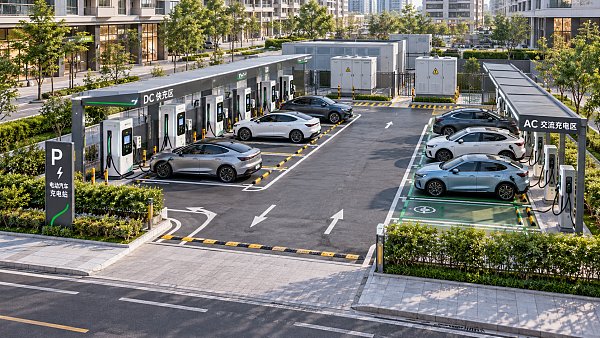
There is also a strategic choice between mixed-use hubs and specialized sites. Mixed sites can share infrastructure and diversify utilization, but they may create conflicts between passenger vehicles seeking quick turnover and trucks occupying high-power bays for longer periods. Specialized sites may provide clearer operations but require enough demand to justify dedicated infrastructure. The appropriate model depends on the route's freight intensity, nearby logistics activity, and grid availability.
Do Not Let the Cheapest Connection Option Decide the Asset Strategy
Upfront connection cost is a major project variable, but the lowest-cost technical option is not automatically the best long-term decision. A smaller connection may reduce capital expenditure and accelerate an initial business case. It may also limit revenue, weaken customer experience, prevent future fleet contracts, and require an expensive upgrade just as competition intensifies.
Conversely, paying for a large connection too early can create stranded capacity if traffic adoption is slower than expected. The right decision usually comes from comparing lifecycle scenarios, not from selecting either the maximum or minimum capacity by instinct. That comparison should include connection charges, reinforcement contributions, land and civil works, equipment replacement cycles, tariff structure, anticipated utilization, peak-service performance, storage costs, and the value of future optionality.
Investors should be cautious with models that assume uniform utilization across all chargers or smooth growth over time. Highway demand is lumpy. A site can remain lightly used for much of the week yet be capacity-constrained on the days that matter most to drivers and host-site partners. Queue risk should be modeled as an operational and reputational cost, not dismissed because average annual utilization remains low.
A Decision Framework for Corridor Developers
Before committing to a corridor rollout, teams should be able to answer a short set of hard questions. What traffic scenario is the site designed to serve, and which peak periods matter most? What level of waiting time is acceptable? What capacity is firm under the grid agreement? Which electrical and civil assets are sized for the final build-out? How will the site operate when one critical component is unavailable? Can storage genuinely support the peak pattern, or does it only improve the presentation of an undersized connection? And what triggers will authorize the next phase?
These questions connect engineering with the actual business case. They also create a clearer basis for discussions among utilities, charging-network operators, EPC teams, landowners, equipment suppliers, and capital providers, each of whom may otherwise optimize a different part of the project.
The strongest highway charging corridors will not necessarily be those with the largest charger ratings at launch. They will be the ones designed around credible demand, secure grid access, transparent load management, and expansion options that remain practical after the first vehicles begin charging. In a market where vehicle capability is advancing faster than many local networks, disciplined capacity planning is becoming one of the clearest indicators of whether a charging site is a durable infrastructure asset or merely an early installation.
Questions about market trends? Contact Market Scope Live for deeper business insights.
We respect your privacy. Your information is strictly confidential.
Related News
 EV Charging InfrastructureIndian Minister Proposes Lower EV Charging Rates to Encourage AdoptionIndia EV charging rates could fall in Maharashtra under Nitin Gadkari’s proposal. Explore the potential impact on drivers, fleets and charging operators.MORE+
 EV Charging InfrastructureEV Charging for Industrial Parks: Sizing Capacity and Managing Peak LoadsPlan industrial parks EV charging with confidence. Learn how to size capacity, manage peak loads, reduce demand costs, and keep fleets ready without disrupting production.MORE+
 EV Charging InfrastructureArlington County, Virginia, to Raise Public EV Charging Rates by 72%Arlington County public EV charging rates will rise 72% to $0.30/kWh on November 1, 2026. Explore the potential impact on fleet budgets and how businesses can prepare.MORE+
 EV Charging InfrastructurePlanning Solar EV Charging Hubs: Sizing PV, Battery Storage, and Grid CapacityPlan solar EV charging hubs with confidence. Learn how to size PV, battery storage, and grid capacity to meet peak demand, control costs, and support reliable charging.MORE+
 EV Charging InfrastructureChery Unveils 1.44 MW Charging System, Claims 500 km of Range in Five MinutesChery’s 1.44 MW charging system claims 500 km of range in five minutes. Explore its ultrafast EV charging technology, vehicle compatibility and global rollout plans.MORE+
 EV Charging InfrastructureComparing EV Charging Equipment Manufacturers: Warranty, Lead Times, and SupportCompare EV charging equipment manufacturers on warranty coverage, lead times, and support. Discover how to reduce downtime, uncover hidden costs, and choose the right supplier.MORE+
 EV Charging InfrastructurePlanning Urban EV Charging Hubs: Site Selection, Power Needs, and Charger MixPlan urban EV charging hubs with confidence. Discover how to select sites, size power capacity, and balance AC/DC chargers to control costs and deliver reliable charging.MORE+
 EV Charging InfrastructureHow to Plan Charging Corridors for Fleet Routes, Grid Capacity, and Future DemandCharging corridor infrastructure planning helps fleets align routes, grid capacity, reliable charging, and scalable site design for future demand.MORE+
 EV Charging InfrastructureHow to Size Fast EV Charging Equipment for Fleet Depots Without OverbuildingFast EV charging equipment for fleet depots: learn how to match power, charging windows, grid capacity, and smart controls without costly overbuilding.MORE+
 EV Charging InfrastructureHow to Plan EV Charging Infrastructure in Indonesia for Fleet and Public SitesCharging infrastructure planning in Indonesia for fleet and public sites: optimize energy, grid capacity, smart load management, safety, and scalable EV charging.MORE+
 EV Charging InfrastructureHow to Size DC EV Charging Equipment for Fleet Depots and Peak DemandDC EV charging equipment sizing guide for fleet depots: balance energy demand, peak loads, utility limits, smart charging, and scalable growth.MORE+
 EV Charging InfrastructureAre EV Charger Payment Systems Interoperable Across Regions?Are there interoperability standards for EV charger payment systems across regions? Explore OCPP, OCPI, Plug & Charge, roaming, and payment strategies for seamless EV charging.MORE+
 EV Charging InfrastructureHow to Evaluate Total Cost of Ownership for a Fleet DC Charging DepotHow to evaluate total cost of ownership for a fleet DC charging depot: compare grid costs, tariffs, uptime, smart charging, and scalable infrastructure.MORE+
 EV Charging InfrastructurePublic Charging Infrastructure Planning: Site Criteria, Grid Capacity, and UtilizationPublic charging infrastructure planning made practical: evaluate site access, grid capacity, utilization, and scalable design to build reliable, investable EV charging hubs.MORE+
 EV Charging InfrastructureHow Behind-the-Meter Energy Systems for EV Charging Cut Peak-Demand CostsBehind the meter energy systems for EV charging help cut peak-demand costs, defer grid upgrades, and improve charging reliability with storage and smart controls.MORE+
 EV Charging InfrastructureIs Building a Public EV Charging Network in Rural Areas Financially Viable?Is it financially viable to build public charging networks in rural areas? Explore grid costs, utilization, funding, AC/DC choices, and strategies for profitable rural EV charging.MORE+
 EV Charging InfrastructureHow Public EV Charging Load Management Prevents Peak Demand and Grid Overloadspublic EV charging load management prevents costly peak demand and grid overloads. Explore smarter controls, capacity planning, and scalable charging performance.MORE+
 EV Charging InfrastructureHow to Assess Long-Term EV Charger Reliability Before ProcurementHow to evaluate long-term reliability of EV chargers before procurement? Explore practical checks for uptime, grid compatibility, software stability, service support, and lifecycle costs.MORE+
 EV Charging InfrastructureIs AC Charging Still Worth Investing in for New Public Stations in 2026?Is AC charging still worth investing in for new public stations in 2026? Explore where smart, managed AC charging delivers value, revenue, and scalable EV infrastructure.MORE+
 EV Charging InfrastructureHow to Plan Power Capacity for Highway EV Charging CorridorsHighway charging corridor power capacity planning: learn how to size grid connections, manage peak demand, use storage, and phase EV hubs for reliable, scalable growth.MORE+
 EV Charging InfrastructureWhat Is the Typical BMS Failure Rate in EV Charging Equipment?Battery management system failure rate in charging equipment: learn what BMS faults mean, key risks, and how to protect EV charger uptime.MORE+
 EV Charging InfrastructureHow Should Fleet Depot Charging Stations Be Laid Out?Fleet depot charging station layout design guidelines for safer vehicle flow, smart power use, scalable infrastructure, and reliable fleet readiness. Explore practical planning tips.MORE+
 EV Charging InfrastructureDC Fast Chargers vs Liquid-Cooled Ultra-Fast Chargers in 2026DC fast charger vs liquid-cooled ultra-fast charging stations 2026: compare power, costs, grid demands, uptime, and ideal deployment scenarios for smarter EV infrastructure.MORE+
 EV Charging InfrastructureWhat Does the Global EcoPower Charging Intelligence Platform Do?Global EcoPower EV charging infrastructure intelligence platform delivers actionable insights on grid capacity, storage, technology, risk, and profitable charging project planning.MORE+
 EV Charging InfrastructureHow Global EcoPower Manages Energy Across EV Charging NetworksGlobal EcoPower energy management systems for charging networks optimize EV charging with dynamic load control, storage, solar integration, and reliable data insights.MORE+
 EV Charging InfrastructureWhat Switchgear Specifications Are Needed for a 500 kW Charging Site?What switchgear specifications are required for a 500kW charging installation? Explore load sizing, transformer selection, fault ratings, protection, and expansion planning.MORE+
 EV Charging InfrastructureWhich Communication Protocols Matter When Mixing Charger Brands?What communication protocols matter most when mixing charger brands at one station? Explore OCPP, OCPI, ISO 15118, and energy controls for reliable interoperability.MORE+
 EV Charging InfrastructureWhat Grid Connection Capacity Does a 10-Bay Fast Charging Hub Need?What grid connection capacity is needed for a 10-bay fast charging hub? Explore demand, power sharing, batteries, and scalable planning for reliable EV charging.MORE+
 EV Charging InfrastructureHow to Plan EV Charging Systems for Apartments Without Overloading the Building?EV charging systems for apartments start with capacity, not charger count. Learn how to prevent overloads, use smart load management, and plan scalable charging that fits your building.MORE+
 EV Charging InfrastructureHow City Charging Infrastructure Planning Can Reduce Costs and Avoid Grid BottlenecksCharging infrastructure planning for cities helps cut costs, avoid grid bottlenecks, and speed EV rollout with smarter, scalable deployment.MORE+
 EV Charging InfrastructureEU Mandates EN 61851-23:2026 for EV ChargersEU Mandates EN 61851-23:2026 for EV Chargers: learn how the new EU rule impacts certification, customs clearance, and market access before October 2026.MORE+
 EV Charging InfrastructureITC Ruling Puts Chinese EV Chargers Under 337 PressureITC ruling on Chinese EV chargers puts Section 337 pressure on imports, compliance, and OEM supply chains. Learn how patent risks may impact U.S. customs, distributors, and EV charger sourcing.MORE+
 EV Charging InfrastructureHow EV Charging Technology Affects Charging Speed, Compatibility, and Site PlanningEV charging technology shapes real charging speed, vehicle compatibility, and site planning. Learn how to avoid costly design mistakes and build charging projects that perform.MORE+
 EV Charging InfrastructureUS Requires UL 1741 SA-2025 EVSE ModulesUS Requires UL 1741 SA-2025 EVSE Modules for imported DC fast chargers. Learn how V2G, FCC+UL testing, and firmware compliance will reshape US market access.MORE+
 EV Charging InfrastructureUSTR Opens Section 301 Review on China EV ChargersUSTR Opens Section 301 Review on China EV Chargers: learn how the 25% tariff review may affect import costs, customs compliance, and procurement timing across EV charging and BESS supply chains.MORE+
 EV Charging InfrastructureHow to Plan Fleet Charging Infrastructure for Logistics Depots and Delivery HubsFleet charging infrastructure for logistics starts with duty cycles, dwell time, and grid limits. Learn how to design depot and hub charging that cuts bottlenecks and supports scalable fleet electrification.MORE+
 EV Charging InfrastructureWhat Is Load Management in EV Charging and How Does It Reduce Peak Power Costs?Load management in EV charging helps control peak demand, lower grid upgrade pressure, and cut costly power spikes. Learn how smart power allocation improves site economics.MORE+
 EV Charging InfrastructureHow to Evaluate an EV Charging Software Platform for Multi-Site Charging OperationsEV charging software platform evaluation made practical: learn how to assess interoperability, load management, billing, security, and scalability for multi-site charging operations.MORE+
 EV Charging InfrastructureUSTR Opens 301 Review on China EV Charging GearUSTR opens a Section 301 review on China EV charging gear, putting tariffs, import costs, pricing, and inventory plans at risk. See what US importers and distributors should watch now.MORE+
 EV Charging InfrastructureEU Sets 17.1% Duty on Chinese EV ChargersEU Sets 17.1% Duty on Chinese EV Chargers: see how the new EU tariff affects EV charging equipment exports, customs costs, HS codes, and contract risks for suppliers.MORE+