How to Plan EV Charging Systems for Apartments Without Overloading the Building?
Apartment charging projects often start with a simple request: residents want more EV chargers, management wants to support them, and the parking area seems to have enough wall space. The problem usually appears one step later, when someone asks a harder question: can the building actually carry that load without creating new risks? That is where many plans slow down. A charger is easy to picture. The upstream electrical consequences are not.
If you are planning EV charging systems for apartments, the real task is not just adding hardware to parking bays. It is deciding how to serve current demand, protect the building’s electrical infrastructure, avoid expensive rework, and leave room for future adoption. In older buildings, spare capacity may be limited. In newer ones, the issue may be less about total capacity and more about peak coincidence, panel constraints, feeder routing, metering, and operational rules. A good plan usually comes from reducing assumptions, not increasing charger count.
One common mistake is to begin with the number of parking spaces and work forward from there. That sounds logical, but it often leads to overdesign or underdesign. The better starting point is the building’s electrical profile. Before choosing charger types, charging power, or installation phasing, you need to understand where the actual limits are: service entrance capacity, transformer loading, main switchboard margin, distribution panel availability, cable paths, and the building’s peak demand pattern.
Where apartment charging plans usually go wrong
In many buildings, the first proposal assumes every charger will eventually operate at full rated power at the same time. That assumption can make the project look impossible, especially if the building already carries elevators, ventilation, pumps, corridor lighting, HVAC systems, and other common-area loads. On the other hand, some plans make the opposite mistake and assume resident charging demand will naturally spread out enough to avoid trouble. That can lead to nuisance tripping, localized overheating, or a system that works on paper but creates complaints in daily use.
The difficulty is that apartment charging demand is not perfectly random. People often return home within similar evening windows. If unmanaged charging begins as soon as vehicles are plugged in, building demand can rise exactly when other loads are still active. Even where total daily energy use is manageable, the peak interval can become the real constraint. That is why EV charging systems for apartments should be designed around controlled power allocation rather than only nameplate charger capacity.
Start with the electrical picture, not the charger catalog
Before discussing charger models or layout density, gather a practical baseline of the site. You do not need to turn the early phase into a long study, but you do need enough information to separate hard constraints from manageable ones.
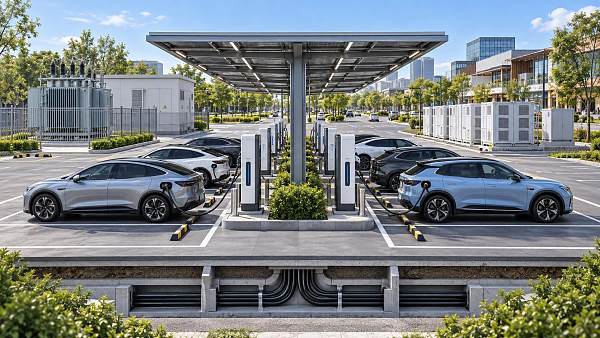
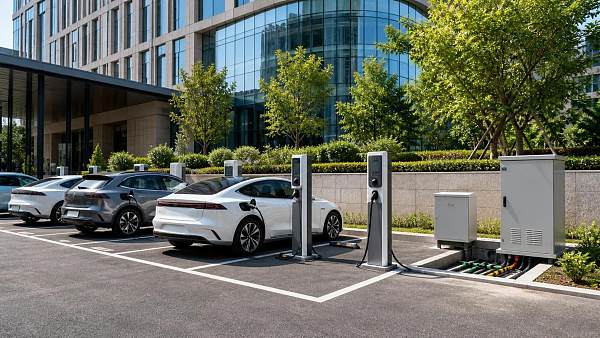
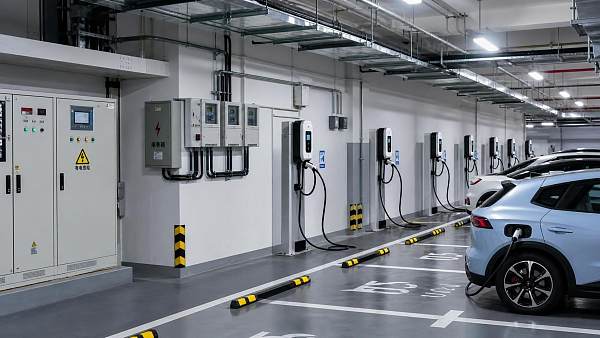
At minimum, review the available utility supply arrangement, the location and spare capacity of the main distribution equipment, existing subpanels near parking areas, cable routing options, fire compartment boundaries, and metering arrangements. It also helps to understand whether the parking area is underground, open, attached, or in a detached structure, because that affects installation complexity, ventilation considerations, cable containment, and maintenance access.
The operating profile matters just as much as the one-line diagram. Many buildings look acceptable when you compare connected loads, but the real issue appears when you examine peak timing. If the property already experiences heavy evening loading, the charging strategy may need tighter controls. If there is meaningful overnight spare capacity, a shared charging design becomes more workable. This distinction affects whether you should prioritize lower-power AC chargers with smart load management, create a managed group of circuits, or plan in phases around infrastructure readiness.
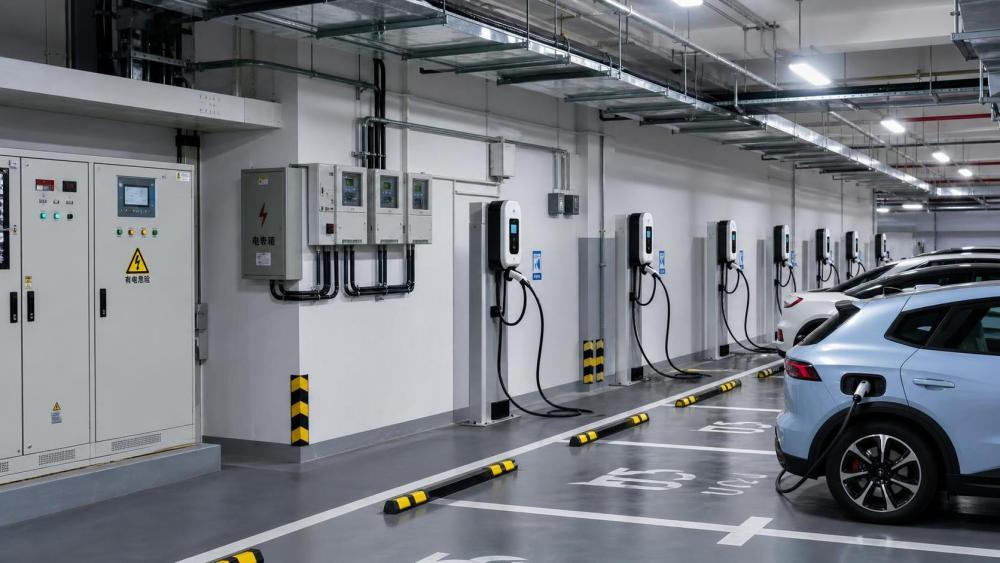
The key decision is not “how many chargers,” but “how much controllable load”
Once the electrical baseline is clear, the planning question changes. Instead of asking how many chargers can be installed at full individual power, ask how much charging load the building can safely allocate under normal and peak conditions. This shifts the project from a static hardware decision to an operational design.
That is why managed AC charging is often the practical foundation for apartment sites. In residential parking, vehicles are usually parked for long periods. That longer dwell time reduces the need for high-power charging at every space. A controlled pool of AC chargers can support more users if the system can dynamically distribute available power according to building load conditions, charging schedules, and access priorities. In many situations, this approach is more realistic than trying to provide every user with unrestricted maximum charging power.
Load management should not be treated as an optional software add-on. It is part of the electrical design logic. If the building has limited spare capacity, unmanaged charging creates a conflict between resident expectations and infrastructure limits. Managed charging helps bridge that gap by setting a site power ceiling and allocating power beneath it. The more constrained the building is, the more important this becomes.
Choosing an approach that fits the building
There is no single correct layout for apartment charging. The right approach depends on ownership structure, resident behavior, parking assignment, and electrical constraints.
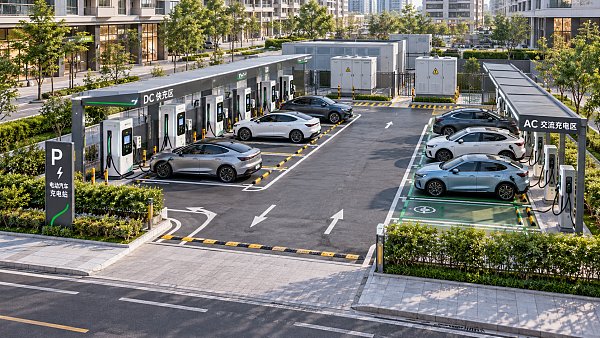
Dedicated chargers for assigned spaces can work well where parking spots are fixed and billing can be linked clearly to each user. The downside is that this approach can lock capacity into spaces that are not always in active use. Shared chargers may use available power more efficiently, but they require clear booking, access, or parking rules. A hybrid model is often more practical: prepare infrastructure for broader future coverage, then energize and activate chargers in phases where demand is real.
For buildings with tight capacity, it can make sense to separate infrastructure readiness from immediate charger deployment. That means installing containment, cable pathways, panel space planning, communication provisions, and protection coordination for a larger long-term buildout, while initially commissioning only a smaller managed charging group. This avoids repeating invasive construction later while keeping present electrical loading under control.
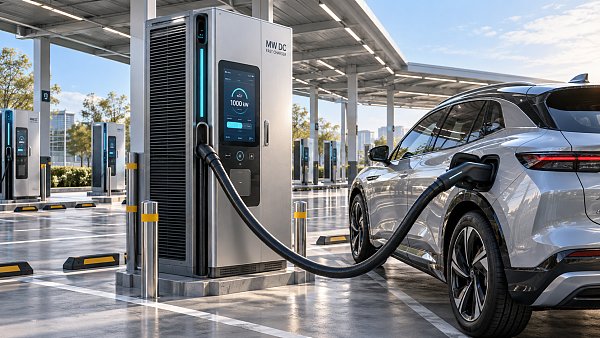
DC fast charging is usually not the first answer for apartments. It draws more power, introduces different cost and grid impacts, and is often mismatched with overnight residential parking patterns. There may be special cases, but for most apartment environments, AC charging with smart control is the more stable planning base.
Practical steps that prevent overload risk
A useful planning sequence begins with confirming the site capacity envelope. That means identifying how much additional charging load can be allowed at the service level, and whether local distribution sections create tighter bottlenecks than the utility connection itself. In some buildings, the main service may have margin while a nearby parking distribution board does not. In others, cable path limitations become the deciding factor before electrical capacity does.
Next, define a charging power budget for the site. This is not the sum of charger nameplates. It is the maximum charging load the system is allowed to draw under normal operating conditions, and in some cases under different time periods. Once that budget exists, charger quantities and ratings can be arranged around it.
Then decide how load control will work in practice. Some buildings only need group load balancing across a cluster of chargers. Others need charging load to respond to wider building demand so that the EV system reduces output when common loads rise. The more occupancy and electrical usage fluctuate, the more valuable real-time coordination becomes. In EV charging systems for apartments, this control layer often makes the difference between a feasible retrofit and a major service upgrade.
Protection design deserves close attention. Apartment parking areas are not just technical spaces; they are occupied property environments where reliability and safety complaints become management issues quickly. Circuit protection, fault coordination, earthing arrangements, isolation access, enclosure suitability, and emergency procedures should be considered early, not after layout decisions are fixed. If communication-based load management is part of the design, think through failure modes as well. The system should fail safely and predictably if control communication is lost.
Demand forecasting without guessing too much
Many teams get stuck because long-term demand is uncertain. That is normal. You do not need perfect adoption forecasts to make a workable decision. You need a structure that can expand without forcing expensive redesign.
A practical way to think about demand is to separate three layers: immediate requests, near-term probable growth, and long-term infrastructure readiness. Immediate requests determine what should be energized now. Near-term growth informs how much switchboard space, conduit capacity, and communication architecture should be prepared. Long-term readiness affects whether the site should be designed for broad parking coverage later, even if only part of it is activated today.
This approach avoids two expensive extremes: building too little and reopening finished areas repeatedly, or building too much active capacity before there is real usage. For apartment settings, phased deployment is often the cleaner answer because it keeps cost, disruption, and electrical exposure aligned with actual uptake.
Metering, billing, and control can create technical problems if handled late
Apartment charging is not only an electrical installation. It is also an operational system. If user identification, energy allocation, billing rules, and access permissions are unclear, even a technically sound installation can become difficult to manage.
That is why charging station design should be coordinated with payment systems and usage control from the start. A project may need user-level metering, common-area energy recovery mechanisms, or allocation rules depending on how the property is managed. It is better to settle these issues before deciding where circuits terminate and how chargers are grouped. Operational uncertainty often leads to redesign, and redesign in parking structures is rarely cheap.
Digital energy platforms and energy management systems can also play a role, especially in larger properties or portfolios. They are useful when you need visibility into charging sessions, load limits, alarms, and expansion planning. The point is not to add complexity for its own sake, but to avoid running a growing charging network as if it were a collection of isolated outlets.
When a building upgrade may still be necessary
Smart load management can solve many constraints, but not all of them. If the site has very limited spare capacity, severe distribution bottlenecks, or future charging demand that clearly exceeds what managed sharing can support, then a service or infrastructure upgrade may still be the right path. The value of early analysis is that it helps you identify this before construction begins, rather than after residents have been promised charging access.
It also helps to compare the cost and disruption of upgrades against the usable performance of a constrained system. In some cases, a phased managed design is enough for years. In others, the building would be better served by combining initial managed charging with a planned future upgrade trigger, such as a certain level of active user demand or parking area expansion. That creates a decision framework instead of leaving the property to react under pressure later.
A better way to frame the project
The safest way to plan apartment charging is to treat it as part of building energy management, not as a stand-alone amenity. Once you do that, the priorities become clearer: understand the electrical limits, define a charging power budget, use controlled load distribution, plan infrastructure in phases, and keep billing and operating rules aligned with the technical design.
For most residential properties, overloading risk is reduced not by avoiding chargers, but by avoiding unmanaged growth. If you are working through EV charging systems for apartments, the strongest plans are usually the ones that leave less to assumption: they measure the building, control the charging load, and make expansion possible without betting the whole project on day-one demand estimates.
Questions about market trends? Contact Market Scope Live for deeper business insights.
We respect your privacy. Your information is strictly confidential.
Related News
 EV Charging InfrastructureIndian Minister Proposes Lower EV Charging Rates to Encourage AdoptionIndia EV charging rates could fall in Maharashtra under Nitin Gadkari’s proposal. Explore the potential impact on drivers, fleets and charging operators.MORE+
 EV Charging InfrastructureEV Charging for Industrial Parks: Sizing Capacity and Managing Peak LoadsPlan industrial parks EV charging with confidence. Learn how to size capacity, manage peak loads, reduce demand costs, and keep fleets ready without disrupting production.MORE+
 EV Charging InfrastructureArlington County, Virginia, to Raise Public EV Charging Rates by 72%Arlington County public EV charging rates will rise 72% to $0.30/kWh on November 1, 2026. Explore the potential impact on fleet budgets and how businesses can prepare.MORE+
 EV Charging InfrastructurePlanning Solar EV Charging Hubs: Sizing PV, Battery Storage, and Grid CapacityPlan solar EV charging hubs with confidence. Learn how to size PV, battery storage, and grid capacity to meet peak demand, control costs, and support reliable charging.MORE+
 EV Charging InfrastructureChery Unveils 1.44 MW Charging System, Claims 500 km of Range in Five MinutesChery’s 1.44 MW charging system claims 500 km of range in five minutes. Explore its ultrafast EV charging technology, vehicle compatibility and global rollout plans.MORE+
 EV Charging InfrastructureComparing EV Charging Equipment Manufacturers: Warranty, Lead Times, and SupportCompare EV charging equipment manufacturers on warranty coverage, lead times, and support. Discover how to reduce downtime, uncover hidden costs, and choose the right supplier.MORE+
 EV Charging InfrastructurePlanning Urban EV Charging Hubs: Site Selection, Power Needs, and Charger MixPlan urban EV charging hubs with confidence. Discover how to select sites, size power capacity, and balance AC/DC chargers to control costs and deliver reliable charging.MORE+
 EV Charging InfrastructureHow to Plan Charging Corridors for Fleet Routes, Grid Capacity, and Future DemandCharging corridor infrastructure planning helps fleets align routes, grid capacity, reliable charging, and scalable site design for future demand.MORE+
 EV Charging InfrastructureHow to Size Fast EV Charging Equipment for Fleet Depots Without OverbuildingFast EV charging equipment for fleet depots: learn how to match power, charging windows, grid capacity, and smart controls without costly overbuilding.MORE+
 EV Charging InfrastructureHow to Plan EV Charging Infrastructure in Indonesia for Fleet and Public SitesCharging infrastructure planning in Indonesia for fleet and public sites: optimize energy, grid capacity, smart load management, safety, and scalable EV charging.MORE+
 EV Charging InfrastructureHow to Size DC EV Charging Equipment for Fleet Depots and Peak DemandDC EV charging equipment sizing guide for fleet depots: balance energy demand, peak loads, utility limits, smart charging, and scalable growth.MORE+
 EV Charging InfrastructureAre EV Charger Payment Systems Interoperable Across Regions?Are there interoperability standards for EV charger payment systems across regions? Explore OCPP, OCPI, Plug & Charge, roaming, and payment strategies for seamless EV charging.MORE+
 EV Charging InfrastructureHow to Evaluate Total Cost of Ownership for a Fleet DC Charging DepotHow to evaluate total cost of ownership for a fleet DC charging depot: compare grid costs, tariffs, uptime, smart charging, and scalable infrastructure.MORE+
 EV Charging InfrastructurePublic Charging Infrastructure Planning: Site Criteria, Grid Capacity, and UtilizationPublic charging infrastructure planning made practical: evaluate site access, grid capacity, utilization, and scalable design to build reliable, investable EV charging hubs.MORE+
 EV Charging InfrastructureHow Behind-the-Meter Energy Systems for EV Charging Cut Peak-Demand CostsBehind the meter energy systems for EV charging help cut peak-demand costs, defer grid upgrades, and improve charging reliability with storage and smart controls.MORE+
 EV Charging InfrastructureIs Building a Public EV Charging Network in Rural Areas Financially Viable?Is it financially viable to build public charging networks in rural areas? Explore grid costs, utilization, funding, AC/DC choices, and strategies for profitable rural EV charging.MORE+
 EV Charging InfrastructureHow Public EV Charging Load Management Prevents Peak Demand and Grid Overloadspublic EV charging load management prevents costly peak demand and grid overloads. Explore smarter controls, capacity planning, and scalable charging performance.MORE+
 EV Charging InfrastructureHow to Assess Long-Term EV Charger Reliability Before ProcurementHow to evaluate long-term reliability of EV chargers before procurement? Explore practical checks for uptime, grid compatibility, software stability, service support, and lifecycle costs.MORE+
 EV Charging InfrastructureIs AC Charging Still Worth Investing in for New Public Stations in 2026?Is AC charging still worth investing in for new public stations in 2026? Explore where smart, managed AC charging delivers value, revenue, and scalable EV infrastructure.MORE+
 EV Charging InfrastructureHow to Plan Power Capacity for Highway EV Charging CorridorsHighway charging corridor power capacity planning: learn how to size grid connections, manage peak demand, use storage, and phase EV hubs for reliable, scalable growth.MORE+
 EV Charging InfrastructureWhat Is the Typical BMS Failure Rate in EV Charging Equipment?Battery management system failure rate in charging equipment: learn what BMS faults mean, key risks, and how to protect EV charger uptime.MORE+
 EV Charging InfrastructureHow Should Fleet Depot Charging Stations Be Laid Out?Fleet depot charging station layout design guidelines for safer vehicle flow, smart power use, scalable infrastructure, and reliable fleet readiness. Explore practical planning tips.MORE+
 EV Charging InfrastructureDC Fast Chargers vs Liquid-Cooled Ultra-Fast Chargers in 2026DC fast charger vs liquid-cooled ultra-fast charging stations 2026: compare power, costs, grid demands, uptime, and ideal deployment scenarios for smarter EV infrastructure.MORE+
 EV Charging InfrastructureWhat Does the Global EcoPower Charging Intelligence Platform Do?Global EcoPower EV charging infrastructure intelligence platform delivers actionable insights on grid capacity, storage, technology, risk, and profitable charging project planning.MORE+
 EV Charging InfrastructureHow Global EcoPower Manages Energy Across EV Charging NetworksGlobal EcoPower energy management systems for charging networks optimize EV charging with dynamic load control, storage, solar integration, and reliable data insights.MORE+
 EV Charging InfrastructureWhat Switchgear Specifications Are Needed for a 500 kW Charging Site?What switchgear specifications are required for a 500kW charging installation? Explore load sizing, transformer selection, fault ratings, protection, and expansion planning.MORE+
 EV Charging InfrastructureWhich Communication Protocols Matter When Mixing Charger Brands?What communication protocols matter most when mixing charger brands at one station? Explore OCPP, OCPI, ISO 15118, and energy controls for reliable interoperability.MORE+
 EV Charging InfrastructureWhat Grid Connection Capacity Does a 10-Bay Fast Charging Hub Need?What grid connection capacity is needed for a 10-bay fast charging hub? Explore demand, power sharing, batteries, and scalable planning for reliable EV charging.MORE+
 EV Charging InfrastructureHow to Plan EV Charging Systems for Apartments Without Overloading the Building?EV charging systems for apartments start with capacity, not charger count. Learn how to prevent overloads, use smart load management, and plan scalable charging that fits your building.MORE+
 EV Charging InfrastructureHow City Charging Infrastructure Planning Can Reduce Costs and Avoid Grid BottlenecksCharging infrastructure planning for cities helps cut costs, avoid grid bottlenecks, and speed EV rollout with smarter, scalable deployment.MORE+
 EV Charging InfrastructureEU Mandates EN 61851-23:2026 for EV ChargersEU Mandates EN 61851-23:2026 for EV Chargers: learn how the new EU rule impacts certification, customs clearance, and market access before October 2026.MORE+
 EV Charging InfrastructureITC Ruling Puts Chinese EV Chargers Under 337 PressureITC ruling on Chinese EV chargers puts Section 337 pressure on imports, compliance, and OEM supply chains. Learn how patent risks may impact U.S. customs, distributors, and EV charger sourcing.MORE+
 EV Charging InfrastructureHow EV Charging Technology Affects Charging Speed, Compatibility, and Site PlanningEV charging technology shapes real charging speed, vehicle compatibility, and site planning. Learn how to avoid costly design mistakes and build charging projects that perform.MORE+
 EV Charging InfrastructureUS Requires UL 1741 SA-2025 EVSE ModulesUS Requires UL 1741 SA-2025 EVSE Modules for imported DC fast chargers. Learn how V2G, FCC+UL testing, and firmware compliance will reshape US market access.MORE+
 EV Charging InfrastructureUSTR Opens Section 301 Review on China EV ChargersUSTR Opens Section 301 Review on China EV Chargers: learn how the 25% tariff review may affect import costs, customs compliance, and procurement timing across EV charging and BESS supply chains.MORE+
 EV Charging InfrastructureHow to Plan Fleet Charging Infrastructure for Logistics Depots and Delivery HubsFleet charging infrastructure for logistics starts with duty cycles, dwell time, and grid limits. Learn how to design depot and hub charging that cuts bottlenecks and supports scalable fleet electrification.MORE+
 EV Charging InfrastructureWhat Is Load Management in EV Charging and How Does It Reduce Peak Power Costs?Load management in EV charging helps control peak demand, lower grid upgrade pressure, and cut costly power spikes. Learn how smart power allocation improves site economics.MORE+
 EV Charging InfrastructureHow to Evaluate an EV Charging Software Platform for Multi-Site Charging OperationsEV charging software platform evaluation made practical: learn how to assess interoperability, load management, billing, security, and scalability for multi-site charging operations.MORE+
 EV Charging InfrastructureUSTR Opens 301 Review on China EV Charging GearUSTR opens a Section 301 review on China EV charging gear, putting tariffs, import costs, pricing, and inventory plans at risk. See what US importers and distributors should watch now.MORE+
 EV Charging InfrastructureEU Sets 17.1% Duty on Chinese EV ChargersEU Sets 17.1% Duty on Chinese EV Chargers: see how the new EU tariff affects EV charging equipment exports, customs costs, HS codes, and contract risks for suppliers.MORE+