How to Assess Long-Term EV Charger Reliability Before Procurement
How to Assess Long-Term EV Charger Reliability Before Procurement
How to evaluate long-term reliability of EV chargers before procurement? This is a practical question for charging network operators, fleet managers, commercial property owners, utilities, and EPC teams. A charger can look competitive on rated power, connector count, and initial price, yet still become an expensive asset if it suffers repeated faults, poor communications, heat-related derating, unavailable spare parts, or slow field service.
Long-term reliability is not a single product specification. It is the ability of a charging system to continue delivering safe, compatible, billable charging under local grid conditions, expected traffic patterns, weather exposure, and software changes. Procurement teams therefore need to assess the charger, the supplier, the site design, and the operating model together. A reliable 150 kW DC charger at a controlled fleet depot may require a different design and service model from the same-rated unit installed at an exposed public highway location.
For infrastructure investors, the real concern is usually not whether a charger can complete a demonstration session. It is whether the asset can remain available over years of daily use without creating disproportionate maintenance cost or customer frustration. That distinction should shape the entire tender and technical evaluation process.
Start with the operating duty, not the nameplate rating
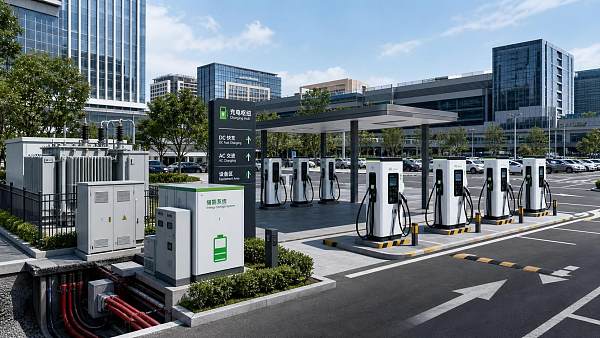
A charger’s rated output is only one part of its operating envelope. Before comparing suppliers, define how the equipment will actually work. This includes expected daily charging sessions, average session duration, peak-hour concurrency, vehicle types, ambient temperature, elevation where relevant, indoor or outdoor installation, dust exposure, flood risk, and the likely quality of the local power supply.
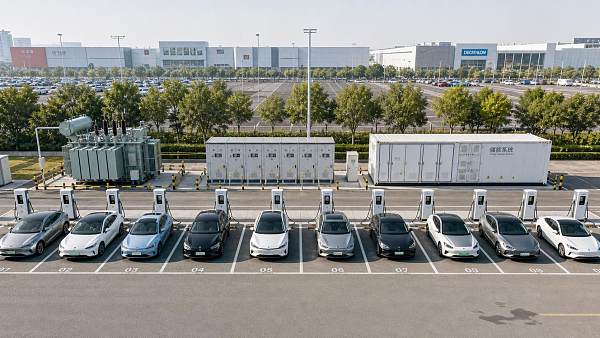
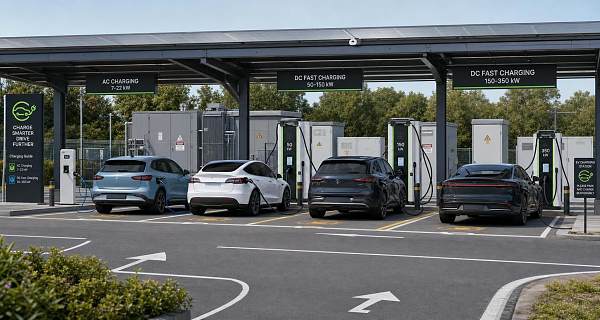
Duty cycle deserves particular attention for DC fast charging. A charger that performs well during occasional daytime use may face much greater thermal and electrical stress when multiple dispensers operate continuously during fleet return windows or holiday traffic peaks. If power cabinets are shared across connectors, buyers should understand exactly how power is allocated when several vehicles are plugged in. The important question is not simply “How many connectors are available?” but “What output can each vehicle receive under the expected simultaneous load?”
Site conditions also change the reliability equation. Coastal salt exposure, extreme heat, severe cold, wind-driven rain, vandalism risk, and dusty logistics yards can all affect enclosures, screens, cables, fans, filters, seals, and connector mechanisms. A procurement specification that merely asks for “outdoor use” is too broad. It should define the actual environmental conditions and request evidence that the offered configuration is suitable for them.
This site-first approach reflects a wider energy infrastructure reality: charging equipment sits at the intersection of vehicles, distribution grids, digital platforms, civil works, and user behavior. It should be treated as a long-life operational asset rather than a standalone electrical appliance.
Look inside the reliability claim
Suppliers often describe their chargers as robust, industrial-grade, or built for high availability. Those descriptions may be reasonable, but procurement teams need to convert them into reviewable evidence. Ask how the charger is designed around the components and failure points that matter most in the intended application.
For DC equipment, examine the power conversion architecture, module redundancy, contactors, relays, protection devices, cable assemblies, connector locking mechanisms, cooling system, and internal wiring discipline. A modular power design can help serviceability if a failed module can be isolated and replaced efficiently, but this benefit depends on fault diagnosis, spare-part availability, and the supplier’s field process. It is not enough for a brochure to state that a charger is modular.
Thermal design is often underestimated. Power electronics, charging cables, connectors, displays, and communication components all face temperature-related stress. Forced-air cooling introduces a maintenance dependency: filters, fan condition, airflow paths, and dust accumulation must be managed. Liquid-cooled systems can support demanding use cases, but they introduce other items to inspect, including coolant monitoring, leak detection, hose serviceability, and maintenance instructions. Buyers should request clear derating behavior rather than assuming that a charger will always sustain maximum output in difficult weather.
Mechanical details matter just as much in public and fleet environments. The charge cable is handled repeatedly, sometimes dragged, bent, dropped, or exposed to vehicles. Cable reach, strain relief, holster durability, connector weight, emergency-stop placement, screen protection, and cabinet access all affect both downtime and daily usability. A technically advanced charger can still fail operationally if its high-wear parts are poorly suited to the site.
Check reliability at the grid interface
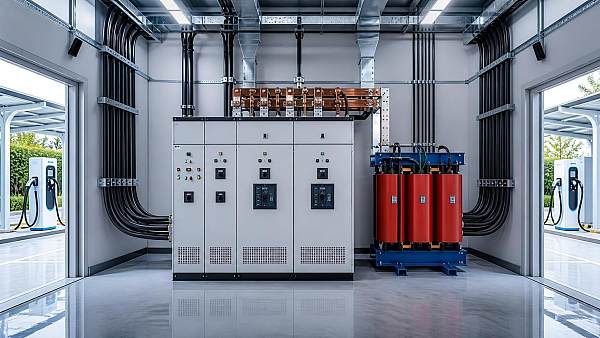
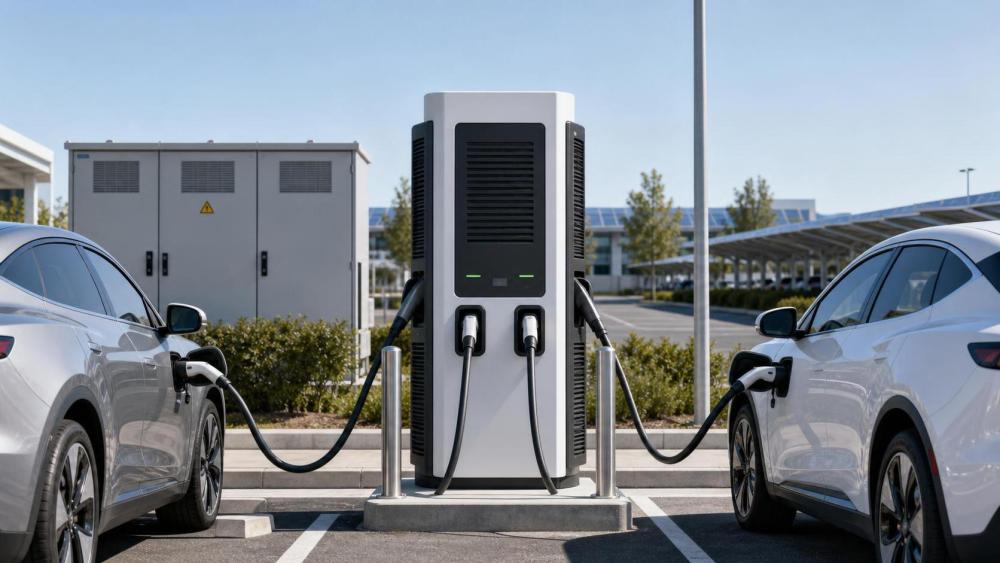
Many apparent charger faults originate outside the charger cabinet. Voltage fluctuation, phase imbalance, grounding issues, insufficient transformer capacity, harmonics, poorly coordinated protection settings, or unstable communication connections can interrupt service and create misleading fault records. Procurement should therefore include an early review of the electrical network, not wait until commissioning to discover constraints.
Ask the supplier to state the required input conditions, protection arrangements, earthing assumptions, power-quality limits, and any site-side equipment needed for compliant operation. These requirements should be coordinated with the utility, electrical designer, and EPC contractor. Where load management is planned, test the control logic against real site priorities: building demand limits, fleet departure schedules, solar generation, battery storage dispatch, or tariff periods.
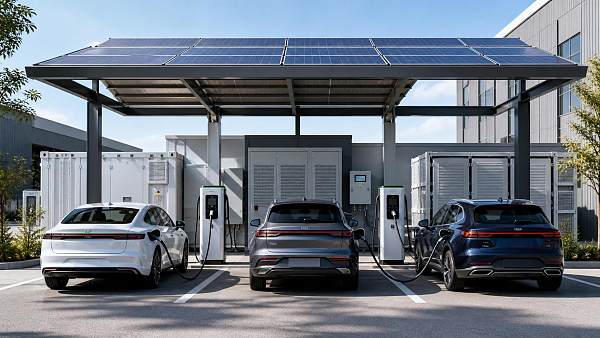
Grid compatibility is especially important for charging hubs connected to constrained distribution networks. A charger that trips frequently under a local voltage condition may be technically functional but commercially unreliable. In integrated projects involving rooftop solar, behind-the-meter batteries, microgrids, or demand response, the charging system needs a clearly defined role within the site energy management strategy.
Software stability is part of equipment reliability
Charging infrastructure increasingly depends on software for authorization, payment, remote monitoring, dynamic load balancing, fault alerts, tariff management, and roaming or backend integration. A charger may be electrically healthy while unavailable to users because of a software, network, or configuration problem. For this reason, a long-term reliability review must include the digital layer.
Procurement documents should clarify which communication protocols are required, whether the charger must work with an existing charge point management system, and how software updates are approved, tested, deployed, and reversed if a problem occurs. OCPP support is commonly requested in commercial charging projects, but the version stated on paper does not by itself prove interoperability. Buyers should confirm which functions have been tested with the intended backend and whether any features depend on supplier-specific implementation.
Vehicle compatibility requires the same discipline. Connector standards, charging control behavior, plug-and-charge capabilities, and ISO 15118-related functions may matter for the project, but they should be matched to the local vehicle fleet and commercial model. A compatibility test plan using representative vehicles is more useful than a generic assurance that “all EVs are supported.”
Cybersecurity should not be treated as a separate IT exercise. Remote access, credential management, patching responsibilities, data ownership, network segmentation, and vulnerability response procedures can influence service continuity. The buyer needs to know what happens if cloud connectivity is interrupted: can essential charging continue locally, and which functions become unavailable?
Evaluate evidence, not only declarations
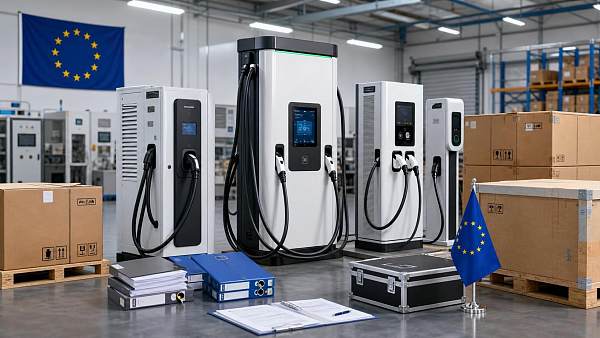
The strongest procurement packages ask suppliers to provide traceable evidence appropriate to the market and installation type. This may include applicable test reports, declarations of conformity, product documentation, maintenance schedules, warranty terms, installation requirements, and records of relevant operating deployments. Requirements will vary by country and project, so buyers should validate the standards and approval pathway with local authorities and technical advisers.
For charging equipment, references to standards such as IEC 61851 for conductive charging systems, IEC 62196 for plugs and vehicle connectors, or ISO 15118 for certain vehicle-to-charger communication functions may be relevant. Their relevance depends on the product, jurisdiction, and scope claimed. The practical procurement question is: what has been tested, by whom, for which configuration, and does that evidence apply to the exact charger model, connector arrangement, software version, and destination market?
Field history can add valuable context, but it should be interpreted carefully. Ask for deployments comparable in climate, power level, usage intensity, and service environment. A low-utilization indoor installation is not a reliable proxy for an outdoor public charging corridor. Where references are available, discussion should focus on recurring failure categories, mean repair workflow, parts lead time, update practices, and lessons learned—not only on the number of units shipped.
Service capacity often determines real uptime
A good charger with weak after-sales support can become a poor infrastructure investment. Before placing an order, assess the supplier’s service organization with the same seriousness given to the hardware. Who performs commissioning? Is first-line support local or remote? Which faults can be resolved through diagnostics or software, and which require a site visit? Who keeps critical spares, and where?
Warranty language should be read for exclusions as well as duration. Clarify responsibility for cable damage, vandalism, network interruptions, upstream power issues, water ingress caused by installation defects, and failures linked to third-party backend systems. A practical service-level agreement should define response and restoration expectations, escalation contacts, reporting format, planned maintenance intervals, and access to fault data.
Serviceability can be reviewed before purchase through simple questions: Can technicians access likely service points without disturbing major assemblies? Are replaceable parts identified by clear part numbers? Is remote diagnosis sufficiently granular to avoid unnecessary site visits? Are manuals usable by the local O&M team? These details may seem operational, but they directly influence outage duration.
Build reliability requirements into the tender
Reliability is easier to manage when it is written into the procurement process rather than discussed informally after award. A balanced technical schedule can require suppliers to respond to the project duty profile, environmental exposure, grid conditions, communications architecture, service coverage, spare-part plan, and acceptance testing approach.
Factory acceptance testing and site acceptance testing should also be specified around the project’s real risks. Beyond powering up the charger, the test plan may need to cover connector operation, emergency stop functions, insulation and protection checks, network recovery, billing or authorization workflows, load-sharing behavior, and charging with representative vehicles. The exact scope should be set by the project’s engineering, safety, and regulatory requirements.
Avoid the lowest-price reliability trap
Lowest purchase price can be a misleading selection criterion when chargers generate revenue, support fleet operations, or affect tenant and customer experience. A lower-cost offer may be appropriate if its operating profile is modest and service support is strong. But it becomes risky when the bid omits commissioning, backend integration, spare parts, warranty clarity, or the site-side equipment needed for stable operation.
The better comparison is total operational exposure: capital cost, civil and electrical integration, energy management requirements, maintenance labor, replacement parts, software fees, response times, expected utilization, and the business consequence of an unavailable charger. For a delivery fleet, one inaccessible charging point may disrupt vehicles scheduled for the next shift. For a public hub, repeated failed sessions can damage utilization long before a formal maintenance report captures the problem.
Global EcoPower & Energy Matrix Intelligence Network (EPEM) approaches EV charging as part of a broader power-system transition. Chargers now interact with renewable generation, energy storage, grid constraints, digital control platforms, and commercial energy strategies. That broader view is useful during procurement because many reliability problems arise in the interfaces between these systems, rather than in one visible cabinet alone.
Make procurement the beginning of lifecycle control
The most reliable charging projects are usually those where procurement, engineering, operations, and commercial teams agree on what “available” means before equipment is ordered. They establish a realistic site duty profile, review technical evidence, test integration early, define responsibility boundaries, and plan for maintenance before the first vehicle arrives.
Before selecting a supplier, turn broad reliability claims into a project-specific checklist: sustained output in local conditions, compatibility with the actual vehicles and backend, electrical fit with the grid connection, accessible spares, trained service support, and transparent software governance. If a supplier cannot answer those questions clearly before award, the uncertainty will not disappear after commissioning.
Questions about market trends? Contact Market Scope Live for deeper business insights.
We respect your privacy. Your information is strictly confidential.
Related News
 EV Charging InfrastructureIndian Minister Proposes Lower EV Charging Rates to Encourage AdoptionIndia EV charging rates could fall in Maharashtra under Nitin Gadkari’s proposal. Explore the potential impact on drivers, fleets and charging operators.MORE+
 EV Charging InfrastructureEV Charging for Industrial Parks: Sizing Capacity and Managing Peak LoadsPlan industrial parks EV charging with confidence. Learn how to size capacity, manage peak loads, reduce demand costs, and keep fleets ready without disrupting production.MORE+
 EV Charging InfrastructureArlington County, Virginia, to Raise Public EV Charging Rates by 72%Arlington County public EV charging rates will rise 72% to $0.30/kWh on November 1, 2026. Explore the potential impact on fleet budgets and how businesses can prepare.MORE+
 EV Charging InfrastructurePlanning Solar EV Charging Hubs: Sizing PV, Battery Storage, and Grid CapacityPlan solar EV charging hubs with confidence. Learn how to size PV, battery storage, and grid capacity to meet peak demand, control costs, and support reliable charging.MORE+
 EV Charging InfrastructureChery Unveils 1.44 MW Charging System, Claims 500 km of Range in Five MinutesChery’s 1.44 MW charging system claims 500 km of range in five minutes. Explore its ultrafast EV charging technology, vehicle compatibility and global rollout plans.MORE+
 EV Charging InfrastructureComparing EV Charging Equipment Manufacturers: Warranty, Lead Times, and SupportCompare EV charging equipment manufacturers on warranty coverage, lead times, and support. Discover how to reduce downtime, uncover hidden costs, and choose the right supplier.MORE+
 EV Charging InfrastructurePlanning Urban EV Charging Hubs: Site Selection, Power Needs, and Charger MixPlan urban EV charging hubs with confidence. Discover how to select sites, size power capacity, and balance AC/DC chargers to control costs and deliver reliable charging.MORE+
 EV Charging InfrastructureHow to Plan Charging Corridors for Fleet Routes, Grid Capacity, and Future DemandCharging corridor infrastructure planning helps fleets align routes, grid capacity, reliable charging, and scalable site design for future demand.MORE+
 EV Charging InfrastructureHow to Size Fast EV Charging Equipment for Fleet Depots Without OverbuildingFast EV charging equipment for fleet depots: learn how to match power, charging windows, grid capacity, and smart controls without costly overbuilding.MORE+
 EV Charging InfrastructureHow to Plan EV Charging Infrastructure in Indonesia for Fleet and Public SitesCharging infrastructure planning in Indonesia for fleet and public sites: optimize energy, grid capacity, smart load management, safety, and scalable EV charging.MORE+
 EV Charging InfrastructureHow to Size DC EV Charging Equipment for Fleet Depots and Peak DemandDC EV charging equipment sizing guide for fleet depots: balance energy demand, peak loads, utility limits, smart charging, and scalable growth.MORE+
 EV Charging InfrastructureAre EV Charger Payment Systems Interoperable Across Regions?Are there interoperability standards for EV charger payment systems across regions? Explore OCPP, OCPI, Plug & Charge, roaming, and payment strategies for seamless EV charging.MORE+
 EV Charging InfrastructureHow to Evaluate Total Cost of Ownership for a Fleet DC Charging DepotHow to evaluate total cost of ownership for a fleet DC charging depot: compare grid costs, tariffs, uptime, smart charging, and scalable infrastructure.MORE+
 EV Charging InfrastructurePublic Charging Infrastructure Planning: Site Criteria, Grid Capacity, and UtilizationPublic charging infrastructure planning made practical: evaluate site access, grid capacity, utilization, and scalable design to build reliable, investable EV charging hubs.MORE+
 EV Charging InfrastructureHow Behind-the-Meter Energy Systems for EV Charging Cut Peak-Demand CostsBehind the meter energy systems for EV charging help cut peak-demand costs, defer grid upgrades, and improve charging reliability with storage and smart controls.MORE+
 EV Charging InfrastructureIs Building a Public EV Charging Network in Rural Areas Financially Viable?Is it financially viable to build public charging networks in rural areas? Explore grid costs, utilization, funding, AC/DC choices, and strategies for profitable rural EV charging.MORE+
 EV Charging InfrastructureHow Public EV Charging Load Management Prevents Peak Demand and Grid Overloadspublic EV charging load management prevents costly peak demand and grid overloads. Explore smarter controls, capacity planning, and scalable charging performance.MORE+
 EV Charging InfrastructureHow to Assess Long-Term EV Charger Reliability Before ProcurementHow to evaluate long-term reliability of EV chargers before procurement? Explore practical checks for uptime, grid compatibility, software stability, service support, and lifecycle costs.MORE+
 EV Charging InfrastructureIs AC Charging Still Worth Investing in for New Public Stations in 2026?Is AC charging still worth investing in for new public stations in 2026? Explore where smart, managed AC charging delivers value, revenue, and scalable EV infrastructure.MORE+
 EV Charging InfrastructureHow to Plan Power Capacity for Highway EV Charging CorridorsHighway charging corridor power capacity planning: learn how to size grid connections, manage peak demand, use storage, and phase EV hubs for reliable, scalable growth.MORE+
 EV Charging InfrastructureWhat Is the Typical BMS Failure Rate in EV Charging Equipment?Battery management system failure rate in charging equipment: learn what BMS faults mean, key risks, and how to protect EV charger uptime.MORE+
 EV Charging InfrastructureHow Should Fleet Depot Charging Stations Be Laid Out?Fleet depot charging station layout design guidelines for safer vehicle flow, smart power use, scalable infrastructure, and reliable fleet readiness. Explore practical planning tips.MORE+
 EV Charging InfrastructureDC Fast Chargers vs Liquid-Cooled Ultra-Fast Chargers in 2026DC fast charger vs liquid-cooled ultra-fast charging stations 2026: compare power, costs, grid demands, uptime, and ideal deployment scenarios for smarter EV infrastructure.MORE+
 EV Charging InfrastructureWhat Does the Global EcoPower Charging Intelligence Platform Do?Global EcoPower EV charging infrastructure intelligence platform delivers actionable insights on grid capacity, storage, technology, risk, and profitable charging project planning.MORE+
 EV Charging InfrastructureHow Global EcoPower Manages Energy Across EV Charging NetworksGlobal EcoPower energy management systems for charging networks optimize EV charging with dynamic load control, storage, solar integration, and reliable data insights.MORE+
 EV Charging InfrastructureWhat Switchgear Specifications Are Needed for a 500 kW Charging Site?What switchgear specifications are required for a 500kW charging installation? Explore load sizing, transformer selection, fault ratings, protection, and expansion planning.MORE+
 EV Charging InfrastructureWhich Communication Protocols Matter When Mixing Charger Brands?What communication protocols matter most when mixing charger brands at one station? Explore OCPP, OCPI, ISO 15118, and energy controls for reliable interoperability.MORE+
 EV Charging InfrastructureWhat Grid Connection Capacity Does a 10-Bay Fast Charging Hub Need?What grid connection capacity is needed for a 10-bay fast charging hub? Explore demand, power sharing, batteries, and scalable planning for reliable EV charging.MORE+
 EV Charging InfrastructureHow to Plan EV Charging Systems for Apartments Without Overloading the Building?EV charging systems for apartments start with capacity, not charger count. Learn how to prevent overloads, use smart load management, and plan scalable charging that fits your building.MORE+
 EV Charging InfrastructureHow City Charging Infrastructure Planning Can Reduce Costs and Avoid Grid BottlenecksCharging infrastructure planning for cities helps cut costs, avoid grid bottlenecks, and speed EV rollout with smarter, scalable deployment.MORE+
 EV Charging InfrastructureEU Mandates EN 61851-23:2026 for EV ChargersEU Mandates EN 61851-23:2026 for EV Chargers: learn how the new EU rule impacts certification, customs clearance, and market access before October 2026.MORE+
 EV Charging InfrastructureITC Ruling Puts Chinese EV Chargers Under 337 PressureITC ruling on Chinese EV chargers puts Section 337 pressure on imports, compliance, and OEM supply chains. Learn how patent risks may impact U.S. customs, distributors, and EV charger sourcing.MORE+
 EV Charging InfrastructureHow EV Charging Technology Affects Charging Speed, Compatibility, and Site PlanningEV charging technology shapes real charging speed, vehicle compatibility, and site planning. Learn how to avoid costly design mistakes and build charging projects that perform.MORE+
 EV Charging InfrastructureUS Requires UL 1741 SA-2025 EVSE ModulesUS Requires UL 1741 SA-2025 EVSE Modules for imported DC fast chargers. Learn how V2G, FCC+UL testing, and firmware compliance will reshape US market access.MORE+
 EV Charging InfrastructureUSTR Opens Section 301 Review on China EV ChargersUSTR Opens Section 301 Review on China EV Chargers: learn how the 25% tariff review may affect import costs, customs compliance, and procurement timing across EV charging and BESS supply chains.MORE+
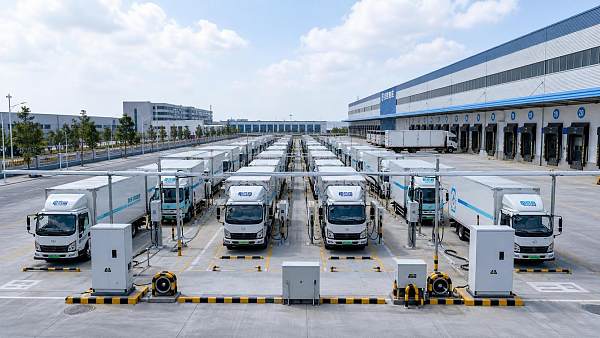
 EV Charging InfrastructureHow to Plan Fleet Charging Infrastructure for Logistics Depots and Delivery HubsFleet charging infrastructure for logistics starts with duty cycles, dwell time, and grid limits. Learn how to design depot and hub charging that cuts bottlenecks and supports scalable fleet electrification.MORE+
 EV Charging InfrastructureWhat Is Load Management in EV Charging and How Does It Reduce Peak Power Costs?Load management in EV charging helps control peak demand, lower grid upgrade pressure, and cut costly power spikes. Learn how smart power allocation improves site economics.MORE+
 EV Charging InfrastructureHow to Evaluate an EV Charging Software Platform for Multi-Site Charging OperationsEV charging software platform evaluation made practical: learn how to assess interoperability, load management, billing, security, and scalability for multi-site charging operations.MORE+
 EV Charging InfrastructureUSTR Opens 301 Review on China EV Charging GearUSTR opens a Section 301 review on China EV charging gear, putting tariffs, import costs, pricing, and inventory plans at risk. See what US importers and distributors should watch now.MORE+
 EV Charging InfrastructureEU Sets 17.1% Duty on Chinese EV ChargersEU Sets 17.1% Duty on Chinese EV Chargers: see how the new EU tariff affects EV charging equipment exports, customs costs, HS codes, and contract risks for suppliers.MORE+