EV Charging for Industrial Parks: Sizing Capacity and Managing Peak Loads
EV charging can become an electrical bottleneck when delivery vehicles return, employees plug in, and production equipment reaches its afternoon peak. Spare transformer capacity observed during a quiet shift may disappear during normal operations. The result can be missed vehicle departures, unexpected demand charges, or pressure to restrict charging after equipment has already been purchased.
The starting point for industrial parks EV charging is to calculate vehicle energy requirements within actual parking windows, then test whether the site can deliver that energy under a controlled power limit. Size the installation around departure readiness and electrical constraints—not the sum of charger nameplates. Use managed charging where vehicles have scheduling flexibility, and consider grid reinforcement or storage where the remaining shortfall cannot be shifted.
Establish the electrical boundary before choosing chargers
An industrial park may have one utility connection but several tenant meters, transformers, and private distribution networks. Capacity available at the main incomer does not automatically mean capacity is available at the parking area. A downstream transformer, feeder, switchboard, or individual phase may become the binding constraint.
Collect interval load data covering representative production cycles, seasonal cooling or heating demand, maintenance shutdowns, and unusual operating peaks. Billing data can reveal demand exposure, but finer-resolution measurements may be needed to understand motor starts, rapid load changes, and controller response requirements.
- Utility connection: Confirm import limits, contracted capacity, metering arrangements, and whether a capacity increase requires network works.
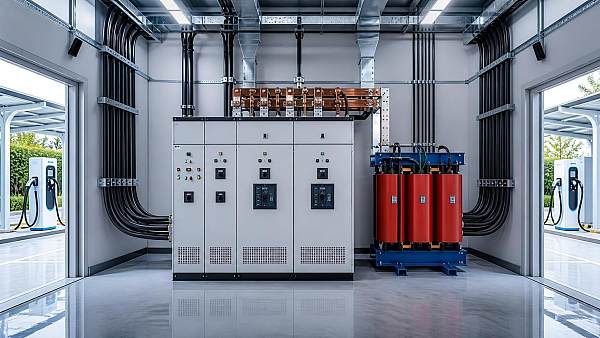
- Internal distribution: Review transformer loading, feeder capacity, voltage drop, switchgear ratings, protection coordination, and installation conditions.
- Existing commitments: Include approved production expansions, tenant fit-outs, and other loads not yet visible in historical measurements.
- Operating reserve: Establish headroom for measurement uncertainty, load changes, and the time required for charging controls to respond.
Keep electrical capacity and electricity cost separate. A site may remain within its connection limit while setting an expensive billing peak. Conversely, a low tariff period does not make additional charging electrically permissible. The project needs both a physical operating envelope and an economic dispatch target.
Translate vehicle movements into energy deadlines
Parking-space counts indicate potential connection points, not required charging capacity. An employee car parked throughout a shift has a different requirement from a distribution vehicle returning briefly between routes. Separate users by energy need, arrival time, departure deadline, and operational priority.
Estimate energy from route consumption or measured charging records where available. Include seasonal operating conditions, auxiliary loads, and the required departure reserve without assuming every vehicle arrives empty. Convert battery energy into grid energy using a stated charging-efficiency assumption.
Grid energy required = battery energy to replenish ÷ charging efficiency. The minimum average input power is that grid energy divided by the usable charging window. The usable window excludes time spent waiting for access, connecting vehicles, or moving them between bays.
Check vehicle acceptance limits as well. A high-rated AC unit cannot overcome a vehicle’s onboard charger limit, and DC power may taper with state of charge or temperature. Charger nameplate power is therefore an upper bound, not a guaranteed session average.
Test capacity with a time-based schedule
Consider an illustrative planning calculation, not a measured project result. Suppose 20 fleet vehicles each need 36 kWh delivered to their batteries during a six-hour parking window. At an assumed 90% grid-to-battery efficiency, they require 800 kWh from the site, equivalent to approximately 133 kW averaged across that window.
If the installation has 20 charging points rated at 11 kW each, its combined nameplate rating is 220 kW. Delivering the required energy does not necessarily require all points to run at full output together. However, the 133 kW average alone does not prove feasibility: staggered arrivals, early departures, vehicle limits, and charging interruptions can create tighter periods.
Build a time-series model using the same timeline for building loads, vehicle availability, and any on-site generation. For each interval, determine:
- The charging headroom below each relevant electrical limit, after allowing for operating reserve.
- Which vehicles are connected and how much energy they still need before departure.
- The power each charger and vehicle can actually accept.
- Whether the remaining energy can still be delivered within each vehicle’s available window.
Available EV power at time t = permitted site import − non-EV net demand − operating reserve, subject to tighter local feeder and equipment limits. Treat export, storage dispatch, and generation consistently in the power balance rather than counting their contribution twice.
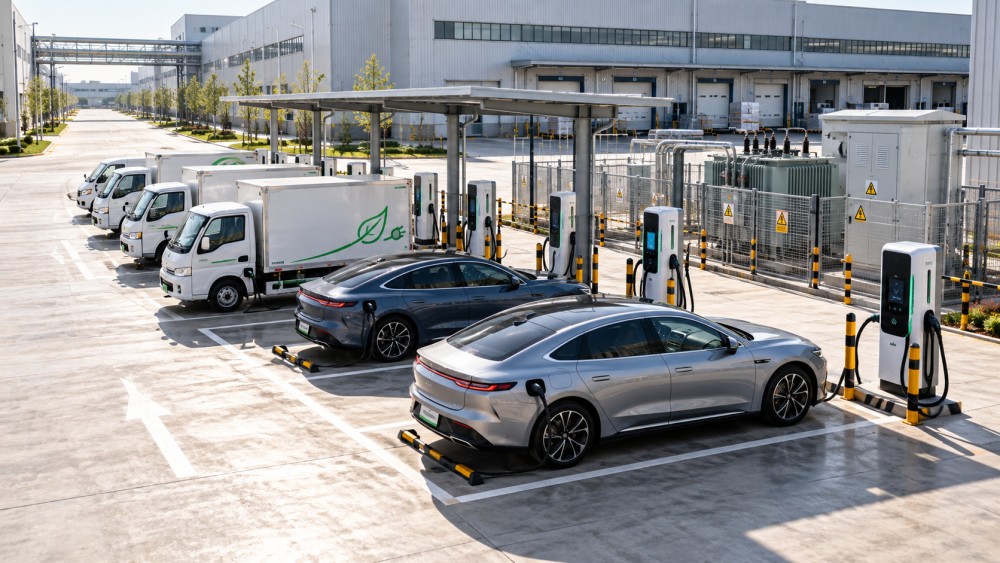
A negative headroom result indicates an existing site constraint; charging controls cannot correct that underlying overload by themselves. Likewise, enough total overnight energy does not guarantee that a vehicle leaving early will be ready. Test both aggregate energy sufficiency and individual departure deadlines.
Run stress scenarios, including a busy production shift, late fleet returns, reduced charger availability, and low solar output. Use a justified concurrency model rather than applying an unexplained diversity factor to total installed power.
Make load management protect operations, not just limit kilowatts
A fixed charging cap can prevent excessive demand, but equal power sharing may leave urgent vehicles short while long-stay cars receive unnecessary energy. The controller should use departure times, requested energy, vehicle priority, and charger availability to allocate capacity.
A practical hierarchy is to protect critical industrial loads first, meet committed fleet departures next, and allocate remaining capacity to flexible employee or visitor sessions. Define who can override priorities and what an override means for other vehicles. Without these rules, urgent requests tend to become permanent exceptions.
The control architecture should address several distinct constraints:
- Site import control: Adjust aggregate charging as measured non-EV demand changes.
- Local limits: Enforce transformer, feeder, and phase constraints even when the site-wide limit has spare capacity.
- Deadline scheduling: Reserve sufficient charging opportunities for vehicles with limited flexibility.
- Tariff optimization: Shift flexible sessions only after electrical limits and departure requirements are satisfied.
Specify meter locations, update rates, control response, and fallback behavior in the tender. A controller using delayed cloud data may be unsuitable as the only mechanism protecting a constrained feeder. Loss of communications should trigger a defined safe power allocation, not unrestricted charging or an unexplained shutdown of every port.
Managed charging does not replace correctly designed protection, earthing, residual-current protection, or cable sizing. Qualified electrical designers must confirm whether the proposed controls can be recognized in capacity calculations under applicable installation rules and utility requirements.
Choose between scheduling, storage, and grid reinforcement
The shape and duration of the shortfall determine the appropriate intervention. Long parking windows with flexible demand generally favor scheduling. A short, recurring overlap between production peaks and fleet charging may justify evaluating storage. A sustained energy deficit usually requires more supply capacity, longer charging windows, or changes to fleet operations.
Where battery storage helps—and where it does not
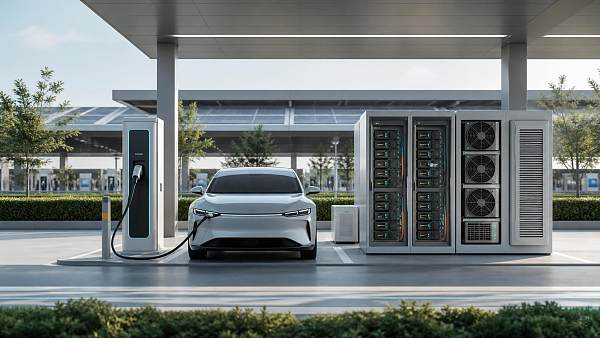
A battery can support charging while holding grid import below a target, provided it has both adequate discharge power and usable energy. Size discharge power from the maximum residual shortfall after scheduling. Size usable energy from the accumulated shortfall over the event, allowing for conversion losses, operating limits, degradation, and any reserved capacity.
For example, an illustrative 100 kW shortfall lasting two hours requires 200 kWh delivered on the AC side before accounting for those allowances. A battery with sufficient energy but insufficient inverter power cannot cover the peak. A powerful inverter paired with too little usable energy will stop supporting the load before the event ends.
Confirm when the battery can recharge without creating another peak. Include cycling costs, tariff structure, fire-safety provisions, siting, maintenance, and replacement assumptions in the commercial comparison. Storage cannot solve a persistent daily energy deficit if no recharge opportunity exists.
When an upgrade is the more credible option
Grid or internal distribution reinforcement deserves priority when high utilization leaves little scheduling flexibility, missed departures carry substantial operational consequences, or the required storage would cycle heavily to compensate for a continuing supply shortage. Request utility feasibility information early: connection lead times can determine the deployment sequence.
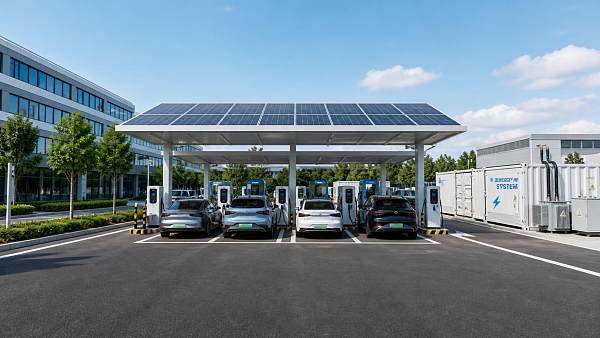
Rooftop solar may reduce daytime net demand, but its contribution must follow a realistic generation profile. Do not count full solar output as firm capacity for evening fleet arrivals. Charging should remain within limits when clouds reduce production or the solar system is unavailable.
Phase construction without locking in the wrong capacity
Separate the number of installed connectors from the power initially made available to them. More lower-power connections can avoid vehicle moving and queuing where dwell times are long. Faster charging is more valuable where turnaround time, rather than parking availability, controls service delivery.
During initial civil works, assess ducts, cable routes, switchboard space, communications coverage, and equipment access for later stages. Avoid purchasing oversized power equipment solely on an unverified adoption forecast. Expansion should follow measured utilization and updated vehicle schedules.
Set specific expansion triggers: repeated departure-energy shortfalls despite optimized scheduling, sustained queues, or a forecast increase that exceeds validated headroom. High connector occupancy alone is not proof that the site needs more electrical capacity.
Commission against departure readiness and peak exposure
Acceptance testing should reproduce the operating conditions the design claims to manage. Demonstrate response to rising production demand, simultaneous connections, a local feeder constraint, lost communications, and unavailable chargers. Verify metering accuracy and confirm that fallback settings remain active after equipment restarts.
Measure completed energy requests by departure time, site peak demand, charging interruptions, and constraint-related curtailment. Separate failures caused by insufficient electrical capacity from vehicles arriving late, incorrect booking information, charger faults, or vehicle-side charging limits.
For multi-tenant parks, commissioning must also validate tenant identification, energy allocation, and responsibility for shared demand costs. Agree who may change the site charging cap and priority rules. These settings influence both production risk and transport availability, so changes need controlled approval rather than unrestricted operator access.
Questions about market trends? Contact Market Scope Live for deeper business insights.
We respect your privacy. Your information is strictly confidential.
Related News
 EV Charging InfrastructureIndian Minister Proposes Lower EV Charging Rates to Encourage AdoptionIndia EV charging rates could fall in Maharashtra under Nitin Gadkari’s proposal. Explore the potential impact on drivers, fleets and charging operators.MORE+
 EV Charging InfrastructureEV Charging for Industrial Parks: Sizing Capacity and Managing Peak LoadsPlan industrial parks EV charging with confidence. Learn how to size capacity, manage peak loads, reduce demand costs, and keep fleets ready without disrupting production.MORE+
 EV Charging InfrastructureArlington County, Virginia, to Raise Public EV Charging Rates by 72%Arlington County public EV charging rates will rise 72% to $0.30/kWh on November 1, 2026. Explore the potential impact on fleet budgets and how businesses can prepare.MORE+
 EV Charging InfrastructurePlanning Solar EV Charging Hubs: Sizing PV, Battery Storage, and Grid CapacityPlan solar EV charging hubs with confidence. Learn how to size PV, battery storage, and grid capacity to meet peak demand, control costs, and support reliable charging.MORE+
 EV Charging InfrastructureChery Unveils 1.44 MW Charging System, Claims 500 km of Range in Five MinutesChery’s 1.44 MW charging system claims 500 km of range in five minutes. Explore its ultrafast EV charging technology, vehicle compatibility and global rollout plans.MORE+
 EV Charging InfrastructureComparing EV Charging Equipment Manufacturers: Warranty, Lead Times, and SupportCompare EV charging equipment manufacturers on warranty coverage, lead times, and support. Discover how to reduce downtime, uncover hidden costs, and choose the right supplier.MORE+
 EV Charging InfrastructurePlanning Urban EV Charging Hubs: Site Selection, Power Needs, and Charger MixPlan urban EV charging hubs with confidence. Discover how to select sites, size power capacity, and balance AC/DC chargers to control costs and deliver reliable charging.MORE+
 EV Charging InfrastructureHow to Plan Charging Corridors for Fleet Routes, Grid Capacity, and Future DemandCharging corridor infrastructure planning helps fleets align routes, grid capacity, reliable charging, and scalable site design for future demand.MORE+
 EV Charging InfrastructureHow to Size Fast EV Charging Equipment for Fleet Depots Without OverbuildingFast EV charging equipment for fleet depots: learn how to match power, charging windows, grid capacity, and smart controls without costly overbuilding.MORE+
 EV Charging InfrastructureHow to Plan EV Charging Infrastructure in Indonesia for Fleet and Public SitesCharging infrastructure planning in Indonesia for fleet and public sites: optimize energy, grid capacity, smart load management, safety, and scalable EV charging.MORE+
 EV Charging InfrastructureHow to Size DC EV Charging Equipment for Fleet Depots and Peak DemandDC EV charging equipment sizing guide for fleet depots: balance energy demand, peak loads, utility limits, smart charging, and scalable growth.MORE+
 EV Charging InfrastructureAre EV Charger Payment Systems Interoperable Across Regions?Are there interoperability standards for EV charger payment systems across regions? Explore OCPP, OCPI, Plug & Charge, roaming, and payment strategies for seamless EV charging.MORE+
 EV Charging InfrastructureHow to Evaluate Total Cost of Ownership for a Fleet DC Charging DepotHow to evaluate total cost of ownership for a fleet DC charging depot: compare grid costs, tariffs, uptime, smart charging, and scalable infrastructure.MORE+
 EV Charging InfrastructurePublic Charging Infrastructure Planning: Site Criteria, Grid Capacity, and UtilizationPublic charging infrastructure planning made practical: evaluate site access, grid capacity, utilization, and scalable design to build reliable, investable EV charging hubs.MORE+
 EV Charging InfrastructureHow Behind-the-Meter Energy Systems for EV Charging Cut Peak-Demand CostsBehind the meter energy systems for EV charging help cut peak-demand costs, defer grid upgrades, and improve charging reliability with storage and smart controls.MORE+
 EV Charging InfrastructureIs Building a Public EV Charging Network in Rural Areas Financially Viable?Is it financially viable to build public charging networks in rural areas? Explore grid costs, utilization, funding, AC/DC choices, and strategies for profitable rural EV charging.MORE+
 EV Charging InfrastructureHow Public EV Charging Load Management Prevents Peak Demand and Grid Overloadspublic EV charging load management prevents costly peak demand and grid overloads. Explore smarter controls, capacity planning, and scalable charging performance.MORE+
 EV Charging InfrastructureHow to Assess Long-Term EV Charger Reliability Before ProcurementHow to evaluate long-term reliability of EV chargers before procurement? Explore practical checks for uptime, grid compatibility, software stability, service support, and lifecycle costs.MORE+
 EV Charging InfrastructureIs AC Charging Still Worth Investing in for New Public Stations in 2026?Is AC charging still worth investing in for new public stations in 2026? Explore where smart, managed AC charging delivers value, revenue, and scalable EV infrastructure.MORE+
 EV Charging InfrastructureHow to Plan Power Capacity for Highway EV Charging CorridorsHighway charging corridor power capacity planning: learn how to size grid connections, manage peak demand, use storage, and phase EV hubs for reliable, scalable growth.MORE+
 EV Charging InfrastructureWhat Is the Typical BMS Failure Rate in EV Charging Equipment?Battery management system failure rate in charging equipment: learn what BMS faults mean, key risks, and how to protect EV charger uptime.MORE+
 EV Charging InfrastructureHow Should Fleet Depot Charging Stations Be Laid Out?Fleet depot charging station layout design guidelines for safer vehicle flow, smart power use, scalable infrastructure, and reliable fleet readiness. Explore practical planning tips.MORE+
 EV Charging InfrastructureDC Fast Chargers vs Liquid-Cooled Ultra-Fast Chargers in 2026DC fast charger vs liquid-cooled ultra-fast charging stations 2026: compare power, costs, grid demands, uptime, and ideal deployment scenarios for smarter EV infrastructure.MORE+
 EV Charging InfrastructureWhat Does the Global EcoPower Charging Intelligence Platform Do?Global EcoPower EV charging infrastructure intelligence platform delivers actionable insights on grid capacity, storage, technology, risk, and profitable charging project planning.MORE+
 EV Charging InfrastructureHow Global EcoPower Manages Energy Across EV Charging NetworksGlobal EcoPower energy management systems for charging networks optimize EV charging with dynamic load control, storage, solar integration, and reliable data insights.MORE+
 EV Charging InfrastructureWhat Switchgear Specifications Are Needed for a 500 kW Charging Site?What switchgear specifications are required for a 500kW charging installation? Explore load sizing, transformer selection, fault ratings, protection, and expansion planning.MORE+
 EV Charging InfrastructureWhich Communication Protocols Matter When Mixing Charger Brands?What communication protocols matter most when mixing charger brands at one station? Explore OCPP, OCPI, ISO 15118, and energy controls for reliable interoperability.MORE+
 EV Charging InfrastructureWhat Grid Connection Capacity Does a 10-Bay Fast Charging Hub Need?What grid connection capacity is needed for a 10-bay fast charging hub? Explore demand, power sharing, batteries, and scalable planning for reliable EV charging.MORE+
 EV Charging InfrastructureHow to Plan EV Charging Systems for Apartments Without Overloading the Building?EV charging systems for apartments start with capacity, not charger count. Learn how to prevent overloads, use smart load management, and plan scalable charging that fits your building.MORE+
 EV Charging InfrastructureHow City Charging Infrastructure Planning Can Reduce Costs and Avoid Grid BottlenecksCharging infrastructure planning for cities helps cut costs, avoid grid bottlenecks, and speed EV rollout with smarter, scalable deployment.MORE+
 EV Charging InfrastructureEU Mandates EN 61851-23:2026 for EV ChargersEU Mandates EN 61851-23:2026 for EV Chargers: learn how the new EU rule impacts certification, customs clearance, and market access before October 2026.MORE+
 EV Charging InfrastructureITC Ruling Puts Chinese EV Chargers Under 337 PressureITC ruling on Chinese EV chargers puts Section 337 pressure on imports, compliance, and OEM supply chains. Learn how patent risks may impact U.S. customs, distributors, and EV charger sourcing.MORE+
 EV Charging InfrastructureHow EV Charging Technology Affects Charging Speed, Compatibility, and Site PlanningEV charging technology shapes real charging speed, vehicle compatibility, and site planning. Learn how to avoid costly design mistakes and build charging projects that perform.MORE+
 EV Charging InfrastructureUS Requires UL 1741 SA-2025 EVSE ModulesUS Requires UL 1741 SA-2025 EVSE Modules for imported DC fast chargers. Learn how V2G, FCC+UL testing, and firmware compliance will reshape US market access.MORE+
 EV Charging InfrastructureUSTR Opens Section 301 Review on China EV ChargersUSTR Opens Section 301 Review on China EV Chargers: learn how the 25% tariff review may affect import costs, customs compliance, and procurement timing across EV charging and BESS supply chains.MORE+
 EV Charging InfrastructureHow to Plan Fleet Charging Infrastructure for Logistics Depots and Delivery HubsFleet charging infrastructure for logistics starts with duty cycles, dwell time, and grid limits. Learn how to design depot and hub charging that cuts bottlenecks and supports scalable fleet electrification.MORE+
 EV Charging InfrastructureWhat Is Load Management in EV Charging and How Does It Reduce Peak Power Costs?Load management in EV charging helps control peak demand, lower grid upgrade pressure, and cut costly power spikes. Learn how smart power allocation improves site economics.MORE+
 EV Charging InfrastructureHow to Evaluate an EV Charging Software Platform for Multi-Site Charging OperationsEV charging software platform evaluation made practical: learn how to assess interoperability, load management, billing, security, and scalability for multi-site charging operations.MORE+
 EV Charging InfrastructureUSTR Opens 301 Review on China EV Charging GearUSTR opens a Section 301 review on China EV charging gear, putting tariffs, import costs, pricing, and inventory plans at risk. See what US importers and distributors should watch now.MORE+
 EV Charging InfrastructureEU Sets 17.1% Duty on Chinese EV ChargersEU Sets 17.1% Duty on Chinese EV Chargers: see how the new EU tariff affects EV charging equipment exports, customs costs, HS codes, and contract risks for suppliers.MORE+