
EV Charging Equipment Price Breakdown: What Drives Cost for AC and DC Chargers?
EV Charging Equipment Price Breakdown: What Drives Cost for AC and DC Chargers?
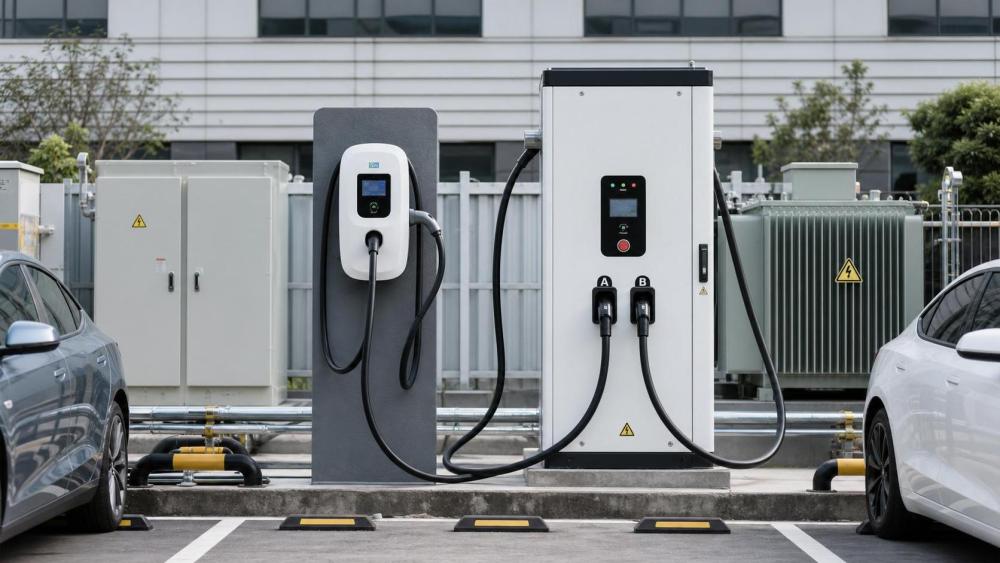
EV charging equipment price is rarely determined by charger power alone.
For procurement review, the real question is what sits behind the quote.
AC chargers and DC fast chargers follow very different cost structures.
That difference affects budget timing, project risk, and long-term operating economics.
A lower hardware quote can still lead to a higher total installed cost.
In practice, EV charging equipment price often reflects electrical capacity, site conditions, software needs, and maintenance strategy.
This is especially true when comparing workplace AC charging with highway or fleet DC fast charging.
A useful review starts by separating equipment cost from project cost.
Why AC and DC Charger Pricing Behaves Differently
AC chargers are simpler devices.
They mainly provide controlled power delivery, communication, safety protection, and user authorization.
Vehicle onboard chargers handle the AC-to-DC conversion.
That keeps AC hardware cost lower and installation more manageable.
DC chargers are different.
They include power electronics, rectification modules, cooling systems, cable management, advanced communication, and heavier protection components.
So the EV charging equipment price for DC systems rises sharply with power output.
The jump from 7 kW AC to 60 kW DC is not linear.
The jump from 60 kW to 180 kW or 350 kW can be even more dramatic.
More importantly, higher-power DC chargers usually trigger additional grid and civil works costs.
Core Hardware Cost Drivers
The first pricing layer is charger hardware itself.
Several factors push EV charging equipment price up or down.
- Power rating: More kilowatts usually mean more expensive converters, contactors, protection devices, and thermal management.
- Connector standards: CCS, NACS, CHAdeMO, or dual-standard configurations affect component count and compatibility cost.
- Cabinet architecture: Integrated units are simpler, while split systems support scaling but add configuration complexity.
- Cooling method: Air-cooled units cost less, but liquid-cooled systems support higher charging rates and heavier duty cycles.
- Enclosure grade: Outdoor chargers with stronger IP ratings and corrosion resistance cost more.
- Display and payment features: Screens, card readers, QR capability, and user interface upgrades add cost.
Brand and certification also matter.
Products with stronger compliance records often command a higher EV charging equipment price.
Yet they may reduce approval delays, warranty disputes, and field failure risk.
Grid Connection and Electrical Upgrade Costs
This is where many budgets move off plan.
The quoted charger can be only one part of the real EV charging equipment price.
Site power availability is often the deciding factor.
If existing service capacity is sufficient, AC charging can stay relatively cost-effective.
If not, electrical upgrades quickly change project economics.
- Transformer expansion
- Switchgear replacement
- New distribution panels
- Protection coordination studies
- Utility interconnection fees
- Demand charge mitigation measures
For DC fast charging, these line items can exceed charger hardware cost.
That is why two projects using the same charger model can show very different total budgets.
From a finance perspective, site power readiness should be reviewed before vendor comparison.
Installation, Civil Works, and Site Layout
Installation cost is not a side note.
It is one of the biggest reasons EV charging equipment price varies between bids.
Trenching distance affects cable quantity, labor hours, and traffic disruption.
Ground conditions matter as well.
Concrete pads, bollards, canopies, drainage work, and signage can materially shift capital cost.
So can parking layout.
A compact depot with planned charger rows is easier than retrofitting a mixed-use commercial site.
Permitting delays also create soft costs.
When utilization assumptions are time-sensitive, delay risk directly affects return calculations.
Software, Networking, and Commercial Functions
A charger is now part of a connected operating system.
This means EV charging equipment price increasingly includes digital capability.
Basic use cases need simple monitoring.
Commercial sites and fleet operators usually need much more.
- OCPP compatibility
- Remote diagnostics
- Load balancing
- User authentication
- Billing and settlement
- Fleet energy reporting
- Uptime and service analytics
Some vendors bundle these features into hardware pricing.
Others use annual software subscriptions and transaction fees.
That changes the procurement model from capex-only to capex plus recurring opex.
When reviewing EV charging equipment price, software terms should be evaluated over at least five years.
Lifecycle Maintenance and Reliability Economics
The lowest purchase price is rarely the lowest ownership cost.
This is one of the most common mistakes in charger procurement.
AC chargers often have fewer maintenance demands.
DC chargers operate under higher thermal and electrical stress.
That means spare parts planning becomes more important.
Service response time also matters because downtime hits revenue and user confidence.
A slightly higher EV charging equipment price can be justified by better uptime guarantees, local service capability, and modular repair design.
In high-utilization sites, those factors have clear financial value.
Typical Cost Comparison by Charger Type
The table below shows how cost logic usually differs.
This comparison helps frame EV charging equipment price in operational context, not just as a standalone asset quote.
What Procurement Reviews Should Check First
A disciplined review process reduces cost surprises.
- Separate charger quote, installation scope, and utility upgrade scope.
- Check whether EV charging equipment price includes software licenses and backend access.
- Review warranty terms, uptime commitments, and spare parts availability.
- Model demand charges and peak load impacts before approving high-power DC sites.
- Compare lifecycle cost over five to ten years, not just upfront capex.
- Test whether the charger specification matches actual dwell time and vehicle throughput.
That last point is often overlooked.
Oversizing a charger can weaken returns just as much as undersizing it.
A Practical Way to Read EV Charging Equipment Price
The most useful pricing question is not, “Which charger is cheapest?”
It is, “Which configuration delivers the required charging outcome at the lowest lifecycle risk?”
Seen that way, EV charging equipment price becomes a structured decision rather than a simple unit comparison.
AC charging usually wins on simplicity and lower installed cost.
DC charging wins when speed, turnover, and fleet productivity justify the extra capital.
A sound approval decision links power level, site readiness, utilization forecast, and service model into one financial view.
That is usually where the strongest charging investments stand out.
Questions about market trends? Contact Market Scope Live for deeper business insights.
We respect your privacy. Your information is strictly confidential.
Related News
 EV Charging InfrastructureIndian Minister Proposes Lower EV Charging Rates to Encourage AdoptionIndia EV charging rates could fall in Maharashtra under Nitin Gadkari’s proposal. Explore the potential impact on drivers, fleets and charging operators.MORE+
 EV Charging InfrastructureEV Charging for Industrial Parks: Sizing Capacity and Managing Peak LoadsPlan industrial parks EV charging with confidence. Learn how to size capacity, manage peak loads, reduce demand costs, and keep fleets ready without disrupting production.MORE+
 EV Charging InfrastructureArlington County, Virginia, to Raise Public EV Charging Rates by 72%Arlington County public EV charging rates will rise 72% to $0.30/kWh on November 1, 2026. Explore the potential impact on fleet budgets and how businesses can prepare.MORE+
 EV Charging InfrastructurePlanning Solar EV Charging Hubs: Sizing PV, Battery Storage, and Grid CapacityPlan solar EV charging hubs with confidence. Learn how to size PV, battery storage, and grid capacity to meet peak demand, control costs, and support reliable charging.MORE+
 EV Charging InfrastructureChery Unveils 1.44 MW Charging System, Claims 500 km of Range in Five MinutesChery’s 1.44 MW charging system claims 500 km of range in five minutes. Explore its ultrafast EV charging technology, vehicle compatibility and global rollout plans.MORE+
 EV Charging InfrastructureComparing EV Charging Equipment Manufacturers: Warranty, Lead Times, and SupportCompare EV charging equipment manufacturers on warranty coverage, lead times, and support. Discover how to reduce downtime, uncover hidden costs, and choose the right supplier.MORE+
 EV Charging InfrastructurePlanning Urban EV Charging Hubs: Site Selection, Power Needs, and Charger MixPlan urban EV charging hubs with confidence. Discover how to select sites, size power capacity, and balance AC/DC chargers to control costs and deliver reliable charging.MORE+
 EV Charging InfrastructureHow to Plan Charging Corridors for Fleet Routes, Grid Capacity, and Future DemandCharging corridor infrastructure planning helps fleets align routes, grid capacity, reliable charging, and scalable site design for future demand.MORE+
 EV Charging InfrastructureHow to Size Fast EV Charging Equipment for Fleet Depots Without OverbuildingFast EV charging equipment for fleet depots: learn how to match power, charging windows, grid capacity, and smart controls without costly overbuilding.MORE+
 EV Charging InfrastructureHow to Plan EV Charging Infrastructure in Indonesia for Fleet and Public SitesCharging infrastructure planning in Indonesia for fleet and public sites: optimize energy, grid capacity, smart load management, safety, and scalable EV charging.MORE+
 EV Charging InfrastructureHow to Size DC EV Charging Equipment for Fleet Depots and Peak DemandDC EV charging equipment sizing guide for fleet depots: balance energy demand, peak loads, utility limits, smart charging, and scalable growth.MORE+
 EV Charging InfrastructureAre EV Charger Payment Systems Interoperable Across Regions?Are there interoperability standards for EV charger payment systems across regions? Explore OCPP, OCPI, Plug & Charge, roaming, and payment strategies for seamless EV charging.MORE+
 EV Charging InfrastructureHow to Evaluate Total Cost of Ownership for a Fleet DC Charging DepotHow to evaluate total cost of ownership for a fleet DC charging depot: compare grid costs, tariffs, uptime, smart charging, and scalable infrastructure.MORE+
 EV Charging InfrastructurePublic Charging Infrastructure Planning: Site Criteria, Grid Capacity, and UtilizationPublic charging infrastructure planning made practical: evaluate site access, grid capacity, utilization, and scalable design to build reliable, investable EV charging hubs.MORE+
 EV Charging InfrastructureHow Behind-the-Meter Energy Systems for EV Charging Cut Peak-Demand CostsBehind the meter energy systems for EV charging help cut peak-demand costs, defer grid upgrades, and improve charging reliability with storage and smart controls.MORE+
 EV Charging InfrastructureIs Building a Public EV Charging Network in Rural Areas Financially Viable?Is it financially viable to build public charging networks in rural areas? Explore grid costs, utilization, funding, AC/DC choices, and strategies for profitable rural EV charging.MORE+
 EV Charging InfrastructureHow Public EV Charging Load Management Prevents Peak Demand and Grid Overloadspublic EV charging load management prevents costly peak demand and grid overloads. Explore smarter controls, capacity planning, and scalable charging performance.MORE+
 EV Charging InfrastructureHow to Assess Long-Term EV Charger Reliability Before ProcurementHow to evaluate long-term reliability of EV chargers before procurement? Explore practical checks for uptime, grid compatibility, software stability, service support, and lifecycle costs.MORE+
 EV Charging InfrastructureIs AC Charging Still Worth Investing in for New Public Stations in 2026?Is AC charging still worth investing in for new public stations in 2026? Explore where smart, managed AC charging delivers value, revenue, and scalable EV infrastructure.MORE+
 EV Charging InfrastructureHow to Plan Power Capacity for Highway EV Charging CorridorsHighway charging corridor power capacity planning: learn how to size grid connections, manage peak demand, use storage, and phase EV hubs for reliable, scalable growth.MORE+
 EV Charging InfrastructureWhat Is the Typical BMS Failure Rate in EV Charging Equipment?Battery management system failure rate in charging equipment: learn what BMS faults mean, key risks, and how to protect EV charger uptime.MORE+
 EV Charging InfrastructureHow Should Fleet Depot Charging Stations Be Laid Out?Fleet depot charging station layout design guidelines for safer vehicle flow, smart power use, scalable infrastructure, and reliable fleet readiness. Explore practical planning tips.MORE+
 EV Charging InfrastructureDC Fast Chargers vs Liquid-Cooled Ultra-Fast Chargers in 2026DC fast charger vs liquid-cooled ultra-fast charging stations 2026: compare power, costs, grid demands, uptime, and ideal deployment scenarios for smarter EV infrastructure.MORE+
 EV Charging InfrastructureWhat Does the Global EcoPower Charging Intelligence Platform Do?Global EcoPower EV charging infrastructure intelligence platform delivers actionable insights on grid capacity, storage, technology, risk, and profitable charging project planning.MORE+
 EV Charging InfrastructureHow Global EcoPower Manages Energy Across EV Charging NetworksGlobal EcoPower energy management systems for charging networks optimize EV charging with dynamic load control, storage, solar integration, and reliable data insights.MORE+
 EV Charging InfrastructureWhat Switchgear Specifications Are Needed for a 500 kW Charging Site?What switchgear specifications are required for a 500kW charging installation? Explore load sizing, transformer selection, fault ratings, protection, and expansion planning.MORE+
 EV Charging InfrastructureWhich Communication Protocols Matter When Mixing Charger Brands?What communication protocols matter most when mixing charger brands at one station? Explore OCPP, OCPI, ISO 15118, and energy controls for reliable interoperability.MORE+
 EV Charging InfrastructureWhat Grid Connection Capacity Does a 10-Bay Fast Charging Hub Need?What grid connection capacity is needed for a 10-bay fast charging hub? Explore demand, power sharing, batteries, and scalable planning for reliable EV charging.MORE+
 EV Charging InfrastructureHow to Plan EV Charging Systems for Apartments Without Overloading the Building?EV charging systems for apartments start with capacity, not charger count. Learn how to prevent overloads, use smart load management, and plan scalable charging that fits your building.MORE+
 EV Charging InfrastructureHow City Charging Infrastructure Planning Can Reduce Costs and Avoid Grid BottlenecksCharging infrastructure planning for cities helps cut costs, avoid grid bottlenecks, and speed EV rollout with smarter, scalable deployment.MORE+
 EV Charging InfrastructureEU Mandates EN 61851-23:2026 for EV ChargersEU Mandates EN 61851-23:2026 for EV Chargers: learn how the new EU rule impacts certification, customs clearance, and market access before October 2026.MORE+
 EV Charging InfrastructureITC Ruling Puts Chinese EV Chargers Under 337 PressureITC ruling on Chinese EV chargers puts Section 337 pressure on imports, compliance, and OEM supply chains. Learn how patent risks may impact U.S. customs, distributors, and EV charger sourcing.MORE+
 EV Charging InfrastructureHow EV Charging Technology Affects Charging Speed, Compatibility, and Site PlanningEV charging technology shapes real charging speed, vehicle compatibility, and site planning. Learn how to avoid costly design mistakes and build charging projects that perform.MORE+
 EV Charging InfrastructureUS Requires UL 1741 SA-2025 EVSE ModulesUS Requires UL 1741 SA-2025 EVSE Modules for imported DC fast chargers. Learn how V2G, FCC+UL testing, and firmware compliance will reshape US market access.MORE+
 EV Charging InfrastructureUSTR Opens Section 301 Review on China EV ChargersUSTR Opens Section 301 Review on China EV Chargers: learn how the 25% tariff review may affect import costs, customs compliance, and procurement timing across EV charging and BESS supply chains.MORE+
 EV Charging InfrastructureHow to Plan Fleet Charging Infrastructure for Logistics Depots and Delivery HubsFleet charging infrastructure for logistics starts with duty cycles, dwell time, and grid limits. Learn how to design depot and hub charging that cuts bottlenecks and supports scalable fleet electrification.MORE+
 EV Charging InfrastructureWhat Is Load Management in EV Charging and How Does It Reduce Peak Power Costs?Load management in EV charging helps control peak demand, lower grid upgrade pressure, and cut costly power spikes. Learn how smart power allocation improves site economics.MORE+
 EV Charging InfrastructureHow to Evaluate an EV Charging Software Platform for Multi-Site Charging OperationsEV charging software platform evaluation made practical: learn how to assess interoperability, load management, billing, security, and scalability for multi-site charging operations.MORE+
 EV Charging InfrastructureUSTR Opens 301 Review on China EV Charging GearUSTR opens a Section 301 review on China EV charging gear, putting tariffs, import costs, pricing, and inventory plans at risk. See what US importers and distributors should watch now.MORE+
 EV Charging InfrastructureEU Sets 17.1% Duty on Chinese EV ChargersEU Sets 17.1% Duty on Chinese EV Chargers: see how the new EU tariff affects EV charging equipment exports, customs costs, HS codes, and contract risks for suppliers.MORE+


