EV Charging Equipment Manufacturers: 7 Factors Buyers Should Compare Before Ordering
Why does choosing among EV charging equipment manufacturers take more than a price check?
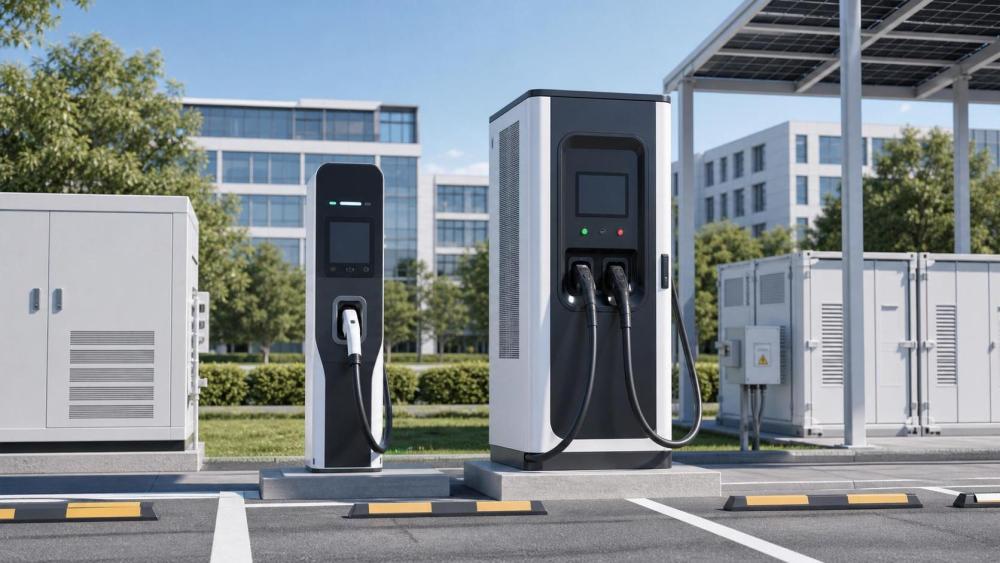
Comparing EV charging equipment manufacturers is rarely a simple unit-price exercise.
The charger may look similar on a quotation sheet, yet performance in the field can differ sharply.
That difference usually appears later, through downtime, failed inspections, software gaps, or expensive service visits.
In practical terms, charging hardware is part electrical equipment, part digital infrastructure, and part long-life energy asset.
This is why many buyers review EV charging equipment manufacturers in the same disciplined way used for other grid-connected assets.
The wider energy market reinforces that approach.
Charging sites now interact with power tariffs, grid constraints, load management, distributed solar, and storage strategies.
Platforms such as EPEM follow these links because charger selection increasingly affects project economics beyond the equipment itself.
So the real question is not which quote is lowest.
It is which supplier can support the required use case with acceptable risk, compliance, serviceability, and lifecycle cost.
Which seven factors should be compared before placing an order?
Most evaluations become clearer when seven factors are reviewed side by side.
A short comparison table helps separate headline pricing from actual project value.
When comparing EV charging equipment manufacturers, these seven points usually reveal the strongest differences.
They also make tenders easier to score objectively.
How do you judge whether the product range actually matches the project?
This is the first filter, and it removes many unsuitable options quickly.
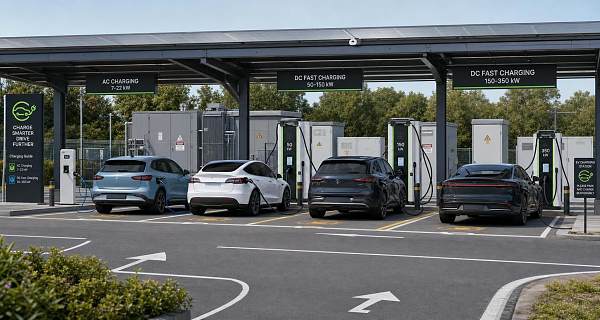
Some EV charging equipment manufacturers are strongest in AC wallboxes.
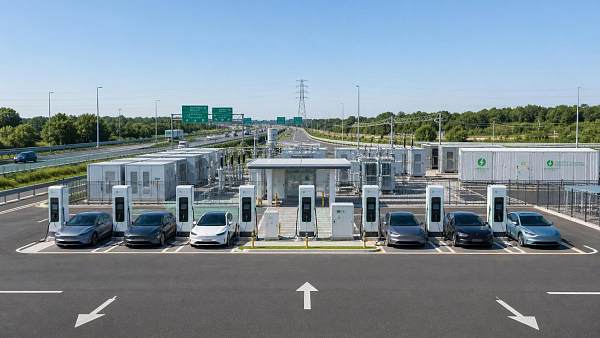
Others are built around DC fast charging, fleet depots, or highway corridors.
A good fit depends on vehicle dwell time, site load profile, and user turnover.
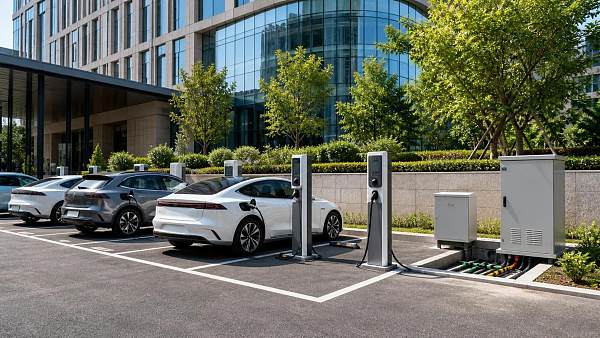
For office parking or residential installations, AC equipment may be sufficient.
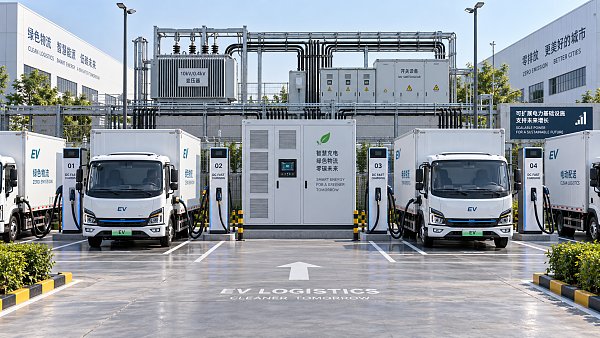
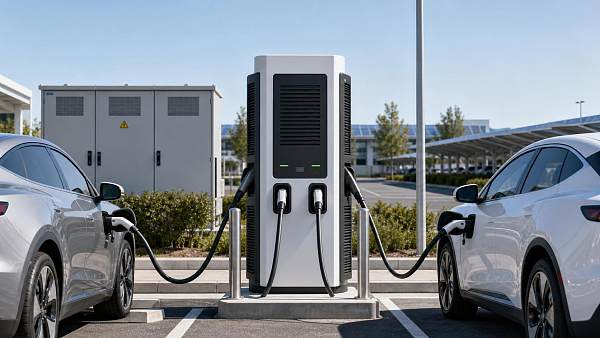
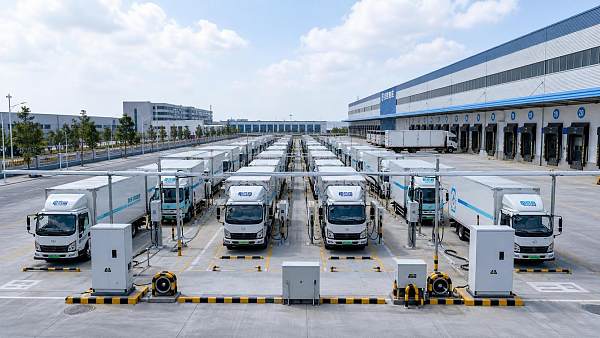
For logistics, ride-hailing, bus depots, or public charging hubs, DC solutions often become necessary.
Need attention to modularity as well.
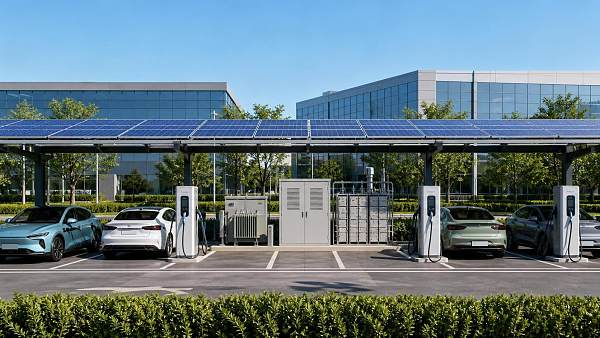
A scalable power cabinet with satellite dispensers may reduce future expansion costs.
That matters when site traffic is expected to rise over several years.
- Confirm connector standards and regional vehicle compatibility.
- Check whether dynamic load sharing is native or optional.
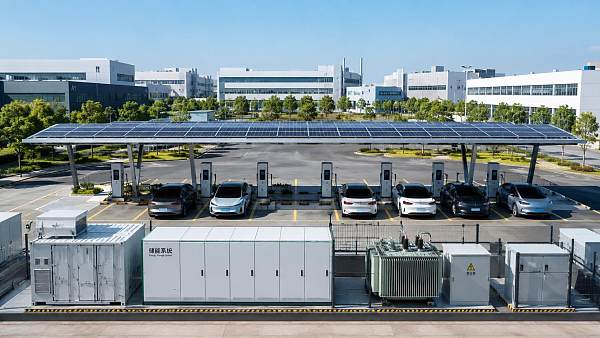
- Ask if the same platform supports solar, storage, or energy management integration.
That last point is increasingly relevant.
EPEM regularly tracks projects where charging is no longer standalone, but part of a broader distributed energy system.
What separates a compliant charger from one that creates approval trouble later?
Compliance documents are often reviewed too late.
By then, design work may already assume equipment that cannot pass local requirements.
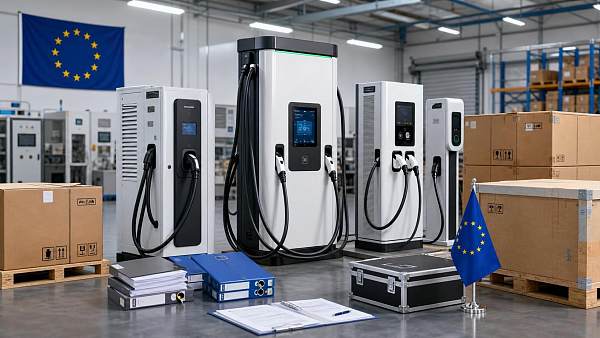
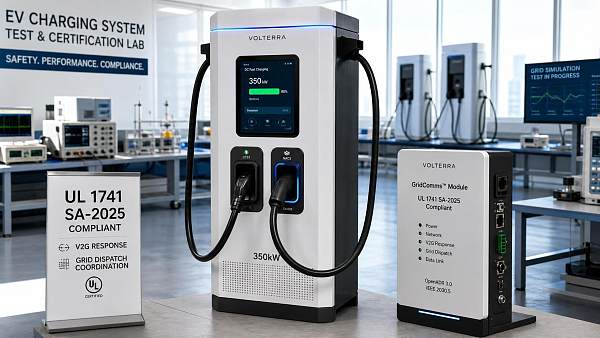
Serious EV charging equipment manufacturers should provide clear certification status for each model and market.
This may include IEC standards, CE marking, UL listing, EMC reports, safety testing, and local grid-related approvals.
In real projects, the issue is not only legal compliance.
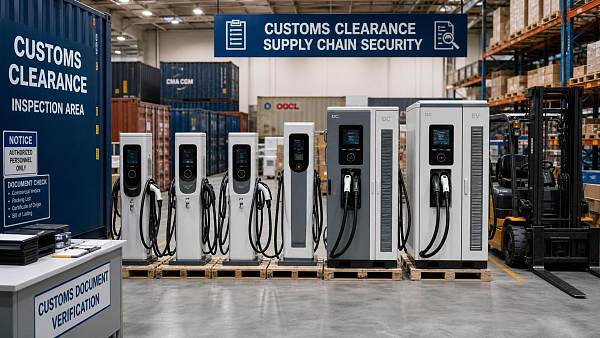
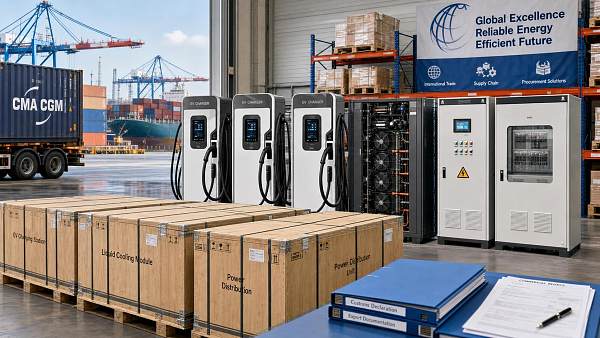
Documentation quality also affects customs clearance, utility review, insurance acceptance, and handover speed.
Ask for sample technical files before award, not after.
If the supplier cannot present consistent datasheets, declarations, and test reports, that is already useful evidence.
The same applies to cybersecurity and communication standards.
Many charging networks now require secure remote control, billing integration, and software update discipline.
Is interoperability still a problem when most chargers claim to support open protocols?
Yes, and the problem is usually more subtle than a missing protocol label.
Many EV charging equipment manufacturers advertise OCPP support, but the practical depth of integration varies.
One charger may support basic session start and stop.
Another may support smart charging, load balancing, tariff updates, alarms, and remote firmware management.
That difference changes operating flexibility.
It becomes even more important where chargers interact with payment systems, fleet software, or site energy controls.
A practical review should cover three layers.
- Vehicle side: connector and charging behavior across major EV brands.
- Platform side: backend compatibility, APIs, and payment interfaces.
- Energy side: load control, peak shaving, and optional storage integration.
Where charging assets are part of smarter energy infrastructure, this check becomes essential.
That is one reason energy intelligence platforms monitor EV charging alongside storage, grid automation, and digital control systems.
What usually drives maintenance cost and downtime after commissioning?
Field reliability is where weak supplier selection becomes visible.
Not every issue comes from core power electronics.
Cable handling, screen failure, cooling performance, contactor wear, and software instability often create service calls.
Buyers should ask EV charging equipment manufacturers for reference projects in comparable climates and usage patterns.
A charger installed in a mild indoor environment tells little about outdoor heavy-duty performance.
The support model matters just as much as the hardware.
Remote diagnostics, firmware update procedures, local spare parts, and repair turnaround will all affect uptime.
More buyers now score service readiness before final pricing discussions.
That is sensible because a low-cost charger with poor service coverage often becomes the expensive option later.
A short service checklist helps here.
When does a cheaper quotation become the more expensive choice?
Usually when hidden operating costs are ignored.
This includes efficiency loss, software subscription fees, short warranty terms, nonstandard components, and higher failure rates.
Lead time risk also belongs in the cost picture.
If one of the EV charging equipment manufacturers cannot deliver on the construction schedule, civil work and installation teams may sit idle.
That cost is real, even if it never appears on the equipment line item.
A stronger buying method is to compare landed and operating cost over several years.
- Equipment price and optional accessories
- Certification and import requirements
- Installation complexity and commissioning support
- Network software and payment integration cost
- Expected uptime and service burden
- Upgrade path for future power or protocol needs
That broader view is increasingly necessary in a market shaped by electricity pricing, grid constraints, and long-term infrastructure planning.
So how should the final shortlist be built?
A workable shortlist usually comes from disciplined filtering, not from collecting the largest number of bids.
Start with the site model, charging speed, grid conditions, and expected utilization.
Then compare EV charging equipment manufacturers against the seven factors already discussed.
In many cases, two or three suppliers will remain clearly stronger than the rest.
Before award, request technical clarification on compliance files, protocol depth, service process, and delivery commitment.
Reference checks are still worth doing, especially for similar site types.
The market for EV charging equipment manufacturers is moving fast, but the buying logic is steady.
Choose the supplier that can support performance over time, not just shipment at the lowest initial number.
Where projects connect charging with storage, solar, or energy management, it also helps to review cross-technology intelligence from sources such as EPEM.
That makes the next step straightforward: define the technical scope, build a weighted comparison sheet, and test each offer against lifecycle risk before ordering.
Questions about market trends? Contact Market Scope Live for deeper business insights.
We respect your privacy. Your information is strictly confidential.
Related News
 EV Charging InfrastructureIndian Minister Proposes Lower EV Charging Rates to Encourage AdoptionIndia EV charging rates could fall in Maharashtra under Nitin Gadkari’s proposal. Explore the potential impact on drivers, fleets and charging operators.MORE+
 EV Charging InfrastructureEV Charging for Industrial Parks: Sizing Capacity and Managing Peak LoadsPlan industrial parks EV charging with confidence. Learn how to size capacity, manage peak loads, reduce demand costs, and keep fleets ready without disrupting production.MORE+
 EV Charging InfrastructureArlington County, Virginia, to Raise Public EV Charging Rates by 72%Arlington County public EV charging rates will rise 72% to $0.30/kWh on November 1, 2026. Explore the potential impact on fleet budgets and how businesses can prepare.MORE+
 EV Charging InfrastructurePlanning Solar EV Charging Hubs: Sizing PV, Battery Storage, and Grid CapacityPlan solar EV charging hubs with confidence. Learn how to size PV, battery storage, and grid capacity to meet peak demand, control costs, and support reliable charging.MORE+
 EV Charging InfrastructureChery Unveils 1.44 MW Charging System, Claims 500 km of Range in Five MinutesChery’s 1.44 MW charging system claims 500 km of range in five minutes. Explore its ultrafast EV charging technology, vehicle compatibility and global rollout plans.MORE+
 EV Charging InfrastructureComparing EV Charging Equipment Manufacturers: Warranty, Lead Times, and SupportCompare EV charging equipment manufacturers on warranty coverage, lead times, and support. Discover how to reduce downtime, uncover hidden costs, and choose the right supplier.MORE+
 EV Charging InfrastructurePlanning Urban EV Charging Hubs: Site Selection, Power Needs, and Charger MixPlan urban EV charging hubs with confidence. Discover how to select sites, size power capacity, and balance AC/DC chargers to control costs and deliver reliable charging.MORE+
 EV Charging InfrastructureHow to Plan Charging Corridors for Fleet Routes, Grid Capacity, and Future DemandCharging corridor infrastructure planning helps fleets align routes, grid capacity, reliable charging, and scalable site design for future demand.MORE+
 EV Charging InfrastructureHow to Size Fast EV Charging Equipment for Fleet Depots Without OverbuildingFast EV charging equipment for fleet depots: learn how to match power, charging windows, grid capacity, and smart controls without costly overbuilding.MORE+
 EV Charging InfrastructureHow to Plan EV Charging Infrastructure in Indonesia for Fleet and Public SitesCharging infrastructure planning in Indonesia for fleet and public sites: optimize energy, grid capacity, smart load management, safety, and scalable EV charging.MORE+
 EV Charging InfrastructureHow to Size DC EV Charging Equipment for Fleet Depots and Peak DemandDC EV charging equipment sizing guide for fleet depots: balance energy demand, peak loads, utility limits, smart charging, and scalable growth.MORE+
 EV Charging InfrastructureAre EV Charger Payment Systems Interoperable Across Regions?Are there interoperability standards for EV charger payment systems across regions? Explore OCPP, OCPI, Plug & Charge, roaming, and payment strategies for seamless EV charging.MORE+
 EV Charging InfrastructureHow to Evaluate Total Cost of Ownership for a Fleet DC Charging DepotHow to evaluate total cost of ownership for a fleet DC charging depot: compare grid costs, tariffs, uptime, smart charging, and scalable infrastructure.MORE+
 EV Charging InfrastructurePublic Charging Infrastructure Planning: Site Criteria, Grid Capacity, and UtilizationPublic charging infrastructure planning made practical: evaluate site access, grid capacity, utilization, and scalable design to build reliable, investable EV charging hubs.MORE+
 EV Charging InfrastructureHow Behind-the-Meter Energy Systems for EV Charging Cut Peak-Demand CostsBehind the meter energy systems for EV charging help cut peak-demand costs, defer grid upgrades, and improve charging reliability with storage and smart controls.MORE+
 EV Charging InfrastructureIs Building a Public EV Charging Network in Rural Areas Financially Viable?Is it financially viable to build public charging networks in rural areas? Explore grid costs, utilization, funding, AC/DC choices, and strategies for profitable rural EV charging.MORE+
 EV Charging InfrastructureHow Public EV Charging Load Management Prevents Peak Demand and Grid Overloadspublic EV charging load management prevents costly peak demand and grid overloads. Explore smarter controls, capacity planning, and scalable charging performance.MORE+
 EV Charging InfrastructureHow to Assess Long-Term EV Charger Reliability Before ProcurementHow to evaluate long-term reliability of EV chargers before procurement? Explore practical checks for uptime, grid compatibility, software stability, service support, and lifecycle costs.MORE+
 EV Charging InfrastructureIs AC Charging Still Worth Investing in for New Public Stations in 2026?Is AC charging still worth investing in for new public stations in 2026? Explore where smart, managed AC charging delivers value, revenue, and scalable EV infrastructure.MORE+
 EV Charging InfrastructureHow to Plan Power Capacity for Highway EV Charging CorridorsHighway charging corridor power capacity planning: learn how to size grid connections, manage peak demand, use storage, and phase EV hubs for reliable, scalable growth.MORE+
 EV Charging InfrastructureWhat Is the Typical BMS Failure Rate in EV Charging Equipment?Battery management system failure rate in charging equipment: learn what BMS faults mean, key risks, and how to protect EV charger uptime.MORE+
 EV Charging InfrastructureHow Should Fleet Depot Charging Stations Be Laid Out?Fleet depot charging station layout design guidelines for safer vehicle flow, smart power use, scalable infrastructure, and reliable fleet readiness. Explore practical planning tips.MORE+
 EV Charging InfrastructureDC Fast Chargers vs Liquid-Cooled Ultra-Fast Chargers in 2026DC fast charger vs liquid-cooled ultra-fast charging stations 2026: compare power, costs, grid demands, uptime, and ideal deployment scenarios for smarter EV infrastructure.MORE+
 EV Charging InfrastructureWhat Does the Global EcoPower Charging Intelligence Platform Do?Global EcoPower EV charging infrastructure intelligence platform delivers actionable insights on grid capacity, storage, technology, risk, and profitable charging project planning.MORE+
 EV Charging InfrastructureHow Global EcoPower Manages Energy Across EV Charging NetworksGlobal EcoPower energy management systems for charging networks optimize EV charging with dynamic load control, storage, solar integration, and reliable data insights.MORE+
 EV Charging InfrastructureWhat Switchgear Specifications Are Needed for a 500 kW Charging Site?What switchgear specifications are required for a 500kW charging installation? Explore load sizing, transformer selection, fault ratings, protection, and expansion planning.MORE+
 EV Charging InfrastructureWhich Communication Protocols Matter When Mixing Charger Brands?What communication protocols matter most when mixing charger brands at one station? Explore OCPP, OCPI, ISO 15118, and energy controls for reliable interoperability.MORE+
 EV Charging InfrastructureWhat Grid Connection Capacity Does a 10-Bay Fast Charging Hub Need?What grid connection capacity is needed for a 10-bay fast charging hub? Explore demand, power sharing, batteries, and scalable planning for reliable EV charging.MORE+
 EV Charging InfrastructureHow to Plan EV Charging Systems for Apartments Without Overloading the Building?EV charging systems for apartments start with capacity, not charger count. Learn how to prevent overloads, use smart load management, and plan scalable charging that fits your building.MORE+
 EV Charging InfrastructureHow City Charging Infrastructure Planning Can Reduce Costs and Avoid Grid BottlenecksCharging infrastructure planning for cities helps cut costs, avoid grid bottlenecks, and speed EV rollout with smarter, scalable deployment.MORE+
 EV Charging InfrastructureEU Mandates EN 61851-23:2026 for EV ChargersEU Mandates EN 61851-23:2026 for EV Chargers: learn how the new EU rule impacts certification, customs clearance, and market access before October 2026.MORE+
 EV Charging InfrastructureITC Ruling Puts Chinese EV Chargers Under 337 PressureITC ruling on Chinese EV chargers puts Section 337 pressure on imports, compliance, and OEM supply chains. Learn how patent risks may impact U.S. customs, distributors, and EV charger sourcing.MORE+
 EV Charging InfrastructureHow EV Charging Technology Affects Charging Speed, Compatibility, and Site PlanningEV charging technology shapes real charging speed, vehicle compatibility, and site planning. Learn how to avoid costly design mistakes and build charging projects that perform.MORE+
 EV Charging InfrastructureUS Requires UL 1741 SA-2025 EVSE ModulesUS Requires UL 1741 SA-2025 EVSE Modules for imported DC fast chargers. Learn how V2G, FCC+UL testing, and firmware compliance will reshape US market access.MORE+
 EV Charging InfrastructureUSTR Opens Section 301 Review on China EV ChargersUSTR Opens Section 301 Review on China EV Chargers: learn how the 25% tariff review may affect import costs, customs compliance, and procurement timing across EV charging and BESS supply chains.MORE+
 EV Charging InfrastructureHow to Plan Fleet Charging Infrastructure for Logistics Depots and Delivery HubsFleet charging infrastructure for logistics starts with duty cycles, dwell time, and grid limits. Learn how to design depot and hub charging that cuts bottlenecks and supports scalable fleet electrification.MORE+
 EV Charging InfrastructureWhat Is Load Management in EV Charging and How Does It Reduce Peak Power Costs?Load management in EV charging helps control peak demand, lower grid upgrade pressure, and cut costly power spikes. Learn how smart power allocation improves site economics.MORE+
 EV Charging InfrastructureHow to Evaluate an EV Charging Software Platform for Multi-Site Charging OperationsEV charging software platform evaluation made practical: learn how to assess interoperability, load management, billing, security, and scalability for multi-site charging operations.MORE+
 EV Charging InfrastructureUSTR Opens 301 Review on China EV Charging GearUSTR opens a Section 301 review on China EV charging gear, putting tariffs, import costs, pricing, and inventory plans at risk. See what US importers and distributors should watch now.MORE+
 EV Charging InfrastructureEU Sets 17.1% Duty on Chinese EV ChargersEU Sets 17.1% Duty on Chinese EV Chargers: see how the new EU tariff affects EV charging equipment exports, customs costs, HS codes, and contract risks for suppliers.MORE+